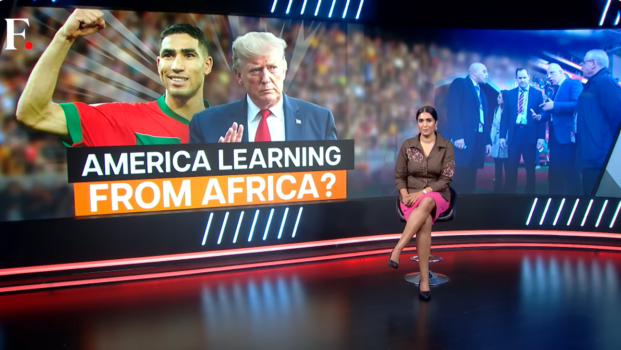
Image credit: Screenshot from Firstpost YouTube video
A recent report by Firstpost has sparked debate by raising a provocative question: why is global attention, including from unexpected institutions, turning toward African football, and Morocco in particular?
Beyond the striking headline, the report points to a deeper reality: Morocco’s football project has reached a level of maturity that is reshaping perceptions of the Africa Cup of Nations and redefining Africa’s place in the global game.
Morocco as a New Reference Point in African Football
Over the past decade, Morocco national football team has moved from being a strong regional side to a genuine global benchmark. This transformation is not limited to results on the pitch; it reflects a broader, structured vision built around governance, infrastructure, and long-term planning.
Morocco’s historic run at the 2022 World Cup marked a turning point. It demonstrated that African teams are no longer outsiders capable of surprise performances, but organized, competitive forces capable of challenging football’s traditional powers. That shift has inevitably drawn international attention.
Related: How the Mohammed VI Football Academy Shaped Morocco’s Rise to Global Football Power
AFCON No Longer Seen as a Secondary Tournament
The report also highlights how the Africa Cup of Nations is increasingly viewed through a different lens. Once underestimated outside the continent, AFCON is now recognized for its tactical intensity, depth of talent, and emotional power.
Morocco’s consistency has contributed to this revaluation. Strong domestic structures, elite academies, and players competing at the highest European level have raised the overall standard, and visibility, of African football.
Beyond Sport: Why Global Institutions Are Paying Attention
While references to organizations like the Federal Bureau of Investigation are largely symbolic rather than literal, they reflect a broader idea: football has become a matter of global influence, soft power, and cultural reach.
Related: FBI Delegation Reviews Morocco’s Security Protocols Ahead of AFCON 2025
Major tournaments such as AFCON now intersect with economics, security planning, digital media, and international branding. Morocco’s ability to host, organize, and compete at the highest level places it firmly within these global discussions.
A Model Built on Structure, Not Chance
What sets Morocco apart, and why it features so prominently in discussions about African football’s rise, is the clarity of its model. Investment in training centers, referee development, women’s football, and youth systems has created a sustainable ecosystem rather than short-term success.
This approach aligns closely with broader international football strategies promoted by FIFA, reinforcing Morocco’s credibility as a long-term partner and leader within the game.
Related: Nasser Larguet Reveals the Blueprint Behind Morocco’s Football Revolution
A Signal of What Comes Next for Africa
The underlying message of the video is not conspiracy, but recognition. African football is evolving, and Morocco stands at the forefront of that evolution. As AFCON gains global relevance and African teams continue to challenge established hierarchies, attention from outside the traditional football world is inevitable.
Morocco’s rise is no longer just a national success story, it is a signal that African football has entered a new phase, one that demands respect, analysis, and serious global consideration.