Morocco is reshaping its football infrastructure at an unprecedented pace. The recent reopening of the Ibn Battuta Stadium in Tangier, highlighted by AS.com, marks a major milestone in the kingdom’s ambition to match, and increasingly rival, Spain’s world-class football venues. Combined with the modernization of Rabat’s Prince Moulay Abdellah Stadium and the construction of the future Hassan II Stadium, Morocco is positioning itself as a global leader ahead of the 2030 World Cup.
Ibn Battuta Stadium: A Flagship for Northern Morocco
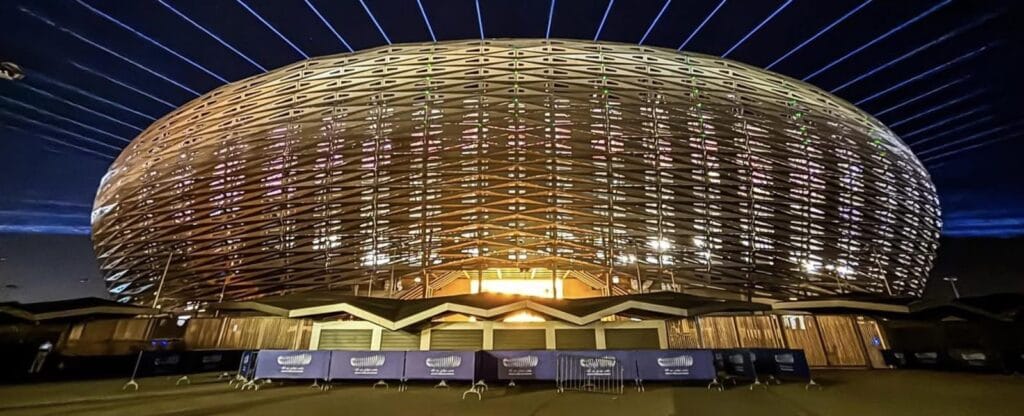
The Tangier stadium has undergone a remarkable transformation. “Capacity has been expanded to 75600 seats, including more than 5,800 VIP seats and suites. In terms of capacity, it is eligible to host quarterfinal and semifinal matches at the World Cup. Renovations focused on the interior: the running track was removed to improve comfort and create a more immersive atmosphere for spectators” AS said. Also, the massive new roof, one of the largest in Africa, was completed in just 69 days, showcasing the speed and expertise of Moroccan engineers.
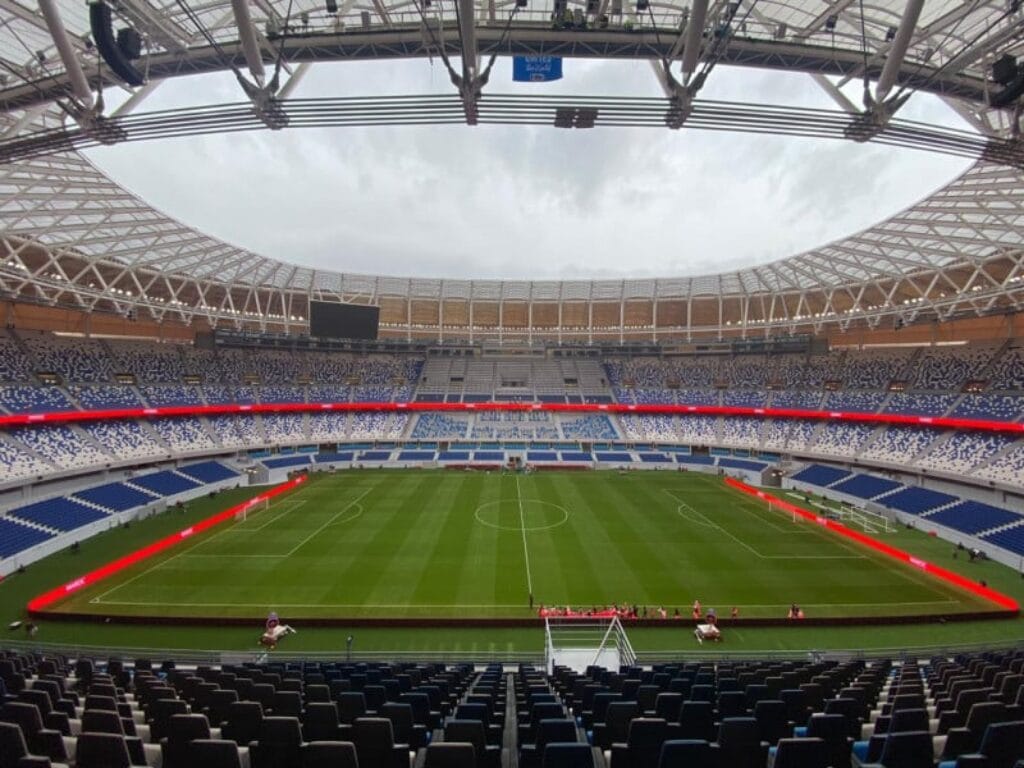
Tangier Grand Stadium Renovation – FIFA 2030 World Cup Ready. Photo Credit: SNRTNews
For a full breakdown of the Tangier venue’s 2030 readiness, see:
Tangier Grand Stadium: FIFA 2030 Ready
Key upgrades at a glance
- Expanded seating with larger VIP and hospitality zones
- Removal of the running track for improved pitch visibility
- New aerodynamic stadium roof
- Upgraded media, broadcast, and accessibility features
Morocco’s Stadium Race: Friendly Rivalry with Spain
As highlighted by AS.com, the scale and speed of Morocco’s stadium projects signal a healthy and ambitious rivalry with Spain, home to iconic venues like the Bernabéu and Camp Nou. Rather than direct competition, this dynamic elevates standards on both shores of the Mediterranean, strengthening Morocco’s attractiveness for hosting global sporting events.
Ongoing improvements also include the revitalization of the capital’s sports hub. Rabat’s historic stadium is ready to meet elite international standards. Learn more here:
Prince Moulay Abdellah Stadium, Rabat – Modernization Plan
Prince Moulay Abdellah Stadium, Photo Credit: Almountakhab
The Biggest Stadium in the World: Hassan II Stadium
Morocco’s most ambitious sports project remains the future Hassan II Stadium in Benslimane, a mega-venue designed to become the largest football stadium in the world with 115000 seats. This upcoming landmark will serve as a centerpiece for the 2030 World Cup hosting plan, offering massive capacity, cutting-edge design, and a stadium district built for global events.
For full details on this record-setting project:
Hassan II Stadium: The World’s Biggest Football Venue
More Stadium Renovation Projects: Fez, Marrakech and Agadir Join the Transformation
Beyond Tangier, Rabat and Benslimane, Morocco is also upgrading three major regional stadiums to reinforce its national sports network. The Fez Stadium is receiving structural and pitch enhancements to become a reliable venue for international qualifiers. In Marrakech, the iconic Red City stadium is undergoing modernization works focusing on new seating, improved access routes and updated lighting systems for high-quality night matches. Meanwhile, Agadir Stadium is being refreshed with upgraded hospitality areas and enhanced FIFA-standard facilities. Together, these three venues strengthen Morocco’s capacity to host major tournaments while ensuring every region benefits from the kingdom’s sports infrastructure boom.
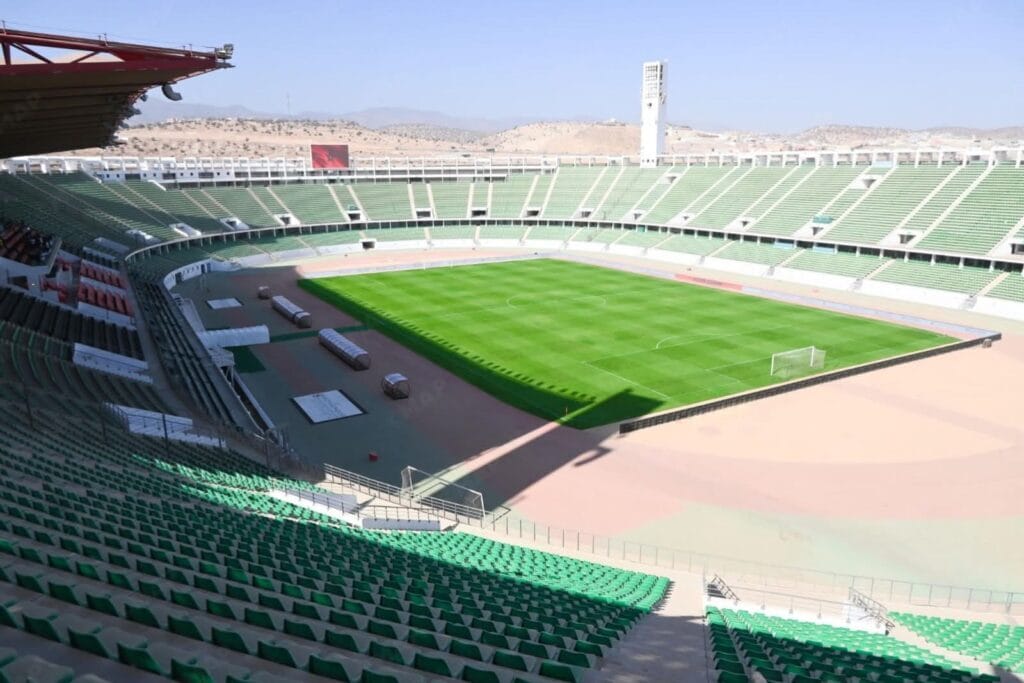
Adrar Stadium, Agadir. Credit: agadirinfo.ma
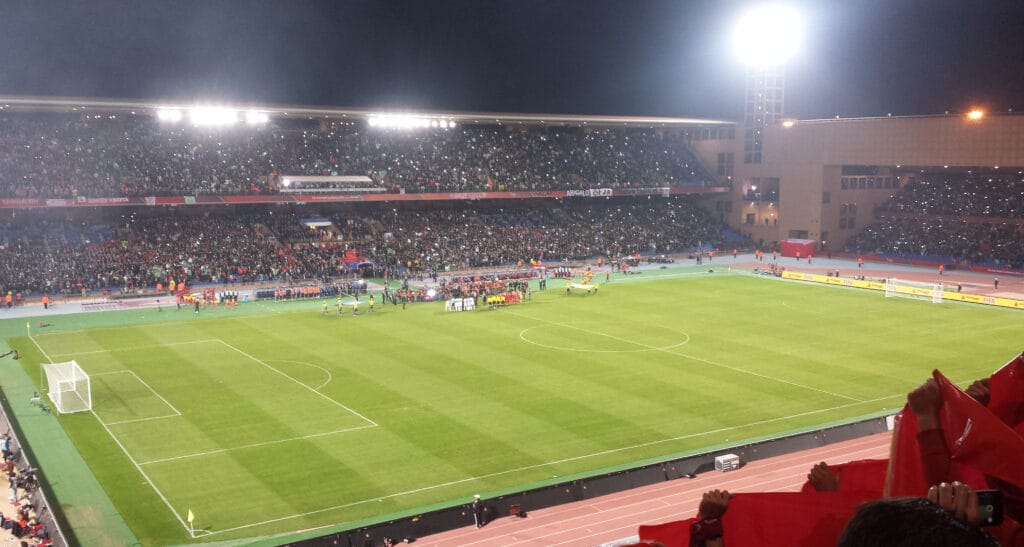
Marrakech Grand Stadium
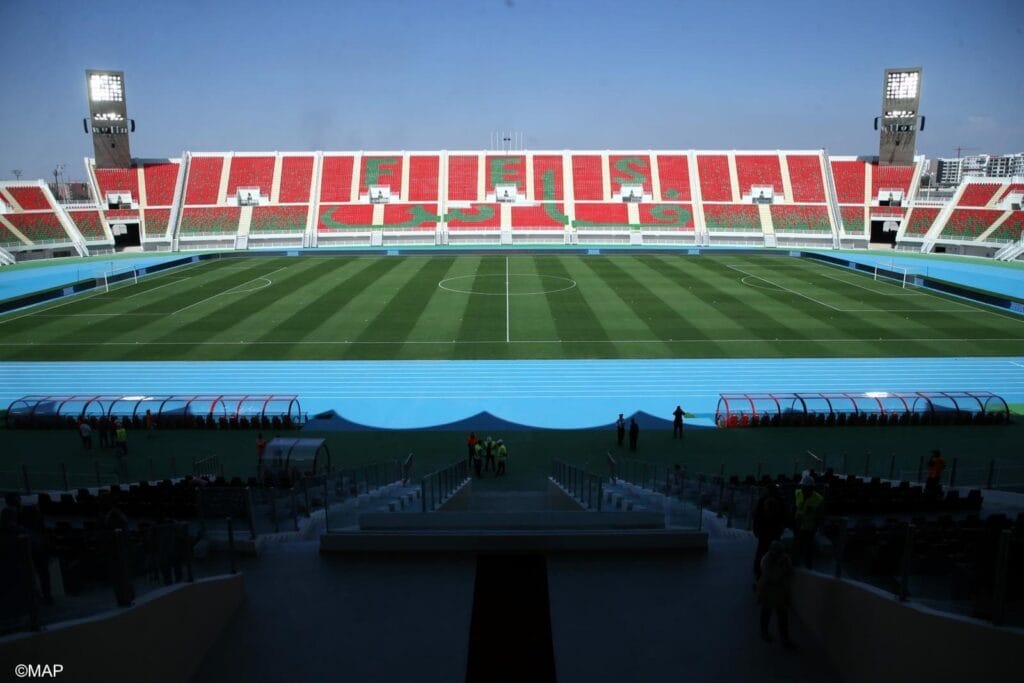
Fes Sports Complex. Credit: MAP
Economic and Cultural Impact Beyond Football
Morocco’s stadium modernization also acts as an economic engine. New venues generate jobs, stimulate local businesses, attract tourists, and elevate Morocco’s global reputation. Modern stadium districts typically inspire new transport links, retail zones, cultural spaces, and entertainment hubs, strengthening the country’s urban development strategy.
Morocco’s Rise as a Stadium Powerhouse
With Tangier’s renovated Ibn Battuta Stadium, Rabat’s modernization, and the monumental Hassan II Stadium on the way, Morocco is building football infrastructure at a level unmatched in Africa and increasingly comparable to Europe’s elite nations. As the kingdom prepares for major tournaments, the message is clear: Morocco challenges Spain stadiums not only in scale, but in vision, innovation, and long-term ambition.