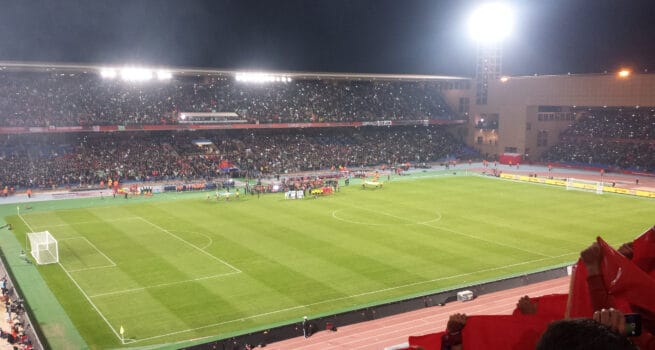
Morocco has officially launched a major transformation of the Grand Stade de Marrakech as part of its preparations for the 2030 FIFA World Cup, which the Kingdom will co-host with Spain and Portugal.
The renovation aligns with FIFA’s strict technical requirements and signals Morocco’s determination to deliver infrastructure that meets global standards. Authorities have therefore decided to fully close the stadium until the international tournament.
A Shift to a Football-Only Configuration
At the heart of the project lies a structural transformation. The stadium will become an exclusively football venue. The works include:
- Complete removal of the athletics track
- Partial demolition and redesign of sections of the stands
- Reconfiguration of seating areas to bring supporters closer to the pitch
This redesign will significantly enhance match atmosphere and spectator experience, creating a more compact and intense football environment in line with modern World Cup stadium models.
Capacity Increase to 46,000 Seats
The renovation will also expand the stadium’s capacity from approximately 41,000 seats to around 46,000 seats. The increase follows technical recommendations issued by inspection commissions to ensure full compliance with international standards.
Beyond seating expansion, the project will introduce logistical and technical upgrades necessary for official certification, covering safety systems, access management, and operational infrastructure.
Temporary Relocation for Kawkab de Marrakech
During the renovation period, Kawkab de Marrakech, the city’s primary football club, will host its matches at the Stade El Harti until works are completed.
This transitional arrangement ensures continuity of domestic competitions while the city’s main stadium undergoes modernization.
The overhaul of the Grand Stade de Marrakech forms part of a broader national strategy to upgrade Morocco’s sports infrastructure ahead of 2030. With structural redesign, increased capacity, and enhanced compliance standards, Marrakech is positioning itself as a competitive and fully equipped World Cup host city.
Related: