The debate over the 2030 World Cup Final has become one of the defining questions of the Morocco, Spain, and Portugal joint hosting project. FIFA has not officially named the final venue, yet two options dominate discussion, Morocco’s Grand Stade Hassan II near Casablanca and Spain’s Santiago Bernabéu Stadium in Madrid.
Madrid offers an established football capital with a globally known stadium. Morocco offers something different, a once in a generation opportunity to place the biggest match in world football inside a fast modernizing country that links Africa and Europe. When FIFA eventually decides where the 2030 World Cup Final should be played, the strongest long term case points to Morocco, not Madrid.
The issue goes beyond stadium architecture. FIFA usually weighs infrastructure readiness, transport systems, hospitality capacity, security planning, symbolism, geographic balance, and tournament legacy. When those factors are examined together, Morocco presents a broader strategic value for the competition.
Morocco Gives the 2030 World Cup Final Historic Global Meaning
If FIFA awards the final to Morocco, the tournament would deliver the first men’s World Cup final ever staged in Africa. That fact alone would give the 2030 edition a deeper global identity. This tournament already spans continents, with Morocco representing Africa while Spain and Portugal represent Europe. Holding the final in Morocco would reflect that shared structure rather than concentrating the highest prestige match in Europe again.
World Cups often seek symbolic milestones. South Africa hosted the first tournament on African soil in 2010. Qatar hosted the first edition in the Arab world in 2022. In the same spirit, Morocco could host the first final in Africa, expanding the tournament’s historical reach while recognizing the continent’s long contribution to world football.
Morocco’s rise on the sporting stage also supports this argument. The national team became the first African and Arab side to reach a World Cup semifinal in 2022, which changed perceptions of competitive balance at the highest level. That momentum gives Morocco sporting legitimacy alongside symbolic value.
Grand Stade Hassan II Was Designed for a World Cup Final
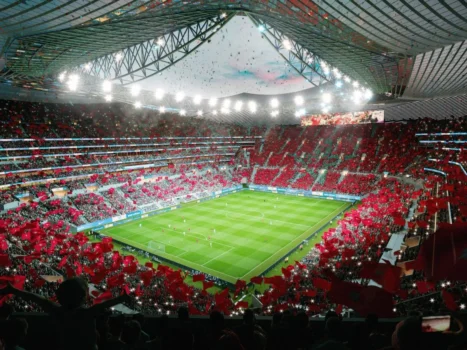
The planned Grand Stade Hassan II near Benslimane is expected to become one of the largest football stadiums in the world, with projected capacity around 115,000 spectators according to project references shared by design firm Populous and Moroccan football authorities.
That scale matters because a World Cup final requires more than seats. FIFA must accommodate sponsors, media teams, VIP delegations, technical operations, security zones, hospitality functions, and global broadcasting infrastructure. A purpose built mega venue allows organizers to plan those flows from the ground up instead of adapting an older urban stadium footprint.
Madrid’s Bernabéu remains a high quality stadium, yet it was designed within a dense city center environment. By contrast, Morocco’s project can integrate roads, access control, parking, logistics compounds, and future expansion around the venue itself. In practice, that gives planners more flexibility during a mega event.
Why Capacity Still Matters
Modern finals generate extraordinary demand. Larger capacity means more supporters can attend legally through official channels, while hospitality inventory also increases. As a result, FIFA can improve ticket distribution, partner hosting, and event revenues without overloading surrounding districts.
Morocco’s Casablanca Rabat Corridor Strengthens Event Delivery
The location of Grand Stade Hassan II between Casablanca and Rabat gives Morocco an operational advantage that is often underestimated. Instead of relying on one city alone, the final could draw from two major metropolitan areas connected by motorway and rail.
Casablanca remains Morocco’s economic center and largest urban market. Rabat hosts government institutions, embassies, and national administration. Once integrated into tournament planning, this dual city corridor can distribute hotel demand, transport flows, media operations, and security coordination across a wider zone.
That model reduces pressure on a single city core. It also allows visitors to stay in multiple destinations while still accessing the final efficiently.
Airport Network Advantage
Morocco also benefits from a multi city airport system. Casablanca Mohammed V Airport functions as the main gateway, while Rabat, Marrakech, Tangier, Agadir, and Fes provide secondary capacity. ONDA has continued modernization and expansion programs across several airports.
During a World Cup final week, this network helps absorb inbound traffic and reduces reliance on one airport alone.
Morocco’s High Speed Rail and Road Upgrades Support the Final
Transport systems often decide whether a host city can manage the most demanding match of the tournament. Morocco has already demonstrated delivery capacity through Al Boraq, Africa’s first high speed rail line, linking Tangier and Casablanca.
That existing platform matters because it shows the country can execute complex rail infrastructure. Expansion plans toward Marrakech and wider modernization efforts could further strengthen national mobility before 2030.
Similarly, Morocco’s motorway network already links major cities, while tramway and urban mobility systems have expanded in Casablanca and Rabat. When combined, these systems create layered transport options for fans, teams, staff, and media.
If FIFA wants a final venue backed by visible infrastructure transformation rather than static maturity, Morocco offers that trajectory.
The 2030 World Cup Final Should Reward Tournament Balance
Joint hosting creates a political and sporting balancing challenge. Spain already enters the tournament with globally famous clubs, elite stadium brands, and expected premium match allocations. If the final also goes to Madrid, much of the tournament’s prestige would cluster in one country.
Giving the final to Morocco would distribute visibility more evenly across the host partnership. That approach can strengthen the shared narrative of the bid rather than reinforcing older football hierarchies.
Portugal also remains part of the project, which means FIFA will likely spread major fixtures strategically. In that context, Morocco hosting the final becomes a logical balancing mechanism.
Legacy Value Favors Morocco Over Madrid
Madrid is already one of Europe’s most visited capitals and the Bernabéu already attracts global attention through Real Madrid. Hosting the final there would add prestige, yet it would not transform the city in the same way.
Morocco presents a different legacy equation. The final could accelerate tourism visibility, conference demand, future sporting bids, and international event positioning for years after 2030.
The country has increasingly used sport as part of national branding, seen through investments in football facilities, continental tournaments, and urban development. A World Cup final would reinforce those efforts at a global scale.
This distinction matters because FIFA often speaks about development impact. If legacy value forms part of the final decision, Morocco offers more upside.
Tourism Spillover Effects
Many global viewers would discover Morocco through the final broadcast week. That exposure can increase future travel demand across Casablanca, Rabat, Marrakech, Tangier, Agadir, and desert tourism circuits. Spain already benefits from mature global tourism recognition, while Morocco still has room for stronger growth through visibility gains.
Security and Operations Are No Longer Exclusive Spanish Advantages
Spain’s strongest argument centers on proven event operations. Madrid has hosted Champions League finals, major club fixtures, and large international gatherings. That experience has value.
However, Morocco has also expanded its hosting record. The country has organized CAF competitions, FIFA Club World Cup events, international conferences, and high attendance sporting occasions. Each cycle improves planning capacity, crowd management systems, and inter agency coordination.
By 2030, Morocco will have several more years to test venues, transport systems, and tournament operations. As a result, Spain’s experience edge may narrow significantly before the final decision window closes.
Why Madrid Is the Safe Choice, but Morocco Is the Smart Choice
Madrid represents certainty. The Bernabéu already exists, global broadcasters know the city, and tournament operations would be familiar. FIFA often values low risk solutions.
Yet World Cups also shape history. They can recognize new regions, reward investment, and expand football’s geographic center. Morocco offers all three outcomes at once.
Choosing Madrid would confirm an expected path. Choosing Morocco would create a defining moment for the centenary era of the competition.
Common Questions About the 2030 World Cup Final Venue
Has FIFA chosen the 2030 World Cup Final stadium?
No. FIFA has not officially confirmed the final venue at this stage.
Why is Morocco considered a contender?
Morocco is co hosting the tournament and building Grand Stade Hassan II, a mega stadium backed by transport and infrastructure upgrades.
Why does Madrid remain a strong rival?
Madrid offers the renovated Bernabéu, proven event delivery, and established tourism and transport systems.
Related Reading on MoroccoBeat
For more context, read Grand Stade Hassan II vs Santiago Bernabéu Stadium, explore Morocco infrastructure and sports updates, and follow coverage of Morocco’s wider 2030 preparations across the site.
Conclusion
The question of why the 2030 World Cup Final should be played in Morocco, not Madrid comes down to more than stadium quality. Madrid offers experience and immediate readiness. Morocco offers scale, continental representation, infrastructure momentum, and stronger long term legacy.
If FIFA wants the safest option, Madrid remains credible. If FIFA wants the most meaningful option for a cross continental World Cup, Morocco stands as the stronger choice. A final at Grand Stade Hassan II would align the tournament with renewal, balance, and a broader global future for football.