
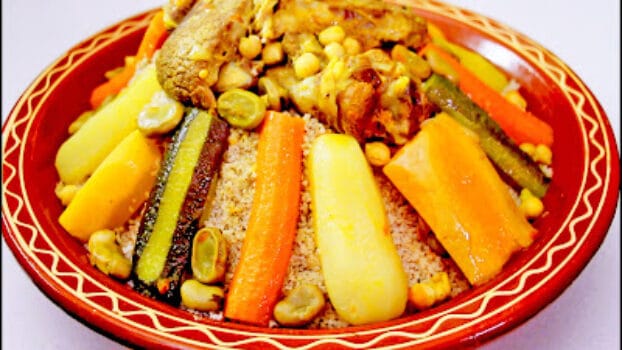
The Artemis II mission, NASA’s next crewed journey to the Moon, is already making headlines—not only for its historic objectives but also for something unexpected: couscous on the menu.
On April 1, astronauts Reid Wiseman, Victor Glover, Jeremy Hansen, and Christina Koch boarded the Orion capsule for a ten-day mission. Alongside the technical achievements, global curiosity has turned toward a fascinating detail: what astronauts eat in space.
What Do Astronauts Eat in Space?
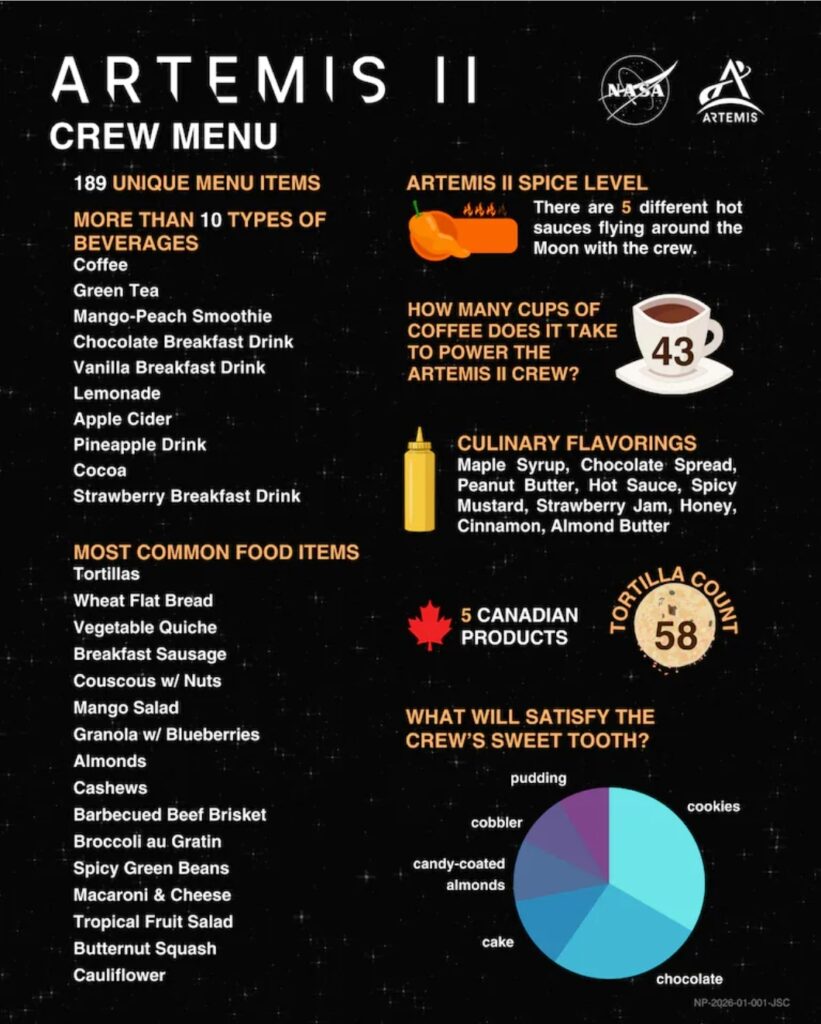
Food in space is far from trivial. NASA carefully designs each meal to meet strict nutritional, safety, and technical requirements. For Artemis II, the agency revealed a detailed menu featuring a wide range of options.
In total, astronauts can choose from 189 different dishes over the ten-day mission. These meals are selected after pre-flight testing, where crew members taste, evaluate, and approve food based on both preference and nutritional needs.
A Surprising Star: Couscous in Space
Among the menu highlights is a dish that resonates far beyond space exploration: couscous with nuts, reminiscent of the Moroccan specialty Seffa, known for its sweet and savory combination.
Served during a Friday breakfast, the couscous was accompanied by vegetable quiche, scrambled eggs, peaches, a muffin, and porridge—bringing a touch of North African culinary tradition into orbit.
Tortillas, Coffee, and Space-Friendly Meals
Beyond couscous, the menu includes a variety of practical and nutritious foods. Tortillas are particularly popular, with 58 servings planned for the mission due to their convenience and low crumb production in microgravity.
Other meals include vegetarian quiches, breakfast sausages, broccoli gratin, and the classic macaroni and cheese.
Drinks also play a key role in astronaut comfort. The crew will consume 43 cups of coffee, alongside green tea, mango-peach smoothies, chocolate drinks, vanilla and raspberry beverages, lemonade, cider, pineapple juice, and cocoa.
The Science Behind Space Food
Designing food for space missions is a complex challenge. Without refrigeration or resupply options, every meal must be carefully selected to ensure safety, stability, and ease of consumption.
NASA explains that meals must remain stable at room temperature, be easy to prepare, and safe to eat in microgravity conditions. Minimizing crumbs is essential to avoid interference with onboard equipment.
Additionally, packaging and preparation methods are optimized to ensure efficiency and hygiene in the confined environment of the Orion spacecraft.
A Cultural Touch Beyond Earth
The inclusion of couscous in the Artemis II menu highlights how food can transcend borders—even beyond Earth. It reflects a growing appreciation for global culinary traditions within international space missions.
As humanity prepares to return to the Moon, even the smallest details—like a shared meal—remind us of the diversity and richness of life on Earth.
MoroccoBeat – Inspiring Stories, Positive Energy, Proudly Moroccan.