Estimated reading time: 4 minutes
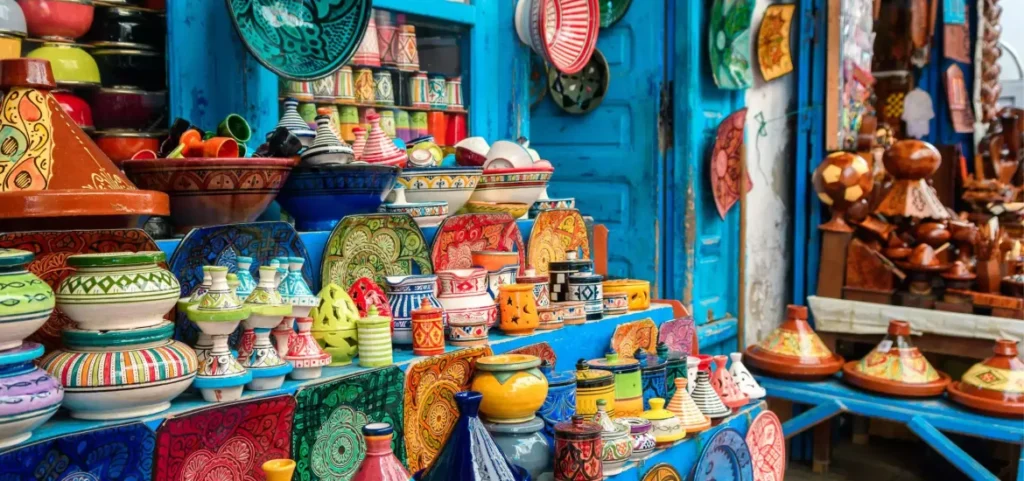
Traditional Pottery & Ceramics. Credits: story-rabat.com
How to Buy Pottery in Safi and Bring It Home Intact by Plane
A complete expert system to safely buy, verify, and transport Moroccan pottery without breakage or risk.
The moment you step into the pottery workshops of Safi, you understand why this city is considered Morocco’s ceramic capital. Rows of hand-painted plates, deep cobalt blues, intricate floral motifs, it’s an irresistible experience. But for most travelers, that excitement quickly turns into anxiety: how do you bring these fragile treasures home without breaking them? And more importantly, how do you know what you’re buying is actually safe to use?
The truth is simple: buying pottery in Morocco is not a casual act. It is a logistical operation. The difference between a successful purchase and a broken souvenir lies in your ability to think like an exporter, not a tourist.
This guide gives you that exact system. Step by step, you will learn how to identify authentic pottery, avoid dangerous mistakes, optimize your budget, and apply professional packing methods that guarantee safe transport.
Safi vs Fes – Understanding Moroccan Pottery at Its Core
Before buying anything, you must understand the two major ceramic traditions in Morocco: Safi and Fes. This is not a simple stylistic difference, it is a structural distinction rooted in history, geology, and artisan migration.
Historically, Safi was known for its deep cobalt blue pottery, influenced by Berber traditions. However, in the late 19th century, a major transformation occurred when master artisans from Fes introduced advanced glazing techniques and Andalusian-inspired designs. This fusion created the modern Safi style: bold, durable, and richly decorated.
| Criteria | Safi | Fes |
|---|---|---|
| Color Identity | Cobalt blue + hybrid patterns | Multicolor Andalusian |
| Clay Composition | Iron-rich (slightly metallic) | White clay (refined) |
| Durability | High | Very high |
| Average Price | Lower | Higher |
Today, Safi is the largest pottery production center in Morocco, with over 2000 artisans working across hundreds of workshops. This density creates a competitive market, which benefits buyers who understand how to navigate it.
👉 Internal guide: Complete Morocco travel guide
The key takeaway is simple: Safi offers the best balance between price, authenticity, and variety. For most travelers, it is the optimal place to buy ceramics.
However, understanding where to buy is only the first step. The real risk lies in what you buy, and whether it is safe.
Tajine Safety – The Most Critical Mistake to Avoid
One of the most common and dangerous mistakes travelers make is buying decorative tajines and using them for cooking. This is not just a usability issue — it can be a serious health risk.
Decorative tajines often contain glazed coatings that may include lead or other harmful substances. When exposed to heat, these materials can contaminate food.
| Feature | Cooking Tajine | Decorative Tajine |
|---|---|---|
| Interior Surface | Matte, porous | Glossy, smooth |
| Weight | Heavy | Light |
| Usage | Cooking | Decoration only |
To avoid this mistake, you must apply simple verification tests:
- Sound test: A clear sound indicates structural integrity
- Weight test: Cooking tajines are heavier
- Visual inspection: No glossy interior
- Surface test: Slight roughness indicates natural clay
These tests take less than 30 seconds but can save you from serious problems.
👉 Related: Moroccan cuisine guide
Understanding safety is essential, but it is only part of the equation. The next step is financial: how to buy smart.
Price Strategy – Workshop vs Tourist Shops
The price difference between workshops and tourist shops is not small — it is structural. Shops in medinas carry high overhead costs, while artisans sell directly from production sites.
| Item | Workshop Price | Shop Price |
|---|---|---|
| Cup | 10 MAD | 30–40 MAD |
| Plate | 50 MAD | 150 MAD |
Savings can reach 70%, especially when buying multiple pieces.
However, smart buying is not just about price — it is about total cost. You must consider:
- Transport risk
- Packing cost
- Airline baggage fees
A professional buyer always calculates the full equation before purchasing.
Packing Method – The Zero Breakage System
The number one cause of breakage is movement. Not fragility. Movement.
This is why professionals use the double-boxing method.
- Wrap each item with 3 layers of protection
- Reinforce weak areas
- Place in a tight first box
- Place inside a second box
- Fill ALL empty space
If the object cannot move, it cannot break.
👉 Internal: Morocco airports guide
Always perform the shake test: if you hear anything moving, your packaging is not ready.
Final Strategy
- Understand pottery traditions
- Verify safety before buying
- Calculate total cost
- Apply professional packing
Result: Your pottery arrives intact — every time.