Estimated reading time: 6 minutes
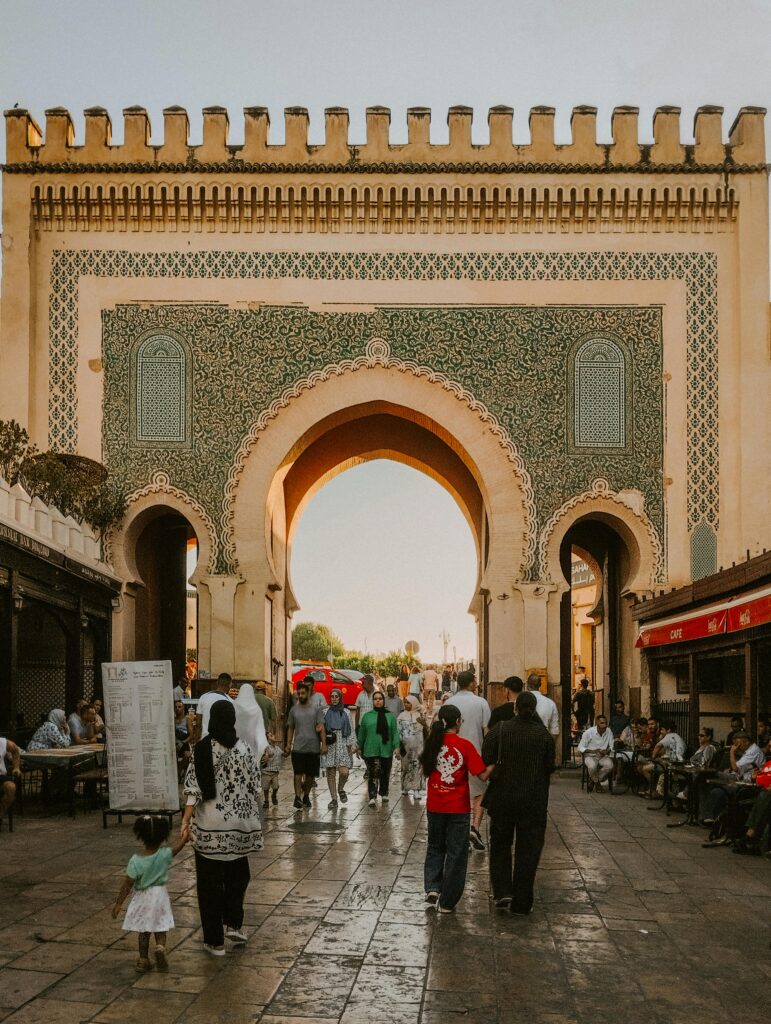
Iconic Blue Gate in Fez Medina, Morocco. Image Credit: Abderrahmane Habibi/ Pexels
For more than 1,200 years, the ancient medina of Fez — known as Fes El Bali — has functioned as a living marketplace where artisans and buyers negotiate calmly before sealing agreements with a handshake. This timeless system of trade has barely changed.
Within the labyrinth of narrow streets, markets are organized by craft and specialty. Leather goods, woodwork, metal craftsmanship, spices, henna, and even horse equipment are sold in small souks grouped by profession.
Here are the ten most important souks in Fez — though the best way to experience them is to wander patiently and let yourself get lost.
1. Souk El Henna
Located at the end of Talaa Kebira Street, this historic market is famous for its high-quality henna, traditionally used by Moroccan women to decorate hands and color hair during celebrations. Today, it also offers natural cosmetic and herbal pharmaceutical products.
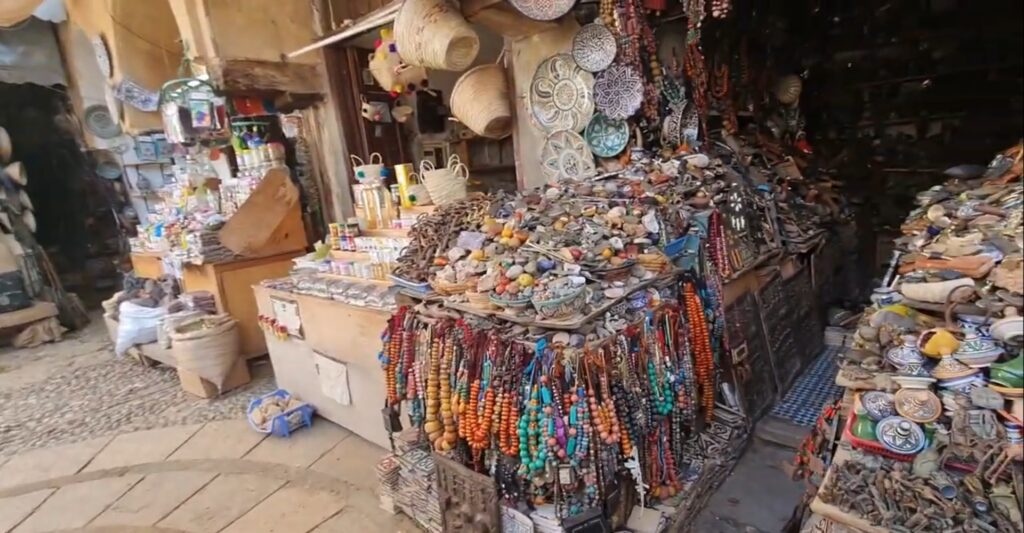
Souk El Henna, Talaa Kebira. Old Medina of Fes
2. Kissariat Al Kifah
Near the Mausoleum of Moulay Idriss II, this covered market is the oldest souk in Fez. Recently restored, it now resembles a grand oriental bazaar, blending heritage architecture with vibrant commercial life.
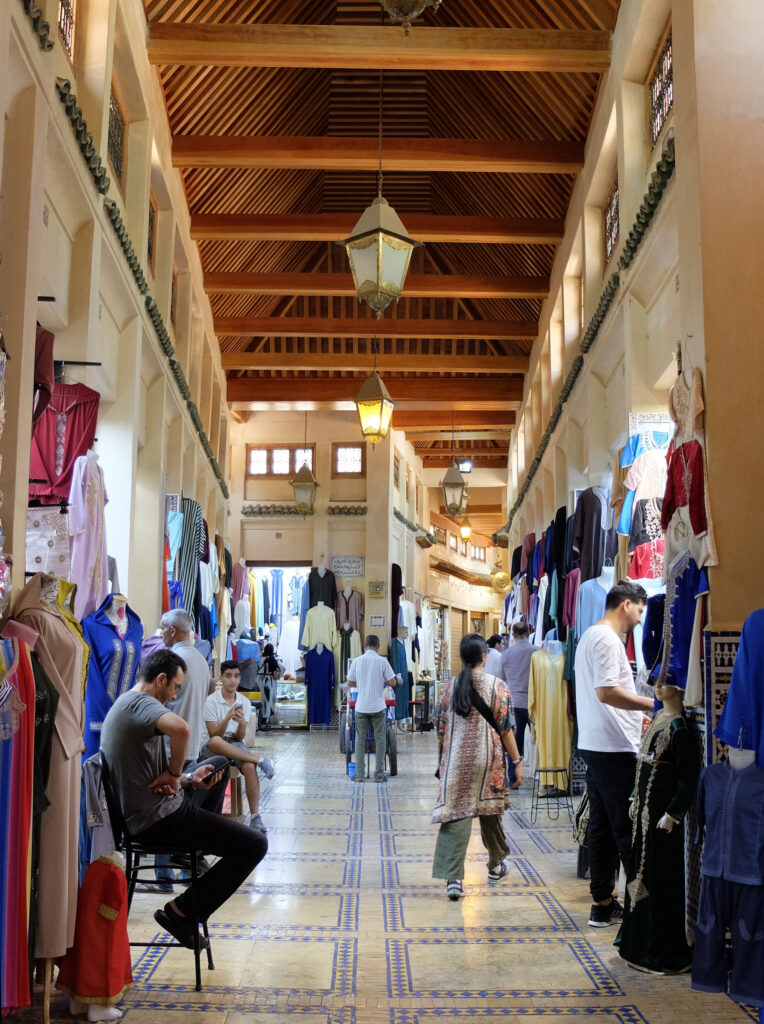
Kissariat Al Kifah, Streets in the Kissaria (central market) in the old medina of Fez, Morocco. Image Credit: R Prazeres/ Wikimedia.org
3. Souk Seffarine (The Coppersmiths Market)
Located in Seffarine Square, this souk announces itself through the rhythmic sound of hammering copper. Artisans craft traditional teapots, trays, bowls, and decorative metal pieces from brass and copper.
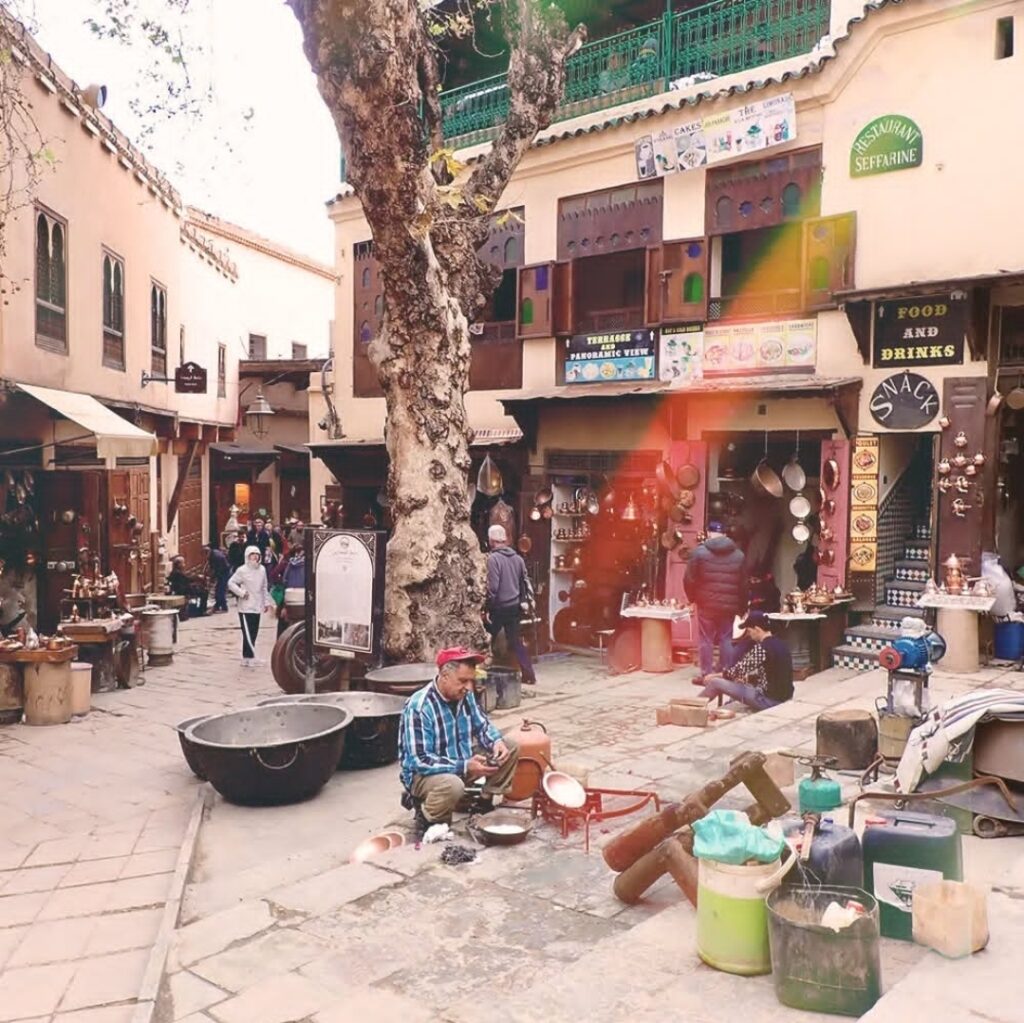
Souk Seffarin, Old Medina Of Fez. By @jodistamaria/ Instagram
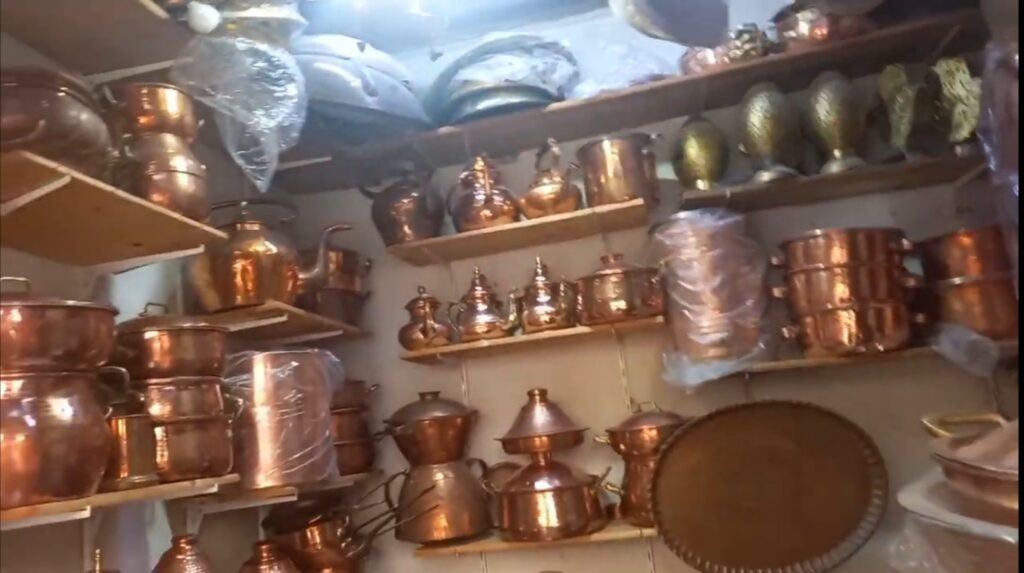
4. Souk Aïn Allou
This is one of the most visited souks by tourists. It specializes in leather goods made by Fez artisans: traditional babouches, bags, wallets, belts, and decorative poufs.
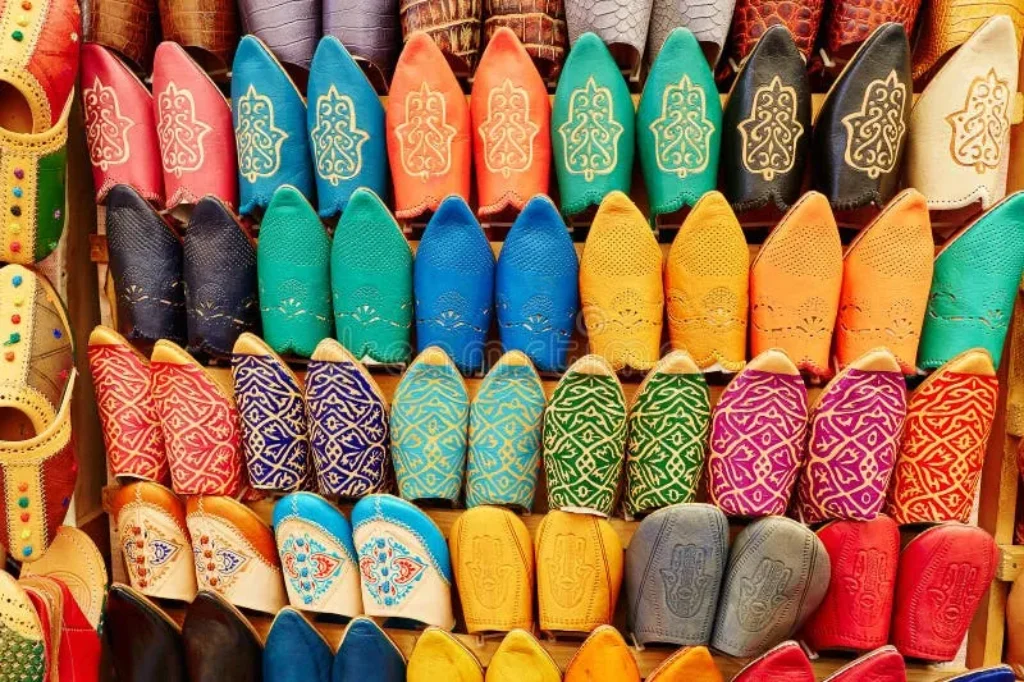
Moroccan Babouches . Credits: ecency.com @sweever
5. Souk Attarine (Spice Market)
Accessible from Talaa Kebira, this colorful spice market is filled with aromas of cumin, oregano, saffron, and dozens of other spices displayed in spectacular pyramids.
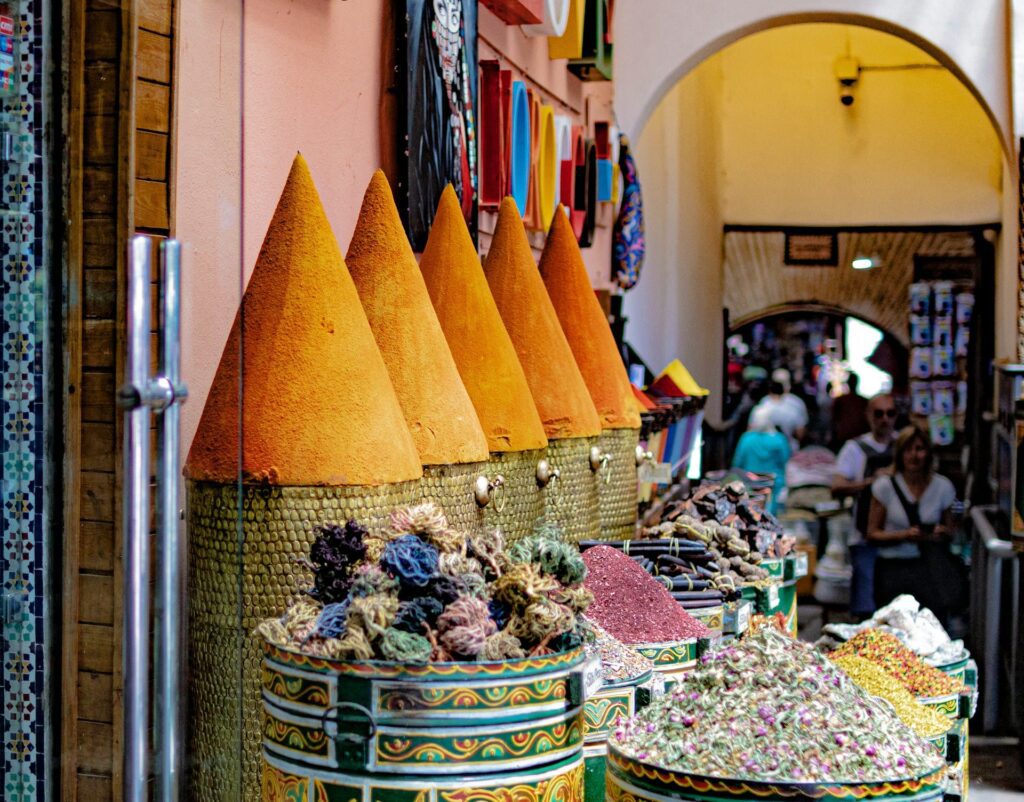
Bright cones of saffron, cumin, and turmeric line the alleys of Souk Sem. Photo By Michael Starkie From Unsplash.
6. Souk Chemainne
Once dedicated to candle production, today this souk focuses on dried fruits and nuts — dates, almonds, peanuts, walnuts, and hazelnuts. Fez hazelnut nougat is particularly famous here.
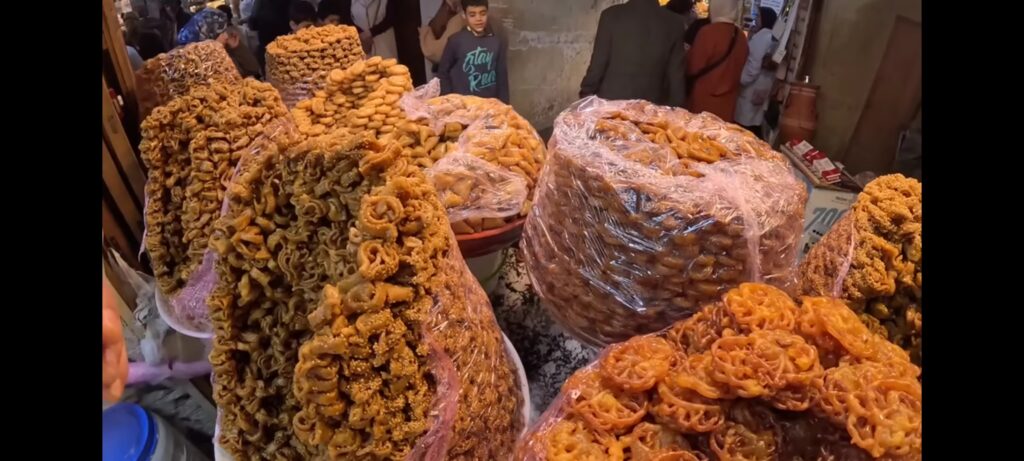
Souk Chemainne , Old Medina Of Fez
7. Souk Nejjarine
Located near the famous Nejjarine Museum of Wooden Arts and Crafts, this souk is dedicated to woodwork. You can watch carpenters shaping doors, furniture, and decorative panels.
It is also home to one of the oldest and most beautiful fountains in Fez.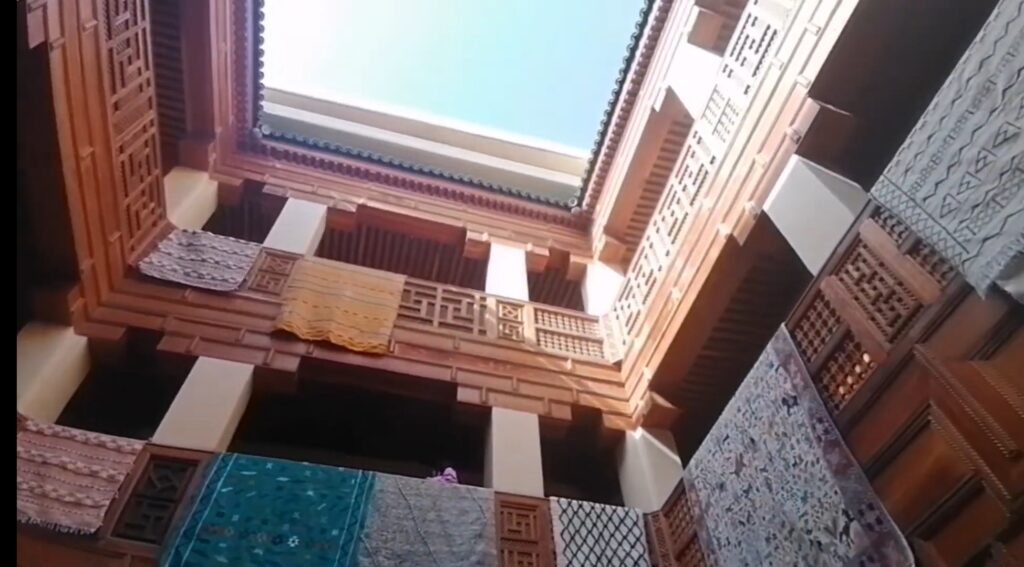
8. Souk Aachabine
Close to the iconic Blue Gate (Bab Boujloud), this market specializes in poultry. Live birds and traditional butcher stalls coexist in a unique and authentic atmosphere.
Bab Boujloud, the Iconic Blue Gate in Fez Medina, Morocco. Image Credit: Abderrahmane Habibi/ Pexels
9. Souk Sekkatine
This unusual souk specializes in equipment for horses, mules, and donkeys. Saddles, reins, and traditional riding gear are produced and sold here.
10. Souk Bellagine
Historically known for wooden locks and wooden clogs worn during the rainy season, Souk Bellagine has evolved but still reflects Fez’s artisan traditions.
Why the Souks of Fez Are Unmissable
The souks of Fez are not just markets — they are living heritage. Stretching along winding streets, they form a true labyrinth filled with colors, scents, craftsmanship, and centuries-old traditions.
From textiles and spices to cosmetics and handmade goods, the souks remain one of Morocco’s most authentic cultural experiences.
Related Posts:
- Fez Named Among Africa’s Top Destinations for 2026 in International Travel Rankings
- Fez Festival 2026: Where Sacred Music Unites the World in Morocco’s Oldest City
- Discover Fez: A Journey Through Morocco’s Spiritual Capital
- Fez Festival 2026: Where Sacred Music Unites the World in Morocco’s Oldest City