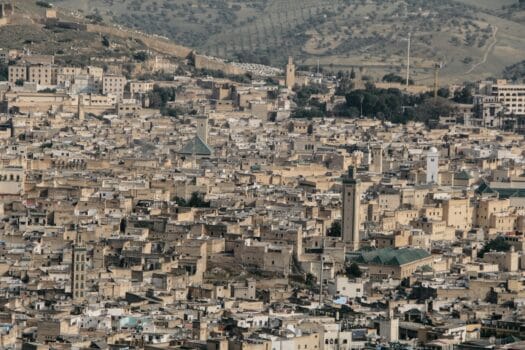
Exploring Fes artisan routes offers one of the most direct ways to understand Morocco’s craft heritage. The medina of Fes, recognized as one of the largest car free urban areas in the world, functions as a living workshop where traditional trades continue to operate within historic structures. For first time visitors, a structured walking plan helps navigate this dense environment while ensuring meaningful encounters with tannery workers, potters, and other artisans.
This guide focuses on a practical walking route through Fes el Bali, the historic core of the city. By following a logical sequence between districts, travelers can reduce navigation complexity and spend more time observing production techniques and engaging with craftsmen.
Starting Point: Bab Boujloud and Entry Into the Medina
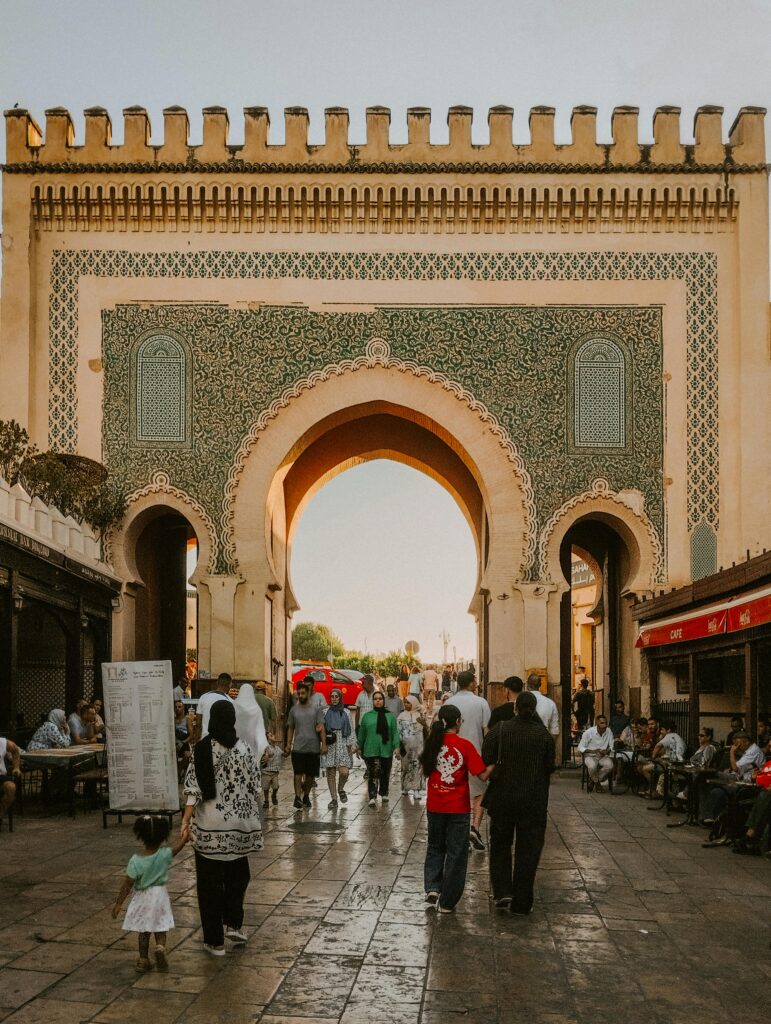
The most efficient starting point for Fes artisan routes begins at Bab Boujloud, the main western gate of the medina. This access point connects directly to Talaâ Kebira, one of the central arteries that structures movement across the old city. Entering through this gate allows visitors to orient themselves quickly before moving deeper into artisan districts.
Once inside, travelers should proceed along Talaâ Kebira for approximately ten to fifteen minutes. This initial segment introduces the rhythm of the medina, including small workshops, food stalls, and local commerce. Establishing this context early helps visitors distinguish between tourist focused shops and active production spaces further inside.
Leather Production at Chouara Tannery
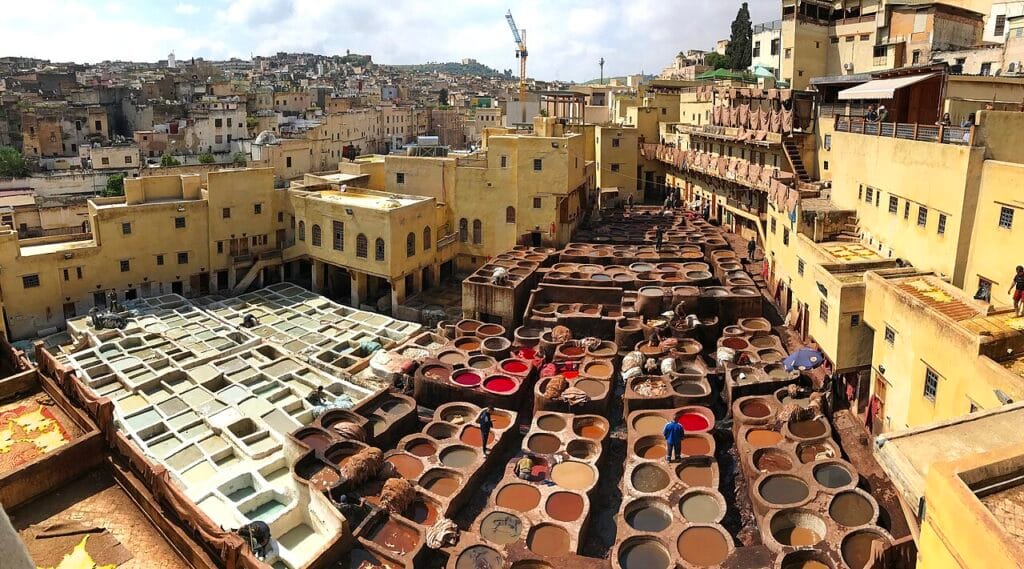
After moving through the main street network, the route continues toward the Chouara Tannery, located in the northeastern section of the medina. This site represents one of the oldest leather production centers in the world, with techniques that have remained largely unchanged for centuries.
Upon arrival, visitors typically access the tannery through surrounding leather shops that provide terrace views. From these vantage points, workers can be seen processing animal hides in large stone vats filled with natural dyes such as saffron, indigo, and henna. The process includes soaking, dyeing, and drying stages that require coordination between multiple workers.
Understanding this process matters because it explains the value of handmade leather goods sold throughout the medina. Observing production allows visitors to connect finished products with the labor intensive techniques behind them.
Entry to viewing terraces is usually free, although shop owners may expect visitors to browse their products afterward. The tannery area lies roughly twenty minutes on foot from Bab Boujloud, depending on walking pace and navigation.
Transition Through Souks and Metalwork Areas
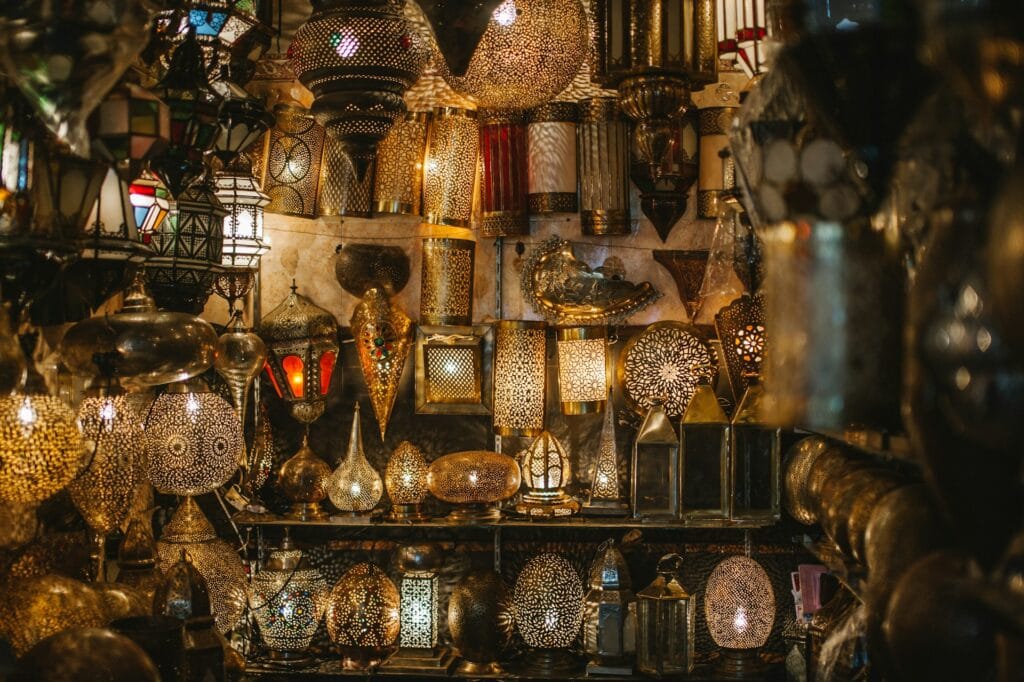
After visiting the tannery, the route continues southwest through interconnected souks. This transition phase plays an important role because it links major artisan sectors within the medina. As visitors move between districts, they encounter metalworkers, carpenters, and textile artisans working in small workshops.
These intermediate zones provide insight into how different crafts coexist within the same urban system. Workshops often specialize in specific techniques, such as brass engraving or wood carving, which support other trades including furniture making and architectural decoration.
Walking through these areas also requires attention to navigation. Using offline maps or following main pedestrian flows helps maintain direction while avoiding unnecessary detours.
Pottery and Zellige Workshops in the Seffarine and Nejjarine Areas
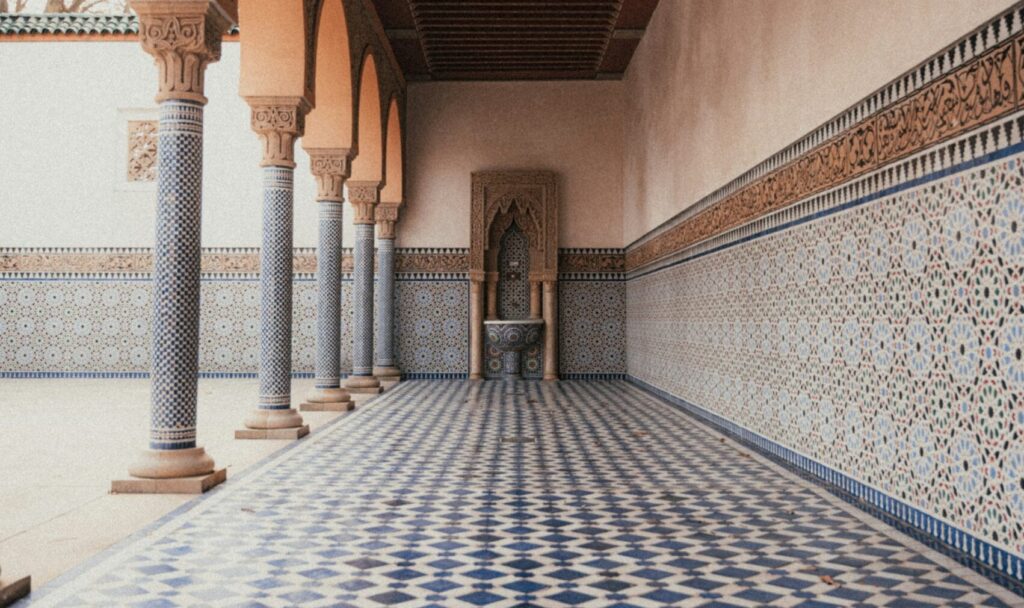
Photo by Luca Severin on Unsplash
The next stage of the walking plan focuses on pottery and zellige production. Visitors should move toward the Seffarine Square and Nejjarine area, which are known for traditional craftsmanship linked to ceramics and woodwork.
Although large scale pottery production occurs outside Fes in areas such as Ain Nokbi, smaller workshops within the medina demonstrate finishing techniques, glazing, and decorative processes. These workshops often display ceramic tiles, bowls, and traditional zellige patterns used in Moroccan architecture.
Observing these processes helps visitors understand how Moroccan design integrates geometry, color, and manual precision. Artisans typically shape, fire, and decorate ceramics using methods passed down through generations, which reinforces the cultural continuity of these crafts.
The distance between the tannery and these workshop areas remains relatively short, usually around ten to fifteen minutes on foot depending on the chosen path.
Nejjarine Museum and Woodcraft Context
At this stage, visiting the Nejjarine Museum of Wooden Arts and Crafts provides additional context. Located near the Nejjarine Fountain, the museum occupies a restored caravanserai that historically hosted merchants and craftsmen.
Inside, exhibitions present tools, furniture, and decorative objects that illustrate the evolution of Moroccan woodcraft. This institutional perspective complements the workshop visits by explaining how individual crafts fit into broader architectural and cultural systems.
The museum entry fee typically ranges between 20 and 30 Moroccan dirhams, and most visitors spend about forty five minutes to one hour exploring the exhibits.
Practical Timing and Walking Conditions
Timing plays a central role in optimizing Fes artisan routes. Starting the walk in the morning allows visitors to observe artisans during active working hours while avoiding peak tourist congestion. Early visits to the tannery also provide better light conditions for observation and photography.
In practice, the full walking route from Bab Boujloud through the tannery and pottery areas requires approximately three to four hours, including stops and interactions. Comfortable walking shoes remain essential because medina streets are uneven and often crowded.
Seasonal conditions also influence the experience. Spring and autumn provide moderate temperatures that support extended walking, while summer heat can make midday exploration more demanding.
Interacting With Artisans and Understanding Value
Engaging directly with artisans enhances the value of the experience. Many craftsmen are open to explaining their techniques when approached respectfully. Simple questions about materials, production steps, or design patterns often lead to informative exchanges.
When purchasing goods, understanding the production process helps evaluate pricing. Handmade items reflect time intensive labor, material costs, and skill development. As a result, negotiating prices should remain balanced and respectful.
This interaction supports local economies while preserving traditional crafts that depend on continued demand.
Conclusion
Following structured Fes artisan routes allows visitors to navigate the medina efficiently while gaining a deeper understanding of Morocco’s craft traditions. By connecting key locations such as Bab Boujloud, Chouara Tannery, and the pottery workshops around Seffarine and Nejjarine, travelers can observe how different artisan sectors operate within a single urban system.
This walking plan transforms the medina from a complex maze into a coherent cultural experience. Once integrated into a broader travel itinerary, it provides a practical and educational approach to exploring Fes through its living craftsmanship.