In the heart of northern Morocco, where olive fields shimmer and Roman ruins sleep under soft hills, Meknès stands like a quiet reflection of Morocco’s imperial past. It carries the grandeur of a royal capital but speaks in calm tones, less theatrical than Marrakech, less labyrinthine than Fès, yet deeply confident in its own legacy.
Between the scholarly spirit of Fès and the ancient stones of Volubilis, Meknès remains the city of measured grace, a place where time feels curated, not conquered.
The Legacy of an Ambitious Sultan
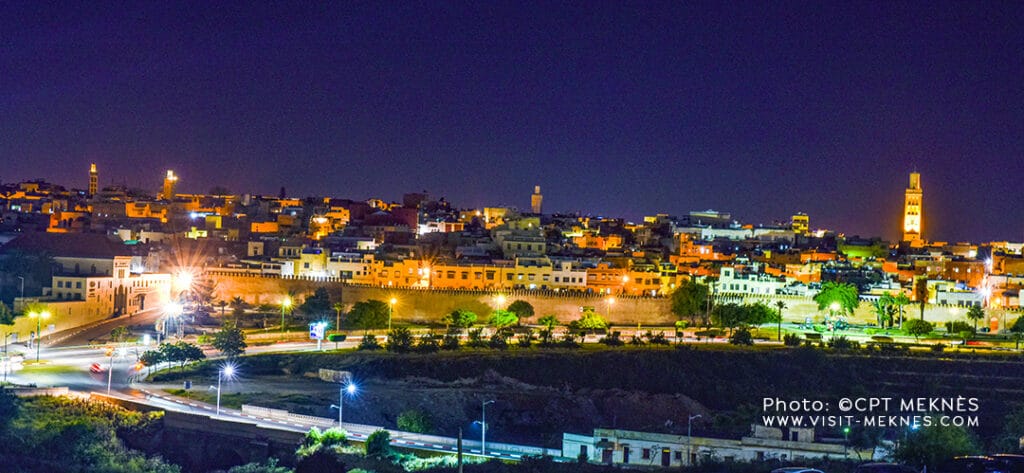
Every street in Meknès carries the vision of Sultan Moulay Ismaïl, the 17th-century ruler who transformed a modest kasbah into a city of empire. Inspired by Versailles, the sultan ordered vast gates, grand stables, and gardens worthy of a royal dream. The result was a city that balanced power and poetry.
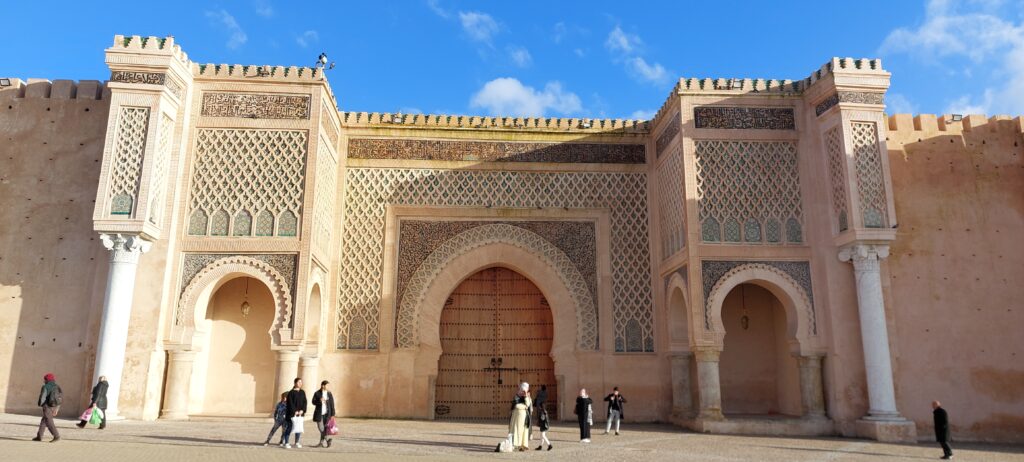
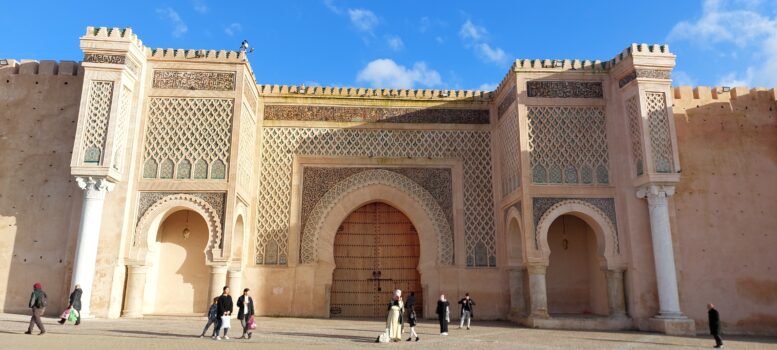
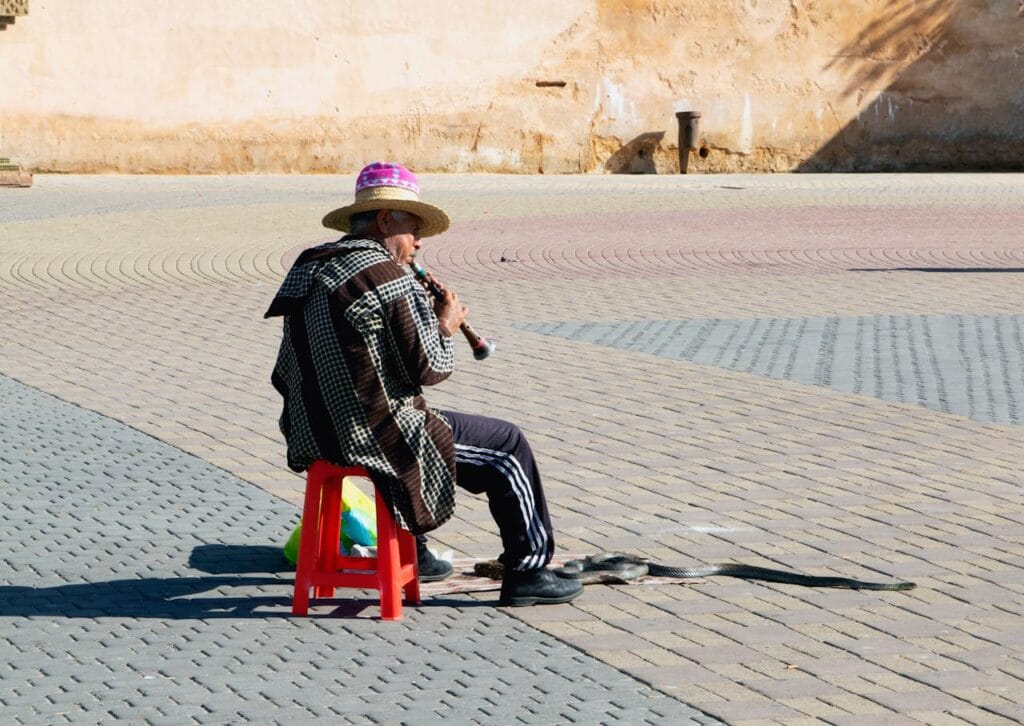
The monumental Bab Mansour, with its green zellij tiles and Kufic inscriptions, still stands as one of Morocco’s most impressive gateways. It leads into the El Hedim Square, a smaller, calmer echo of Marrakech’s Jemaa el-Fna. Storytellers, artisans, and musicians animate the square in the evenings, and as the sun dips, the city’s ochre walls glow like aged parchment.
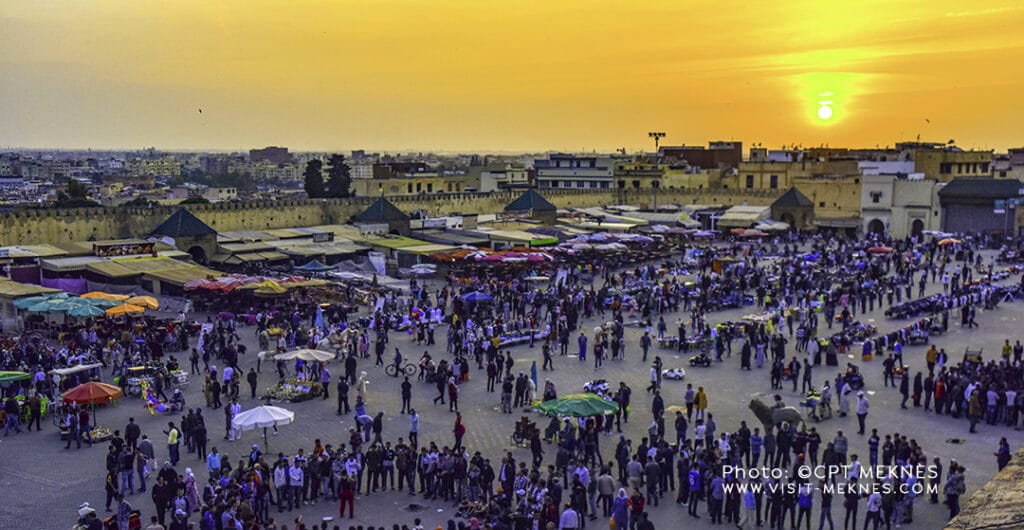
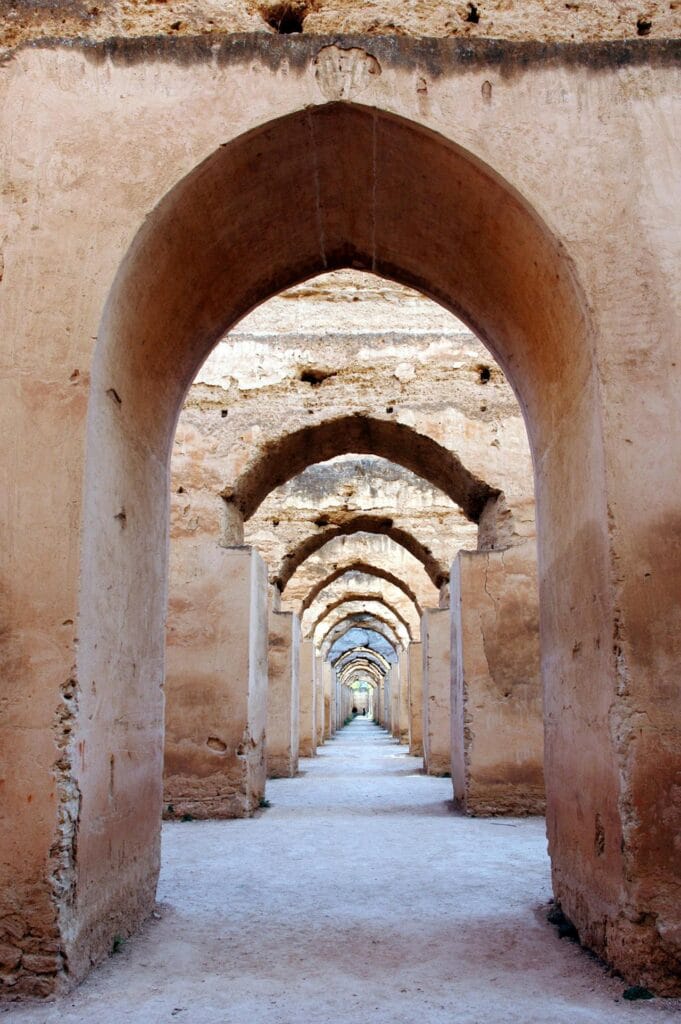
Moulay Ismaïl’s vision extended beyond aesthetics. He built Heris es-Swani, the royal granaries and stables, designed to hold supplies for thousands of horses. Their massive vaults and rhythmic arches still amaze visitors who wander through the cool silence of this architectural masterpiece. It’s easy to imagine the city’s glory days when ambassadors from France and Spain crossed these courtyards, seeking the favor of one of Morocco’s most formidable kings.
Between Fès and Volubilis: The Geography of Stillness
Meknès lies halfway between two worlds: the spiritual intensity of Fès, and the classical calm of Volubilis, Morocco’s best-preserved Roman site. This geography gives the city a unique rhythm. Travelers often find themselves pausing here, letting the road slow down.
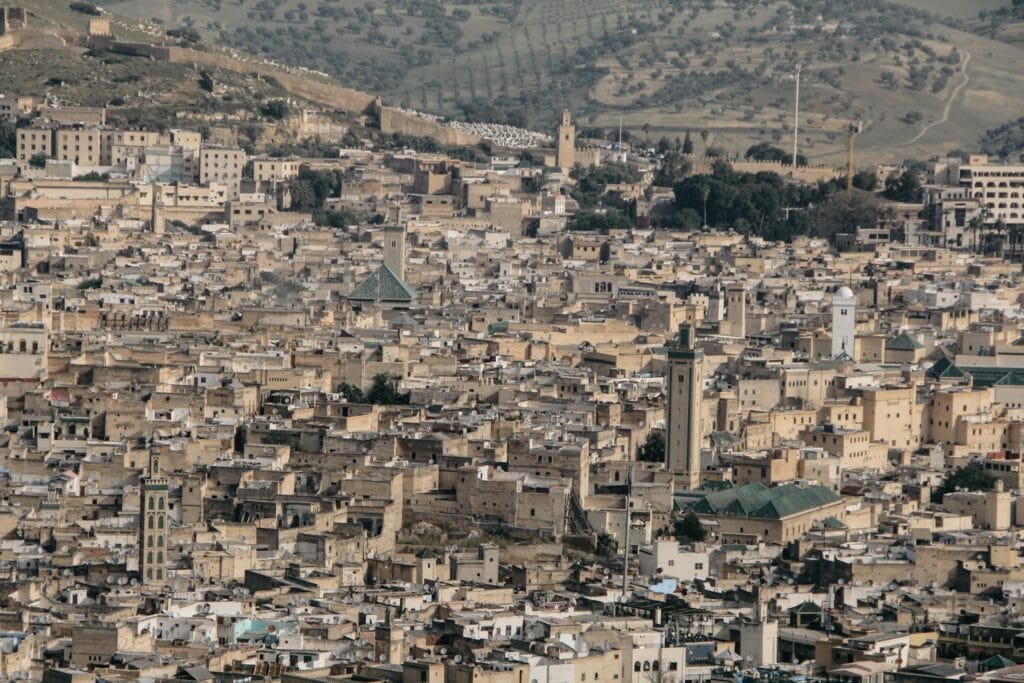
Photo by Matt Dany on Unsplash
The surrounding countryside reveals a softer Morocco: rolling hills, olive groves, and vineyards nourished by the Middle Atlas rain. The road from Meknès to Volubilis feels like an open museum, landscapes layered with history. Within half an hour, one can walk among Roman mosaics in the morning and sip mint tea by Meknès’s medina walls in the afternoon.
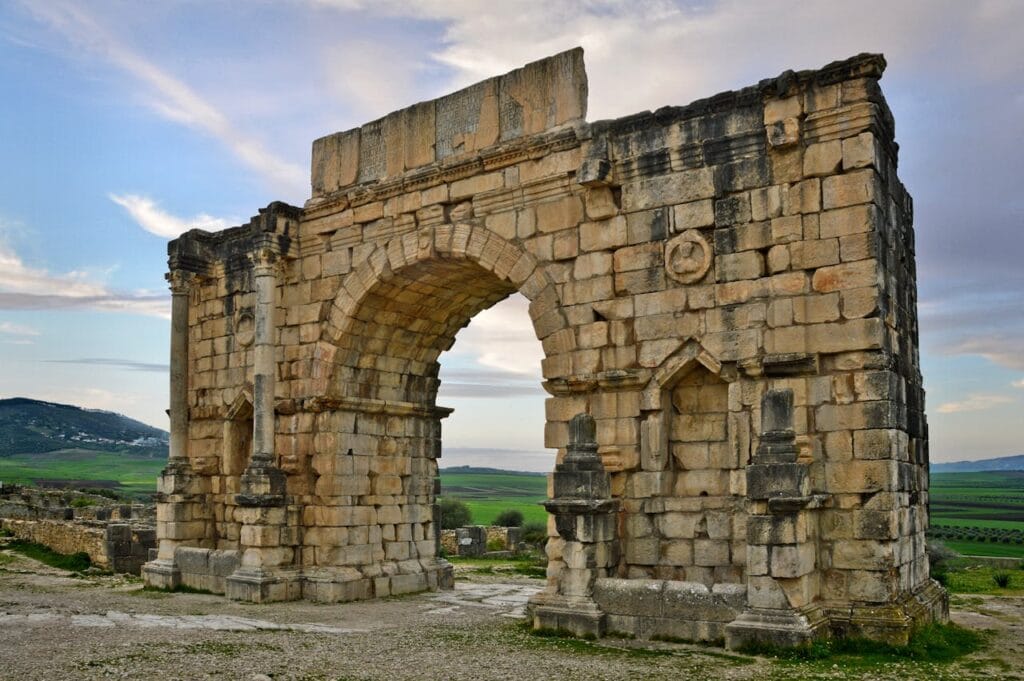
Volubilis itself, once the westernmost outpost of the Roman Empire, complements Meknès perfectly. The ruins of temples, baths, and arches echo the Moroccan love of geometry and symmetry, a design language later perfected in Meknès’s gates and gardens. Together, the two cities tell a continuous story that stretches across civilizations.
Inside the Medina: Calm, Craft, and Color
Meknès’s medina remains one of Morocco’s most authentic, lively but not overwhelming. Narrow streets lined with leather workshops, weavers, and brass artisans lead to peaceful courtyards scented with cedar and jasmine. The city’s souks retain an older rhythm, where merchants still greet regulars by name and tourists are welcomed without haste.
The Nejjarine district, known for woodwork and furniture, showcases local craftsmanship that reflects the city’s refinement. Doors painted in soft blues and greens open onto riads with intricate ceilings and zellij fountains.
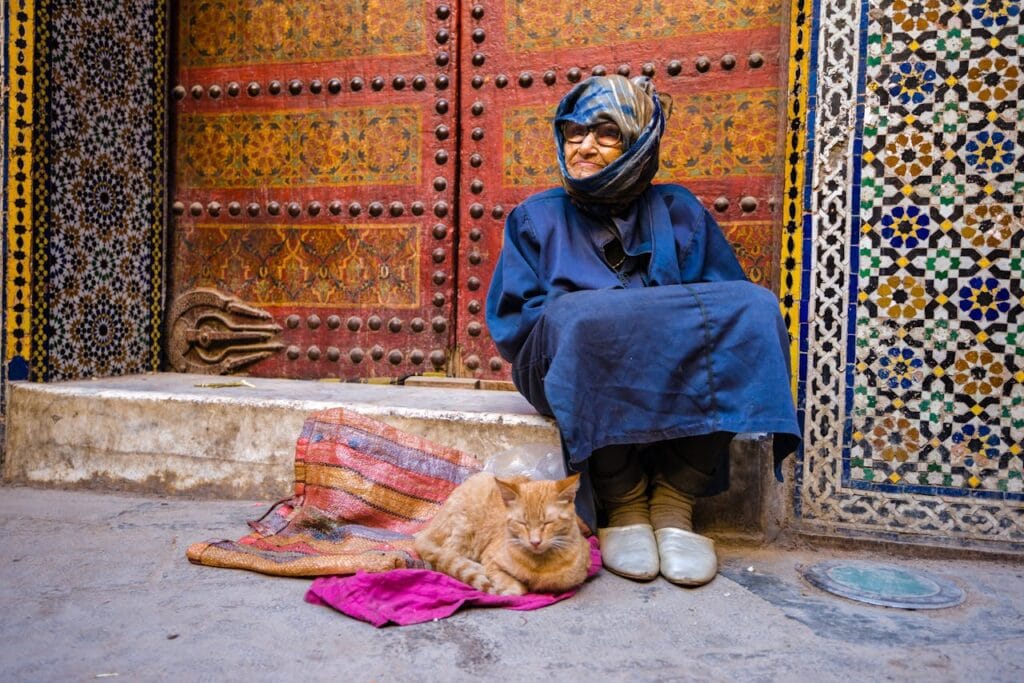
Unlike Fès, where the medina feels like a maze, Meknès’s streets breathe. You can lose yourself, but you rarely feel lost. The pace invites conversation, a tea shared, a story told, a craft explained. This human rhythm defines Meknès more than any monument.
A City of Gates and Gardens
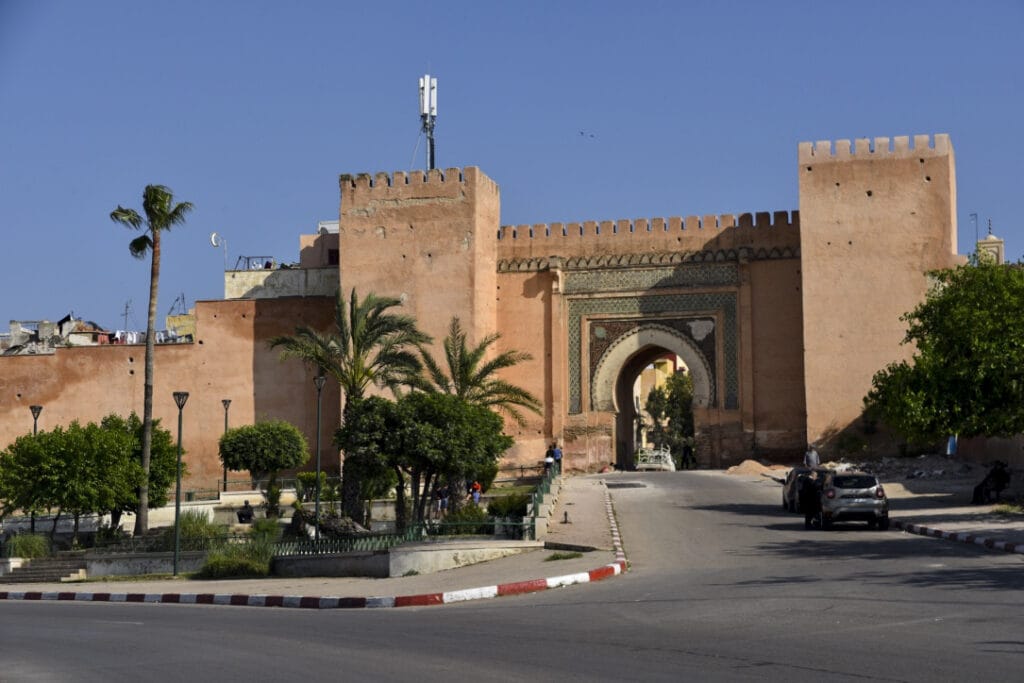
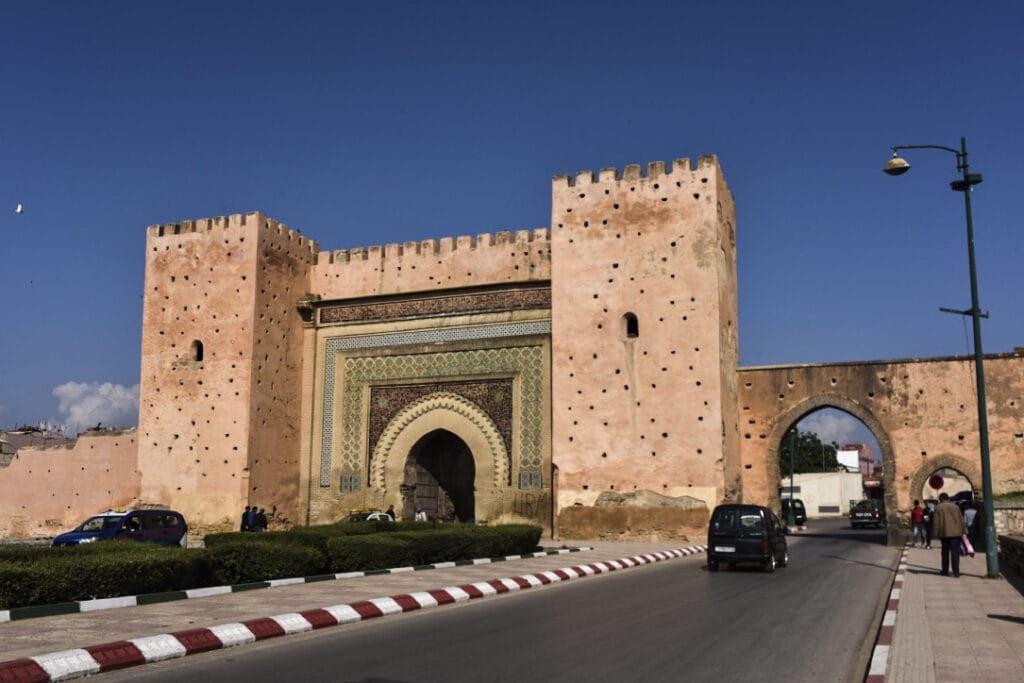
If walls could speak, Meknès’s gates would tell stories of ambition and artistry. The city counts more than forty monumental gates, each one crafted with distinctive tilework and calligraphy. Bab el-Khemis opens onto quiet neighborhoods filled with citrus trees, while Bab Berdieyinne guards the medina’s heart with its sculpted archways.
Beyond the walls, the Agdal Basin and Sahrij Swani lake remind visitors that Meknès was not only built for power but also for pleasure. These vast reservoirs once irrigated royal gardens and supplied water to the stables, turning the city into a symbol of sustainability centuries before the term existed.
Strolling along the lake at sunset, with the walls mirrored in the water, offers one of the most peaceful views in Morocco, a landscape of balance between man-made structure and natural stillness.
The Spiritual and the Everyday
While Meknès is famous for its imperial grandeur, its spiritual soul lives in the Mausoleum of Moulay Ismaïl, one of the few Islamic shrines in Morocco open to non-Muslims. Inside, visitors walk through serene courtyards where light filters through carved cedar screens. The sultan’s tomb, adorned with marble and mosaics, feels both majestic and humble, a fitting tribute to a ruler who dreamed on a grand scale but built with local artisans’ hands.
Nearby, the city’s Zaouia of Sidi Ben Aïssa (Sheikh Elkamel), home to the Aïssawa brotherhood, remains a center of spiritual music. Every autumn, Meknès hosts the Aïssawa Festival, when Sufi musicians and dancers from across Morocco gather to perform hypnotic rituals. For travelers, it’s a chance to witness the country’s living spiritual traditions in an intimate setting.
Modern Meknès: Youth, Creativity, and Renewal
Today, Meknès continues to evolve without losing its calm. The new city district, Hamria, connects past and present through cafés, art galleries, and public gardens. Local artists and photographers are documenting daily life, from market scenes to architectural details, giving Meknès a renewed presence on digital platforms.
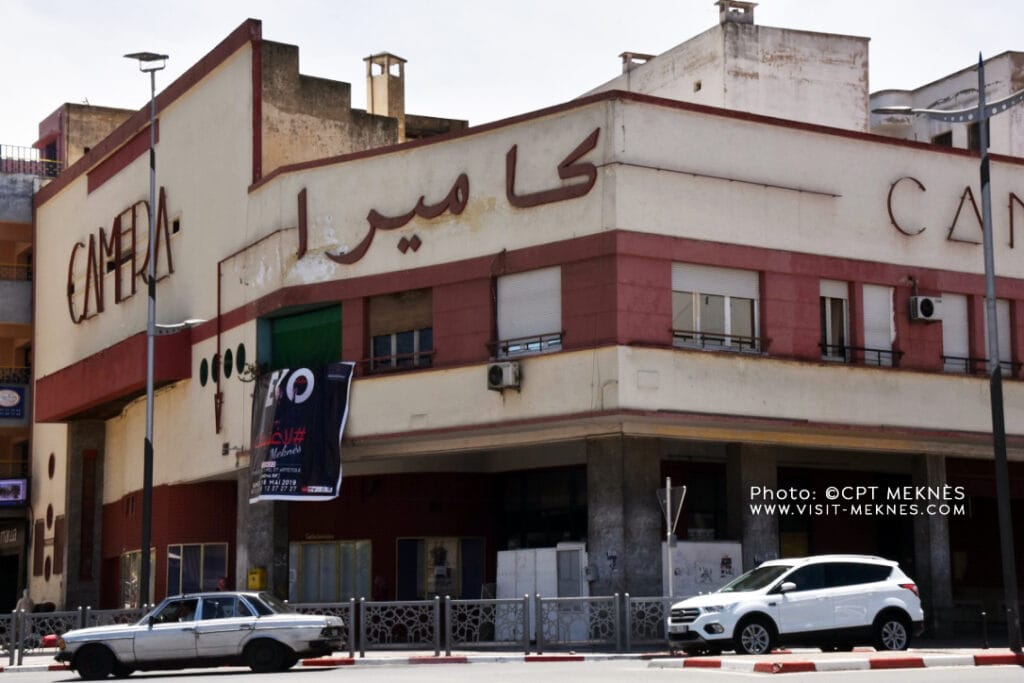
Cultural projects and design schools are emerging, bringing new life to heritage spaces. The city’s proximity to Fès’s universities and Volubilis’s archaeological sites creates a cultural triangle where history and creativity coexist.
Visitors often find that Meknès grows on them slowly. It doesn’t ask for attention; it earns it through detail, the curve of a gate, the echo of footsteps on old tiles, the scent of orange blossom drifting through an open window.
A Pause in the Moroccan Journey
In Morocco’s grand narrative, Meknès is the chapter of reflection, a pause between Fès’s intensity and Volubilis’s silence. It teaches a different kind of beauty, one rooted in proportion, patience, and presence.
For travelers chasing Morocco’s imperial route, Meknès offers balance: imperial but intimate, ancient yet alive. Here, history breathes quietly, artfully, and on its own time.
Related:
- 10 Beautiful Moroccan Gates: Icons of Art, History & Soul
- Fez el-Bali: The Labyrinth City That Rewrote Medieval Urbanism
- The Art of Moroccan Hospitality: Inside a Traditional Riad Stay
- Hassan II Mosque: The Spiritual and Architectural Heart of Casablanca
- Chellah of Rabat: A Timeless UNESCO Treasure of Moroccan Cultural Tourism