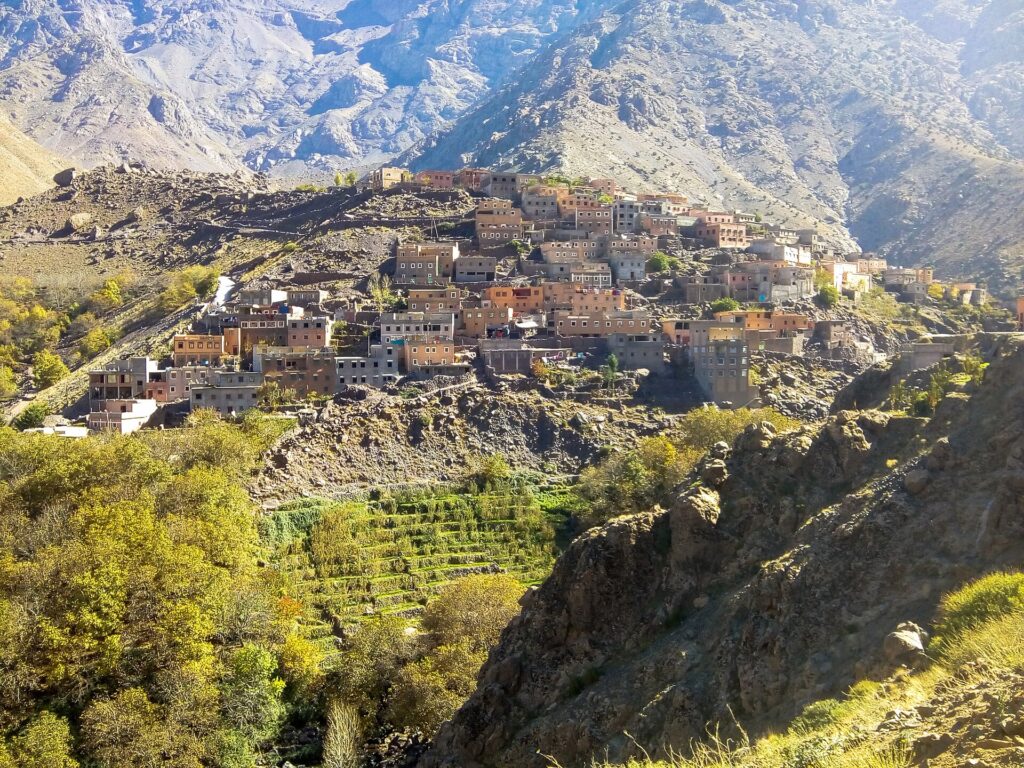
The picture is of a mountain village called Imlil, located in the High Atlas Mountains in Morocco at an altitude of 1800 meters. The nearest city is Marrakesh. Its inhabitants are Berbers, its official language is Amazigh. Its inhabitants retain the ancient Amazigh traditions.
Photo Credit: Mounir Neddi/ Wikimedia.org
Nestled high in the Moroccan High Atlas Mountains, far from the bustle of Marrakech, the Berber village of Imlil is quietly redefining what sustainable tourism can look like. At the foot of Mount Toubkal, North Africa’s highest peak at 4,160 meters, this mountain community has embraced a model of slow, responsible and community-driven tourism that places people, culture and nature at its core.
A Peaceful Alternative to Mass Tourism
While Marrakech ranks among the world’s most visited and increasingly overcrowded destinations, Imlil offers a striking contrast. Life here follows the rhythm of the mountains, rooted in agriculture, traditional hospitality and a deep respect for the land. There are no international hotel chains, no neon signs and limited Wi-Fi — by choice. Instead, visitors are rewarded with crisp mountain air, earthen architecture, and an immersive experience that prioritizes connection over consumption.
According to Metro.co.uk, this deliberate simplicity has become one of Imlil’s greatest strengths, attracting travelers seeking authenticity, calm and meaning rather than speed and spectacle.
The Kasbah du Toubkal: A Pioneer of Responsible Tourism
At the heart of Imlil’s resilience stands the Kasbah du Toubkal, a landmark of responsible tourism founded in 1995 by Mike McHugo and Omar Ait Barmed. Long before sustainability became a global trend, the lodge adopted a community-first approach, employing exclusively local residents and reinvesting 5% of its annual revenue into the Imlil Community Association.
This funding has enabled the village to develop essential services, including the area’s only ambulance, a local waste management system and educational programs focused on empowering women. Tourism here is not extractive — it is regenerative.
A Model Tested by Crisis
The strength of this model became evident following the devastating earthquake of September 2023. Rather than relying solely on external aid, villagers rebuilt homes, paths and tourism infrastructure collectively. The Kasbah du Toubkal reopened thanks to local labor and solidarity, reinforcing the village’s social cohesion and self-reliance.
For residents, tourism has become a vital economic lifeline in the face of climate change. Declining snowfall over the past five years has weakened traditional crops such as walnuts and cherries, making visitor hospitality an increasingly essential source of income.
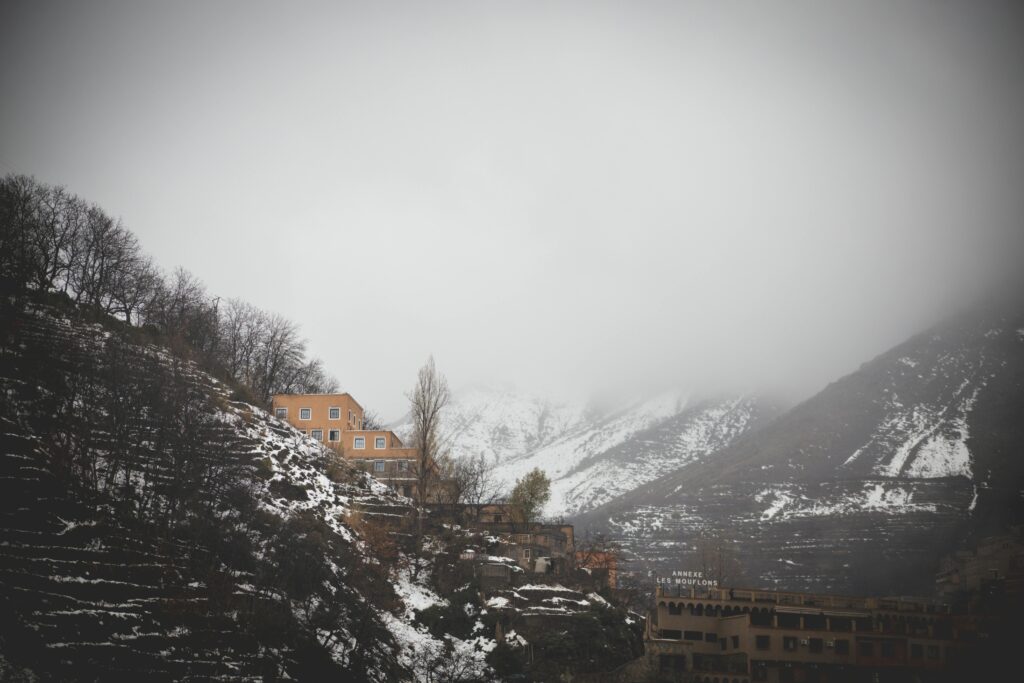
Imlil Village Under Snow. Photo Credit: Hamza Semsamaili/ Pexels
Preserving Culture in a Changing Morocco
Unlike Morocco’s rapidly urbanizing coastal and metropolitan areas, often challenged by water scarcity and overdevelopment, Imlil has chosen a different path. Cultural transmission remains central to the visitor experience. Homestays, traditional tajine cooking, and introductions to the Amazigh language allow travelers to engage directly with local heritage.
This commitment to cultural continuity protects what the villagers describe as their most precious asset: a strong sense of community. As Morocco’s tourism sector continues to expand, Imlil stands as a compelling example of how growth and authenticity can coexist.
Imlil, a Blueprint for Tomorrow’s Travel
In an era where travelers increasingly seek meaningful journeys, Imlil offers a blueprint for the tourism of the future — one built on respect, resilience and shared prosperity. At the foot of Mount Toubkal, this small mountain village proves that the most powerful destinations are often the quietest ones.
Related Moroccan Destinations:
- Surfing in Taghazout, Morocco: The Ultimate Guide to Africa’s Surf Paradise
- Discover Merzouga: Your Gateway to the Magical Sahara Desert in Morocco
- The 7 Most Beautiful Oasis You Must Visit in Morocco
- Ouarzazate: The City of Oases, Kasbahs, and Cinema Magic
- Ait Bouguemez, Morocco’s Hidden Valley Worth the Journey