Estimated reading time: 6 minutes
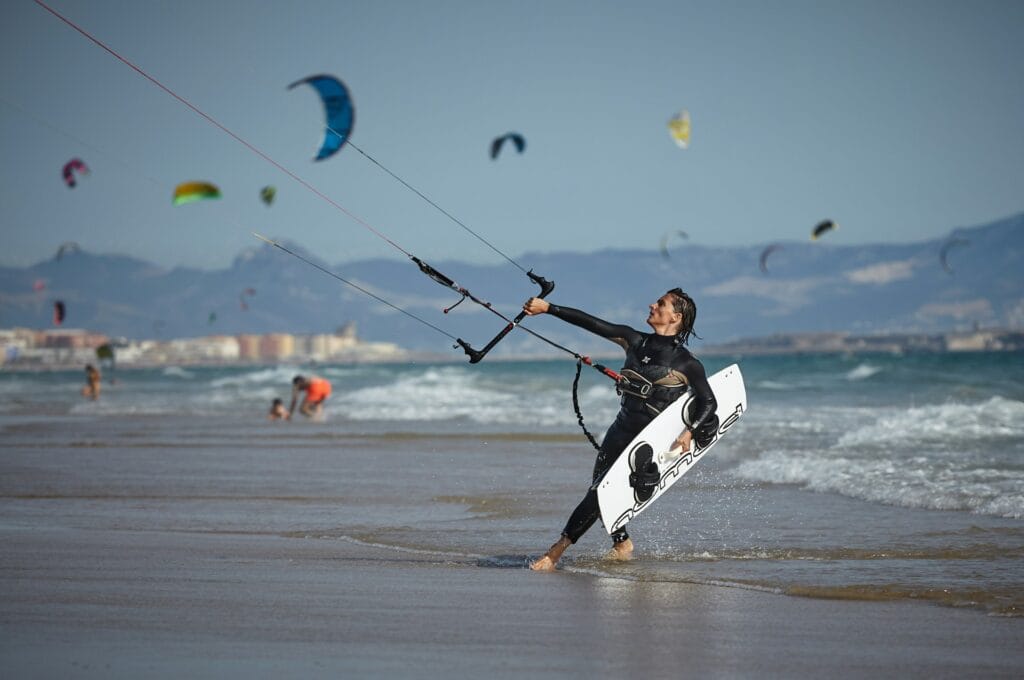
A world-class kitesurfing event in Dakhla is helping Morocco project its soft power ahead of the 2030 World Cup. Photo By Vidar Nordli-Mathisen From Unsplash
If you’re planning your trip, this complete travel guide explains exactly how to get to Dakhla by plane, car, or bus, plus practical tips, costs, distances, and expert advice.
Table of Contents
- 1. Flying to Dakhla
- 2. Reaching Dakhla by Car or Bus
- 3. Must-Stop Places on the Sahara Road
- 4. Organizing Your Arrival
- 5. Best Time to Visit Dakhla
- 6. How Much Does a Trip to Dakhla Cost?
- 7. Top Things to Do After Arrival
- 8. Practical Travel Tips
- 9. FAQ – Travel Guide to Dakhla 2026
1. Flying to Dakhla
The fastest and most comfortable way to reach Dakhla is by air. Dakhla International Airport (VIL) connects major Moroccan cities and selected European destinations.
Flights from Casablanca
Direct flights operate from Casablanca Mohammed V Airport with an average flight time of 2h30. This is the main hub for travelers connecting from Europe or North America.
Flights from Agadir
Direct connections from Agadir are available seasonally and may offer lower fares.
Flights from Europe
Seasonal routes from Paris, Brussels, Madrid and the Canary Islands operate mainly during kitesurf season (October–April).
Pro Tip: Book 4–6 weeks in advance for the best prices. High season runs from October to May.
2. Reaching Dakhla by Car or Bus
Driving from Agadir
Dakhla is approximately 1,700 km south of Agadir via the RN1 coastal highway. Driving takes 16–20 hours depending on stops.
- Fully paved highway
- Routine security checkpoints
- Avoid night driving (camels crossing)
- Fuel stations are spaced out after Boujdour
Bus Options
Long-distance buses operate from Casablanca and Agadir. Travel time from Casablanca: around 24 hours.
| Mode of Transport | Duration (From Agadir) | Est. Cost (2026) |
|---|---|---|
| CTM / Supratours Bus | 18–22 hours | 450 – 700 MAD |
| Private Car | 16–18 hours | Fuel + MAD 300/day rental |
3. Must-Stop Places on the Sahara Road
- Guelmim – Gateway to the Sahara
- Laâyoune – Largest city in the region
- Boujdour – Authentic coastal stop
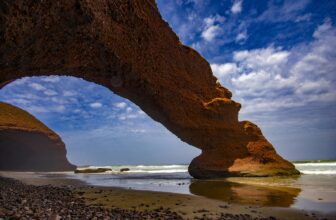
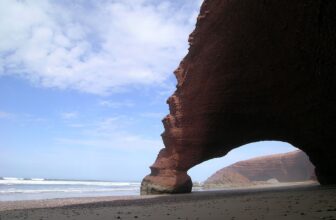
- Oued Chbika – Dramatic red cliffs meeting the Atlantic
- Dunes of Tenbain – Spectacular sunset views before Dakhla
4. Organizing Your Arrival
Car Rental
Small cars start from 300 MAD/day. 4×4 vehicles range from 600–900 MAD/day. A standard car is sufficient unless exploring off-road dunes.
Taxis & Transfers
Airport to city center: 50–80 MAD. Many hotels and kitesurf camps offer shuttle transfers.
5. Best Time to Visit Dakhla
The best period to visit Dakhla is from October to May when temperatures range between 20°C and 28°C.
- Perfect wind conditions for kitesurfing
- Pleasant climate for desert exploration
- Lower humidity compared to summer
Summer months (June–September) can exceed 40°C inland.
6. How Much Does a Trip to Dakhla Cost?
Here is an average budget estimate for a 4-day trip:
- Flights (round trip domestic): 1,500–3,000 MAD
- Hotel or camp (per night): 400–1,500 MAD
- Car rental (4 days): 1,200 MAD
- Meals (daily average): 150–300 MAD
Total average budget: 3,500–7,000 MAD depending on comfort level.
7. Top Things to Do in Dakhla
- Kitesurfing in the Dakhla Lagoon
- Windsurfing
- Fishing
- Visit the White Dune
- Relax at Porto Rico Beach
- Explore the Dragon Island sandbank
- Enjoy fresh Atlantic seafood
For more Morocco travel inspiration, explore our complete tourism coverage on MoroccoBeat.
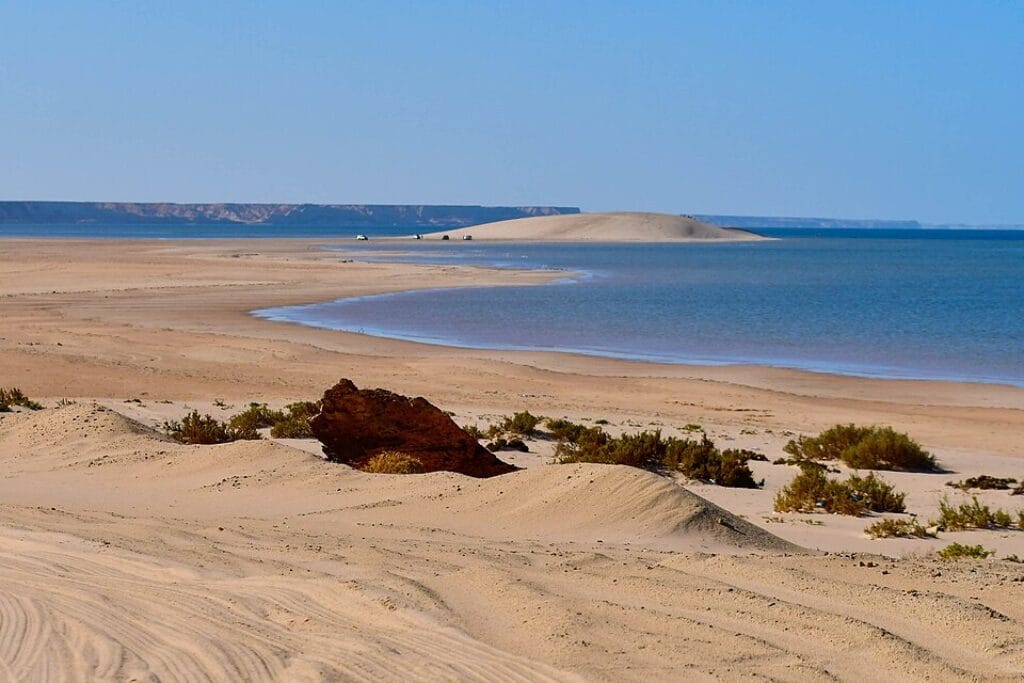
The White Dune in Dakhla, in Morocco By Houssain Tork / Flickr
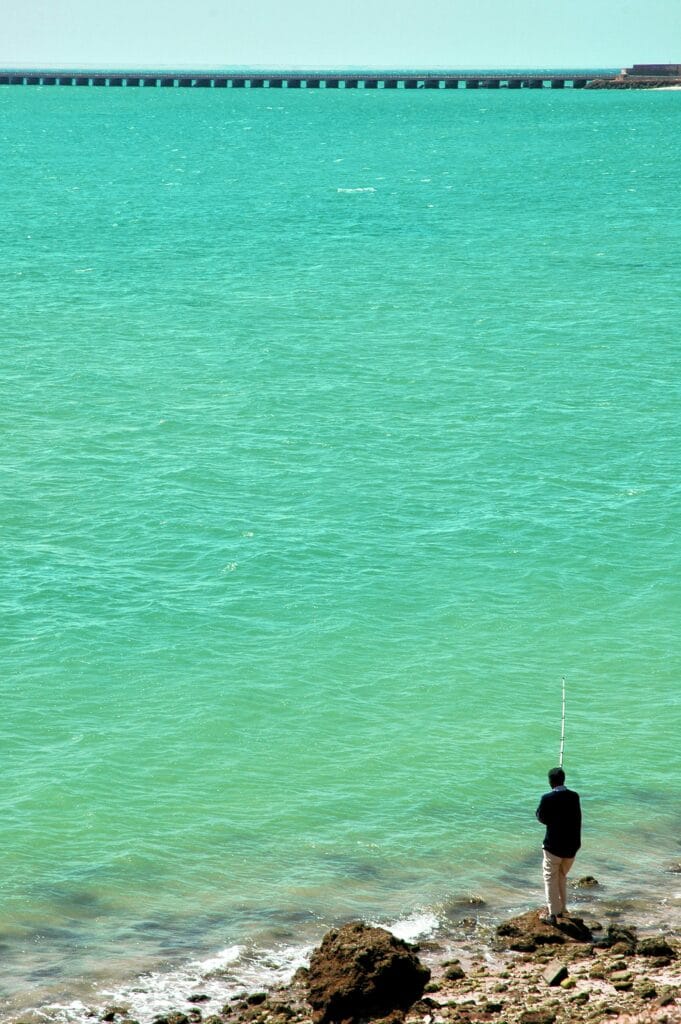
Fishing in Dakhla. Photo by Moussa Idrissi/ Pexels
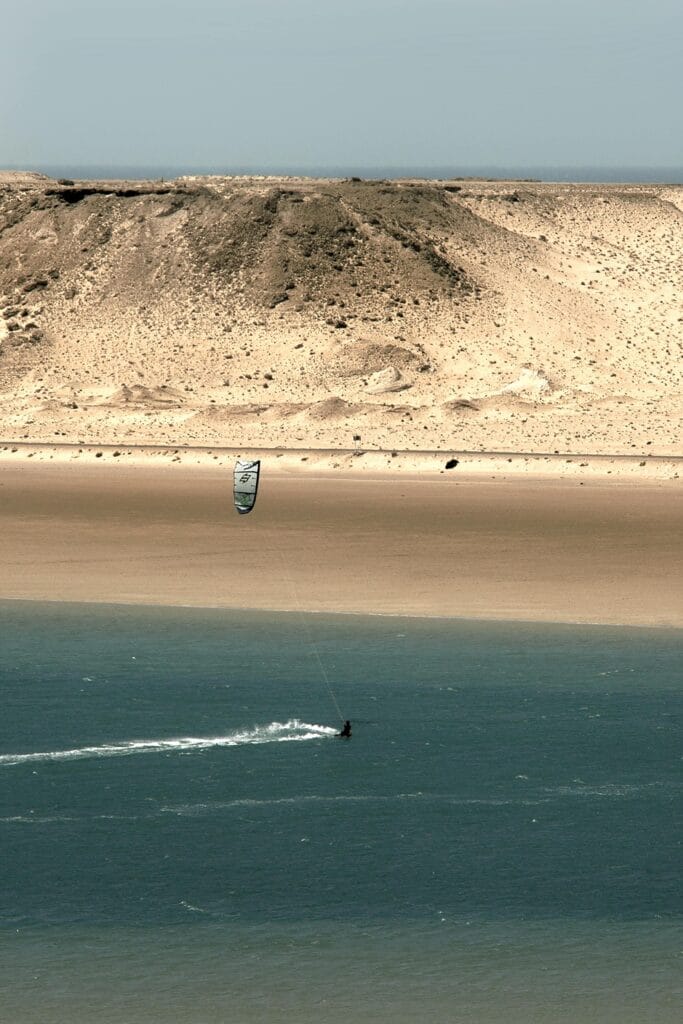
Windsurfing in Dakhla. Photo by Moussa Idrissi/ Pexels
8. Practical Travel Tips
- Valid passport required
- No visa needed for stays under 90 days (EU citizens)
- Carry extra water if driving long distances
- Drive during daylight hours
- Travel insurance recommended
- Car hire at Dakhla Airport starts at 30 – 40€/day for economy models. We recommend a 4×4 only if you plan on deep desert exploration.
- Connectivity: 4G/5G coverage is excellent in Dakhla town but spotty on the long stretches of road between cities.
- Budget: A 4-day trip including flights and mid-range accommodation typically costs between 400 and 750 €.
9. FAQ – Travel Guide to Dakhla 2026
How long does it take to fly from Paris to Dakhla?
With a connection in Casablanca, total flight time averages around 5 hours plus transit time.
Do I need a 4×4 to drive to Dakhla?
No. The RN1 highway is fully paved. A 4×4 is only necessary for off-road desert exploration.
Is the road to Dakhla safe?
Yes. The route is monitored and considered safe. Daytime driving is recommended.
Are there direct flights from the Canary Islands?
Yes. Seasonal flights operate from Las Palmas to Dakhla in about one hour.
Final Thought: Whether you choose to fly or embark on a legendary Sahara road trip, reaching Dakhla is part of the adventure. The journey itself reveals some of Morocco’s most breathtaking landscapes.