
Estimated reading time: 4 minutes
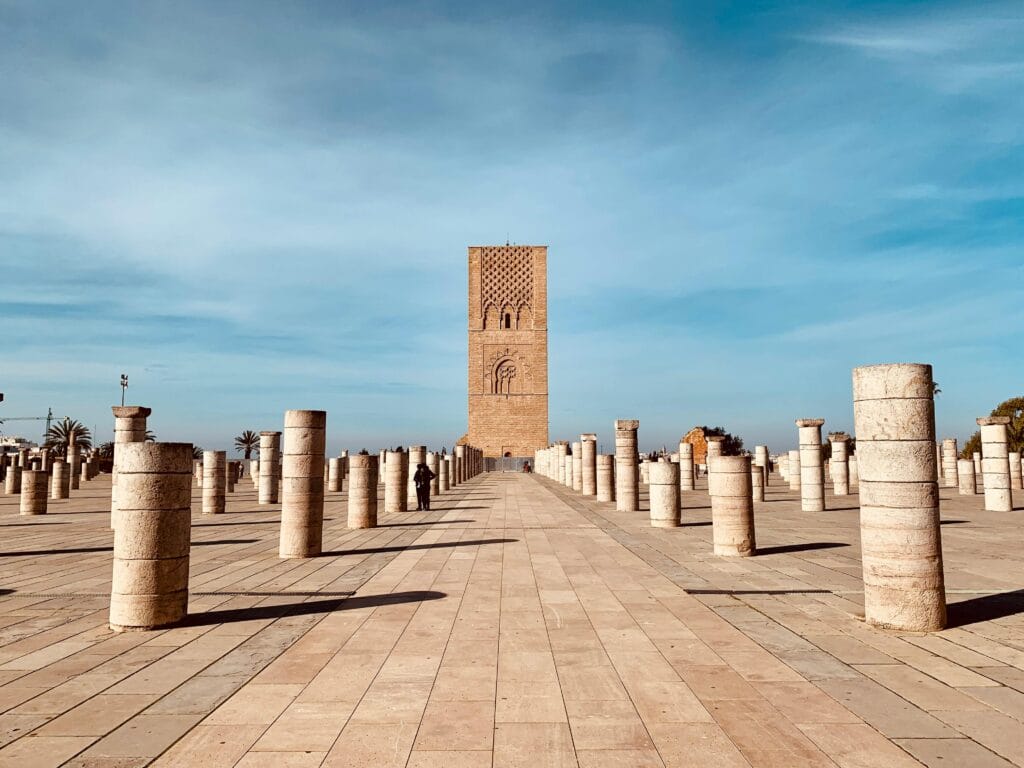
The Hassan Tower in Rabat Morocco By Sarah Hall/Pexels
Overlooking the Bouregreg River, Hassan Tower stands as one of Rabat’s most iconic landmarks, an unfinished Almohad masterpiece that reflects the grand ambitions of a 12th-century empire.
A must-see for visitors exploring Morocco’s capital, Hassan Tower embodies the architectural brilliance of the Almohad dynasty and tells the story of a monumental project left incomplete.
A Monument at the Heart of Rabat
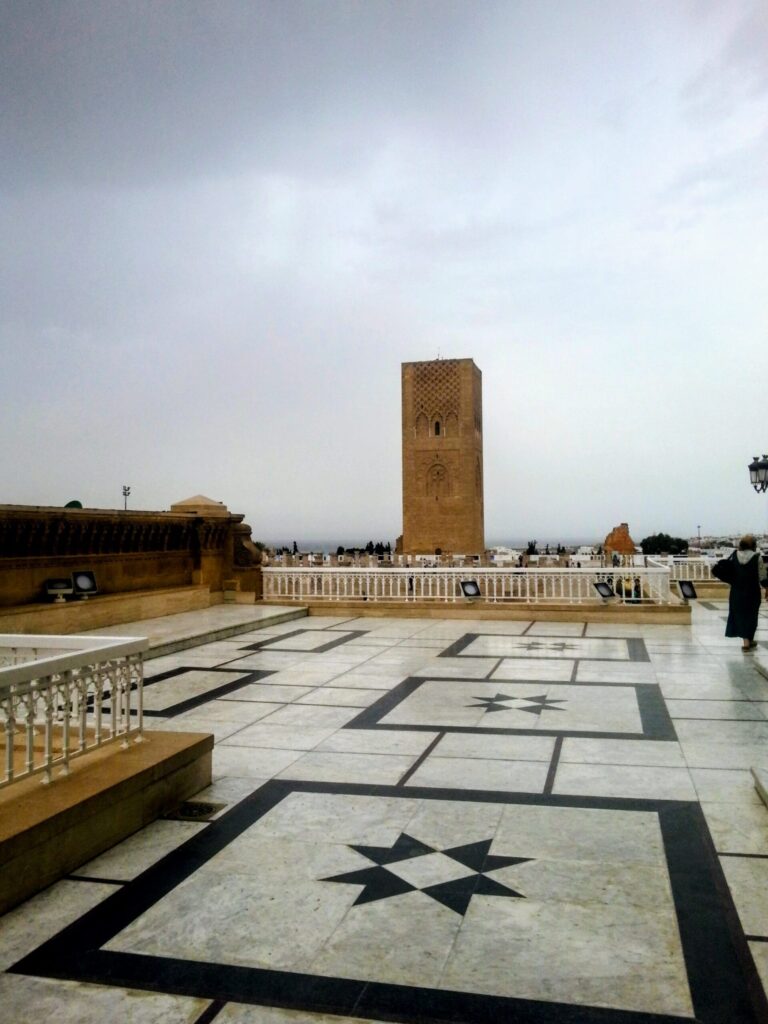
Located on the left bank of the Bouregreg River, the tower dominates an immense esplanade of white stone columns. From the site, visitors enjoy sweeping views over the river, the Kasbah of the Oudayas, and the neighboring city of Salé.
| Feature | Details |
|---|---|
| Current Height | 44 Meters |
| The Esplanade | 200+ marble columns and 44 stone pillars |
| Location | Left bank of the Bouregreg, Rabat |
| Entry Fee | Free (Open to the public) |
An Ambitious Almohad Vision
The project was launched by Sultan Yacoub Al Mansour at the end of the 12th century. His goal was bold: to build the largest mosque in the Muslim world after the Great Mosque of Samarra in Iraq.
Construction began in 1196. However, following the caliph’s death just three years later, the project was abandoned. The minaret, which stands today at 44 meters, was originally intended to reach 80 meters — surpassing the famous Koutoubia Mosque in Marrakech.
Had it been completed, Hassan Tower would have been one of the tallest religious structures of its era.
A Masterpiece of Traditional Moroccan Art
The vast esplanade surrounding the tower features 44 pillars and over 300 marble columns, remnants of the grand mosque that was never finished. The site covers approximately 2,550 square meters.
Each façade of the ochre-colored minaret displays unique carved geometric ornamentation, directly sculpted into the stone. The decorative style closely resembles two other great Almohad monuments: the Giralda of Seville and the Koutoubia of Marrakech.
Inside, the tower contains a gently inclined ramp wide enough for a horse to ascend, a remarkable architectural innovation of the time.
Earthquakes and Restoration
The major event that impacted the monument’s structure was the 1755 earthquake, which caused significant damage. Over the centuries, exposure to ocean humidity, river moisture, climate conditions, and urban pollution further weakened the stone façades.
Between 2015 and 2016, Moroccan authorities invested approximately 17.6 million dirhams in restoration efforts. The renovation restored the monument’s structural integrity and revived its iconic appearance.
Why Visit Hassan Tower?
- Discover a symbol of Almohad architectural ambition
- Enjoy panoramic views over Rabat and the Bouregreg River
- Explore one of Morocco’s most photographed monuments
- Experience a site blending history, art, and urban landscape
- Access a major landmark completely free of charge
Travel Tips
- Best visited at sunset for golden light on the stone façade.
- Combine your visit with the nearby Mausoleum of Mohammed V.
- Wear comfortable shoes, the esplanade is expansive.
- Bring a camera: the site offers some of Rabat’s most iconic views.
An Eternal Symbol of Rabat
Though unfinished, Hassan Tower remains one of Morocco’s most powerful historical symbols. It reflects the ambition of an empire, the elegance of Almohad craftsmanship, and the resilience of a monument that has endured centuries of change.
Standing tall above the capital, the tower continues to define Rabat’s skyline, a reminder that even incomplete dreams can leave a lasting legacy.