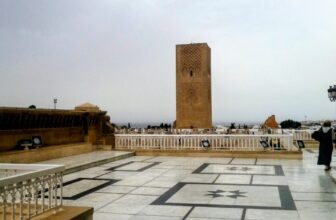
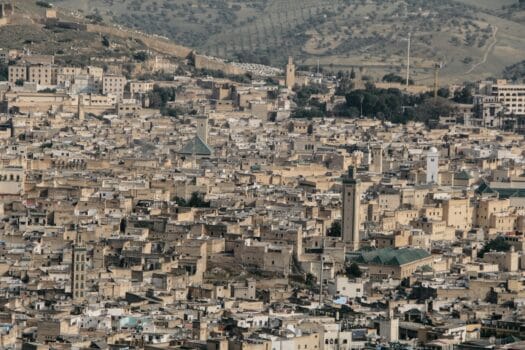
Photo by Matt Dany on Unsplash
Few cities in the world can make you feel as though you’ve slipped through time. Fez el-Bali, the old medina of Fez, is one of them. This ancient Moroccan city isn’t just old; it is a living manuscript of urban genius that reshaped the idea of what a medieval city could be. Built in the 8th century, it still beats with the same rhythm of narrow alleys, echoing artisans’ hammers, and the scent of tanned leather and spices.
A City Designed for the Human Scale
Fez el-Bali’s design was revolutionary for its time. Unlike European medieval cities built around castles or cathedrals, Fez grew from its community. Its design obeyed the needs of people, trade, religion, education, and daily life, rather than the demands of rulers. Streets curve not out of confusion but logic: they follow the terrain, shade pedestrians, and protect privacy from the harsh summer sun.
This “organic” design was the foundation of what modern urbanists today call human-scale urbanism. Every alley, fountain, and souk was placed with purpose.
Related: 10 Beautiful Moroccan Gates: Icons of Art, History & Soul
The Heart of Learning and Trade
By the 13th century, Fez had become one of the most advanced cities in the Islamic world. The University of al-Qarawiyyin, founded in 859 by Fatima al-Fihri, became the oldest existing university in the world. Scholars traveled from Cairo, Cordoba, and even Paris to study mathematics, astronomy, and theology within its walls.
The streets outside mirrored this intellectual spirit. Traders from across Africa and the Mediterranean brought silk, gold, perfumes, and manuscripts. The city became a meeting point of ideas — a bridge between Sub-Saharan Africa and the Arab-Andalusian world.
A Maze of Social Order
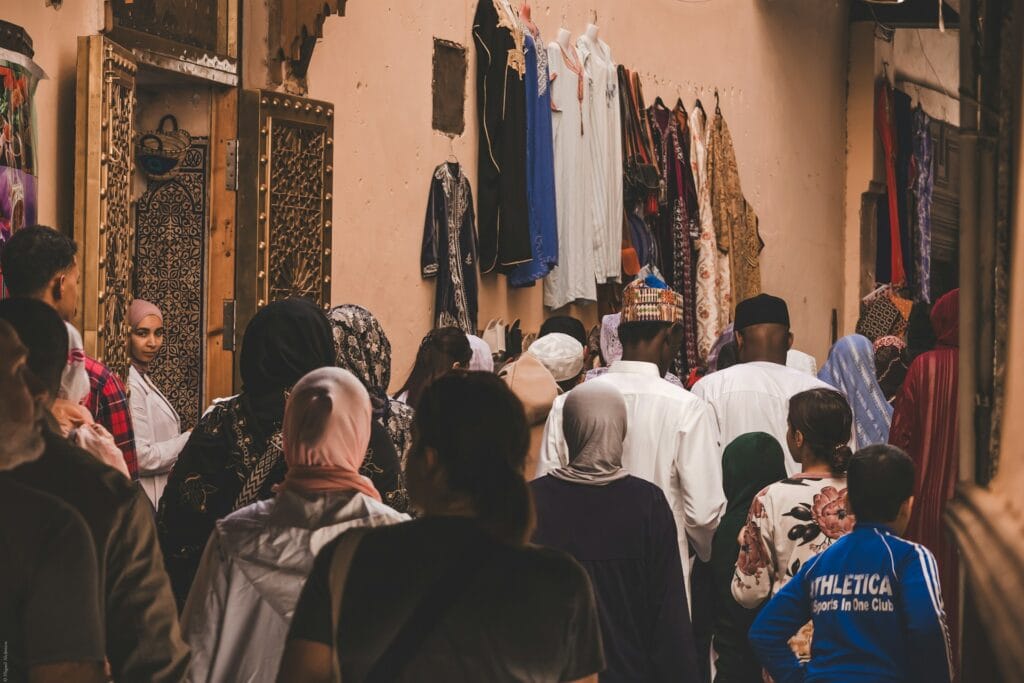
Walking through Fez el-Bali today can be overwhelming, more than 9,000 narrow lanes twist and turn under ancient arches. Yet, there is order beneath the chaos. Each quarter historically served a specific purpose. Some housed blacksmiths and leather tanners, others scholars or merchants. The closer one lived to the mosques, the higher the social status. Farther away were workshops and caravanserais, the hotels of their time for travelers and traders.
This structure created a self-contained ecosystem, balancing social interaction and privacy. Families lived above their workshops, and every neighborhood had its own hammam, bakery, and mosque. It was a city that breathed with its residents, not against them.
Sustainability Before the Term Existed
Long before the concept of “eco-friendly cities,” Fez had mastered sustainable living. Houses were built from local clay and lime, keeping interiors cool in summer and warm in winter. Rainwater was collected through complex underground channels, while the river Fez powered mills and tanneries.
Even waste was recycled. Animal hides became leather, and leftover organic matter fed animals. The city’s medieval urban planning created a sustainable system that modern architects now study as a model of circular design.
The Soul of Craftsmanship
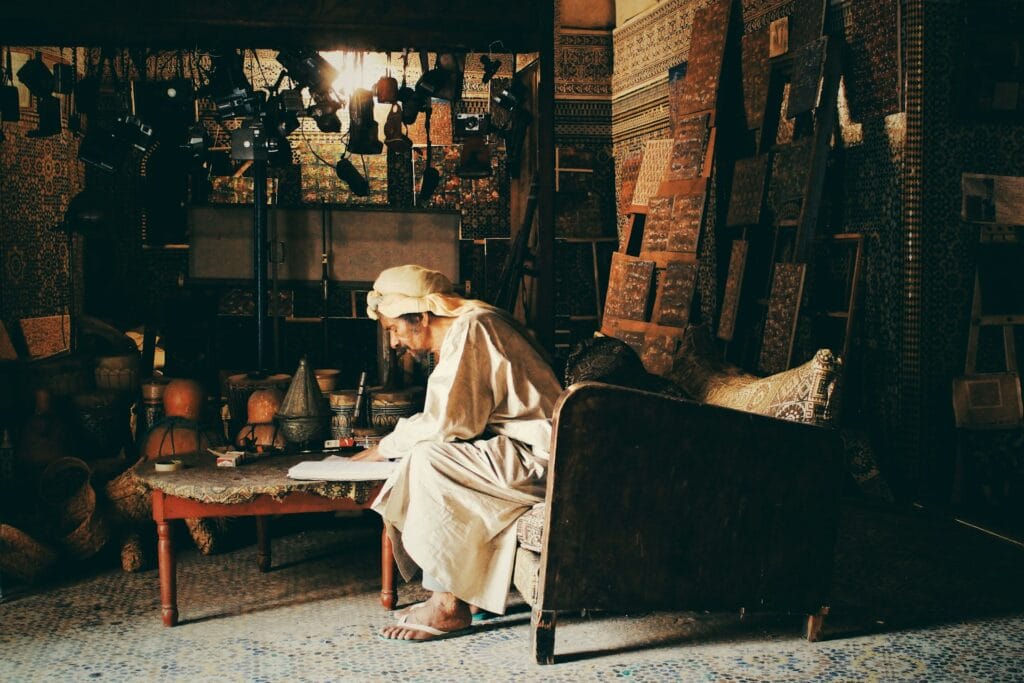
Photo by Anna Jahnon Unsplash
Few places on earth showcase such continuity of craft. In Fez el-Bali, artisans still use the same techniques as their ancestors. At the Chouara Tannery, one of the world’s oldest, workers stand knee-deep in vats of natural dye, turning raw hides into leather with pigeon droppings and lime, an art that hasn’t changed since the 11th century.
The medina is alive with sounds of hammers shaping brass, looms weaving silk, and chisels carving zellij tiles. Each craft is not only a profession but a form of cultural memory. Together, they create an urban orchestra that keeps the city’s medieval soul intact.
Fez and the Future of Urban Heritage
As Morocco prepares for global attention with the 2030 World Cup, Fez el-Bali stands as a reminder of the country’s architectural heritage. UNESCO recognized it as a World Heritage Site in 1981, citing its “outstanding universal value.” Yet its real value lies in how it continues to function, not as a frozen museum but as a living city.
Urban planners around the world now study Fez to learn how pre-modern cities achieved walkability, mixed-use zoning, and energy efficiency without machines or concrete. The medina’s density supports thousands of residents without cars or high-rises. Its design encourages community over isolation, something many modern cities struggle to achieve.
Related: Discover Fez: A Journey Through Morocco’s Spiritual Capital
A Living Blueprint for Future Cities
Fez el-Bali goes beyond being an ancient settlement; it stands as a philosophy carved in stone. The medina reshaped medieval urbanism by placing people, sustainability, and learning at its core. Every corner still invites discovery and reflection.
Each curve, tile, and call to prayer tells the story of a community that built in harmony with the land and the human spirit. While many modern cities rise in glass and steel, Fez continues to prove that true progress begins when design serves life, not the other way around.