Estimated reading time: 4 minutes
Caves of Hercules Tangier: Legend, History & Visit Guide 2026
Morocco is home to extraordinary natural monuments, and the Caves of Hercules stand as one of Tangier’s most iconic coastal landmarks. Here, the raw power of the Atlantic Ocean meets thousands of years of human history and ancient storytelling.
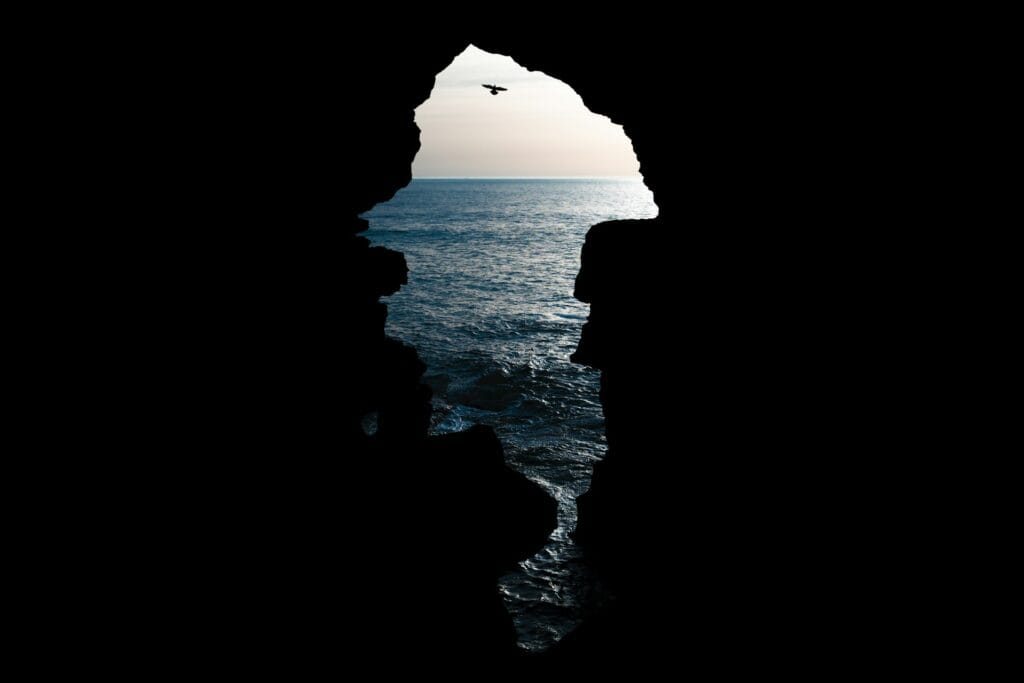
The iconic Africa-shaped opening of the Hercules Caves overlooking the Atlantic Ocean near Tangier.
Image credit: Othman Alghanmi / Unsplash.
A Natural Monument Shaped by the Atlantic
Discovered in 1906 and classified as a historical heritage site in 1950, the caves represent a unique collaboration between nature and man. While the ocean carved the initial hollows, ancient civilizations expanded them to quarry millstones, creating the dramatic architecture seen today.
Following a significant 10 million MAD restoration, the site now offers modern facilities including secure walkways, professional lighting, and a selection of traditional cafes that overlook the Strait of Gibraltar.
| Site Feature | Detailed Information |
|---|---|
| Location | 15 km from Tangier, near Cap Spartel & Achakar Beaches |
| Key Icon | The “Map of Africa” sea-facing window |
| Historical Status | UNESCO-listed Heritage (Classified 1950) |
| Entrance Fee |
|
The “Map of Africa” and the Atlantic Soul
The cave’s most photographed feature is undoubtedly the sea-facing opening. Formed by the relentless erosion of Atlantic waves, the silhouette is a near-perfect mirror of the African continent. Watching the turquoise light of the ocean pour through this frame is a cinematic experience that captures the essence of Tangier’s geographical importance.
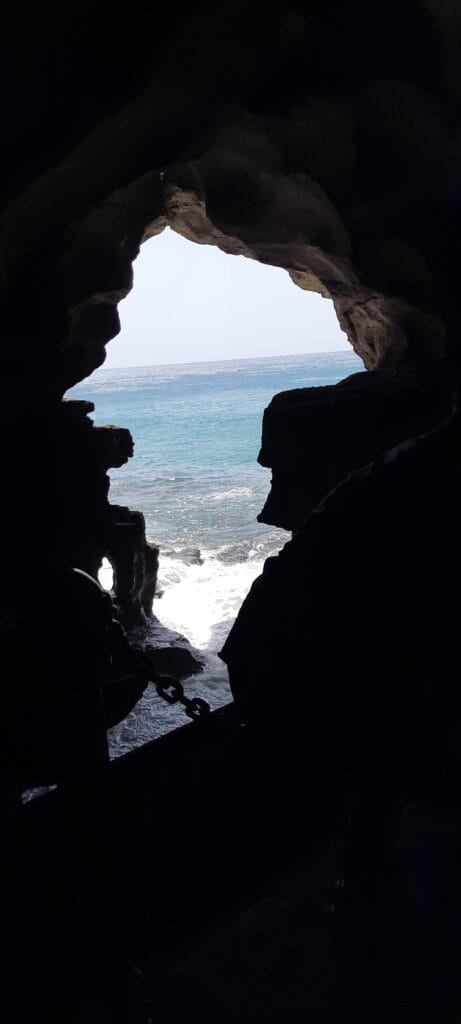
Hercules Caves, with the “Map of Africa” and the Atlantic Soul
The Legend of Hercules in Morocco
In 2026, the myth of Hercules remains as vibrant as ever. Greek mythology identifies northern Morocco as the home of the Gardens of the Hesperides. It was here that Hercules had to perform his 11th labor: stealing the golden apples of immortality from the daughters of Atlas.
Legend tells us that Hercules was so exhausted after slaying the hundred-headed dragon that he sought refuge in these caverns. Local tradition points to specific rock formations within the caves as the “footprints” and the “resting bowl” left behind by the demigod. Another popular belief suggests that the caves were once a sanctuary for an ancient civilization protecting itself from Mediterranean threats.
Why Visit in 2026?
As Morocco moves toward Vision 2030, the heritage of Tangier is being highlighted as a bridge between Africa and Europe. The Caves of Hercules represent this connection perfectly—a site where ancient myths from the north meet the geological heart of the south.