Spain, Portugal and Morocco have firmly resisted proposals to expand the 2030 FIFA World Cup to 64 teams, preferring to preserve structure, quality and their roles as hosts. Their opposition reflects serious logistical, sporting, and symbolic concerns, not mere turf protection. Here’s why the trio is pushing back.
1. Maintaining Tournament Coherence and Quality
One key worry lies in dilution of match quality. With 64 teams, weaker sides could fill many slots, leading to one-sided games that undermine drama and competitiveness. The current 48-team format already stretches balance across confederations. Increasing numbers further risks turning opening rounds into predictable affairs. Critics warn against overextending the tournament’s competitive logic. FIFA sources reportedly say that many in the organization believe 64 teams “would damage the World Cup” by introducing too many uncompetitive matches.
Moreover, the host nations fear that an enlarged format weakens their leverage. Expanding teams often means expanding venues, match allocation, and revenue splits, variables that can erode the control hosts now expect.
2. Logistics, Infrastructure & Scheduling Strain
Hosting 64 teams increases the burden on stadiums, accommodations, transport systems, and match scheduling. Spain, Portugal, and Morocco already committed to a 48-team layout with specific venue plans, reconfiguring that at this stage risks major disruption. Travel, match spacing, rest days, broadcasting slots, security and hospitality all multiply in complexity under expansion.
They have also argued that their concessions, allowing inaugural matches in South America (in Uruguay, Paraguay, Argentina) to honor the centenary, already reflect significant flexibility. They expect FIFA to first prove the viability of the 2026 expansion before considering further changes.
3. Protecting Host Role and Tournament Identity
By resisting expansion, these co-hosts affirm their central roles. An enlarged field tends to diffuse hosting influence across broader geographies. For Spain, Portugal and Morocco, preserving match density, location prominence and fan experience are critical. Their planned share of matches would shrink under a 64-team format.
There is also symbolic weight: this World Cup marks the 100th edition. Hosting nations expect a clean, iconic, tightly controlled tournament, not an overly inflated one that complicates their narrative.
Related: FIFA’s 64-Team Proposal for the 2030 World Cup: What It Could Mean for Morocco
4. FIFA’s Position and Pushback Pressure
Even within FIFA, voices question 64 teams for 2030. Though the proposal came from CONMEBOL to mark World Cup centenary inclusion, FIFA has publicly stated it has made no decision and currently has no firm plan for 64 teams.
Many football executives and analysts argue that the 48-team format is new and untested enough, and that adding 16 more slots now would be premature. Expansion critics urge caution: logic, calendar, and coherence warrant careful pacing before further scaling.
Related: Morocco’s Rising Voice at FIFA: Four High-Level Seats Won on International Committees
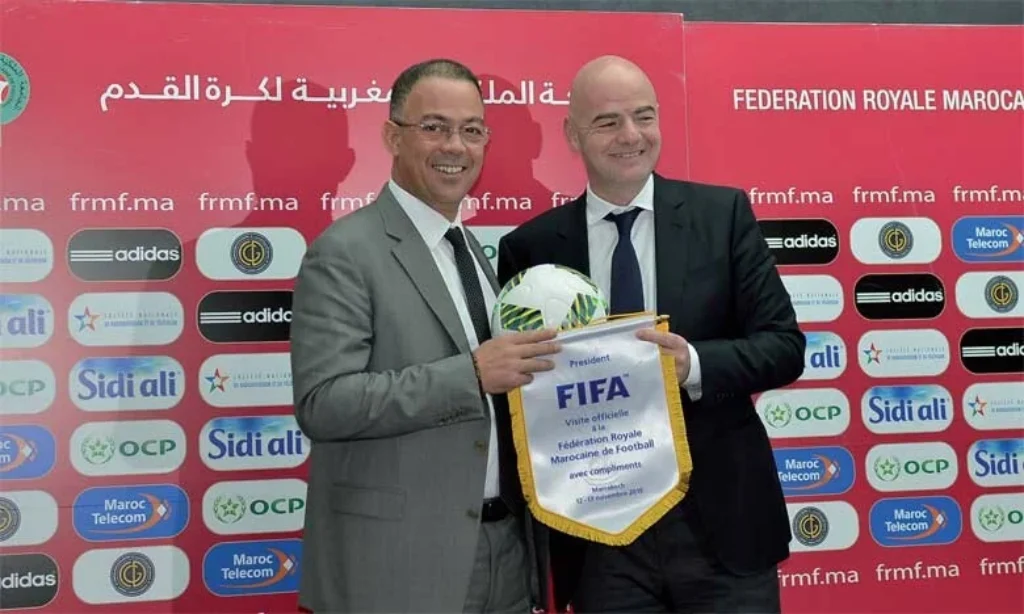
Spain, Portugal and Morocco see the moment differently: they are not rejecting innovation outright, but defending the idea that growth must respect structure. Their stand reflects a belief that a World Cup’s prestige depends on balance, between inclusion and excellence, expansion and identity.
If FIFA ultimately backs 64 teams, the hosts intend to negotiate carefully rather than absorb change. For now, their refusal shapes the debate. The 2030 edition promises novelty, but not at the cost of a World Cup overloaded by ambition without control.