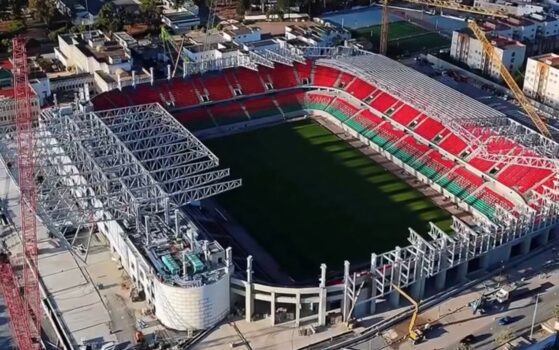
Prince Moulay El Hassan Stadium Upgrade: Rabat’s €22M Investment for AFCON 2025 & World Cup 2030
When a nation prepares not only to host but to perform on the global stage, infrastructure becomes a statement of intent. In Rabat, the allocation of more than MAD 209.7 million (≈ US $22.65 million) for the upgrade of the Prince Moulay El Hassan Stadium reflects exactly that ambition.
With the Africa Cup of Nations 2025 and the 2030 FIFA World Cup on the horizon, Morocco is accelerating its transformation of sports venues to meet global expectations.
The Why: Hosting Ambitions & Global Expectation
Morocco’s long-term vision for major international tournaments requires stadiums that go beyond basic compliance. They must deliver excellence in safety, comfort, broadcasting capability, and fan experience.
The upgrade of the Prince Moulay El Hassan Stadium is part of a nationwide program led by public authorities to align Moroccan sports infrastructure with CAF and FIFA standards.
According to official tender documentation, the renovation covers structural works, metal frameworks, internal systems, and finishing upgrades aimed at transforming the venue into a world-class stadium.
What Will Change?
The renovation focuses on several key infrastructure pillars:
- Structural reinforcement: Upgrading the stadium’s core framework to ensure long-term durability and safety.
- Internal systems modernization: Improvements to electrical networks, plumbing, accessibility routes, and spectator services.
- Pitch and technical infrastructure: Enhancing playing surfaces and match-ready systems for international competitions.
These upgrades go beyond aesthetics. They ensure operational excellence for players, fans, broadcasters, and event organizers.
From Local Venue to Global Stage
For Rabat, this investment represents both a local and national transformation. During construction, it generates employment and stimulates the local economy. Once completed, it strengthens the city’s position as a key sports hub in Morocco.
At a national level, it signals Morocco’s determination to become a benchmark for sports infrastructure in Africa, particularly in preparation for AFCON 2025 and the 2030 FIFA World Cup.
Each stadium upgrade contributes to a broader narrative: Morocco is not only hosting major events, it is redefining how they are hosted.
Potential Challenges & Key Questions
Large-scale infrastructure projects naturally come with expectations and responsibilities. Several key factors will determine long-term success:
- Timely delivery: Coordinating multiple stadium projects across the country requires strict scheduling and execution.
- Quality consistency: Ensuring uniform standards across all upgraded venues nationwide.
- Post-event usage: Guaranteeing long-term utilization of stadiums beyond AFCON and World Cup events.
- Operational readiness: Transport access, crowd management, and safety systems must match physical infrastructure quality.
A Symbol of Morocco’s Ambition
The modernization of the Prince Moulay El Hassan Stadium is more than a construction project. It is a symbol of national ambition, reflecting Morocco’s determination to compete at the highest level of global football infrastructure.
For fans, athletes, and future generations, it represents a promise: that Morocco is building not only stadiums, but opportunities, dreams, and international recognition.
Closing Thought
In global sports, infrastructure defines reputation. With over MAD 209.7 million invested in Rabat’s stadium upgrade, Morocco reinforces its position as a rising benchmark in African and international football hosting.
If delivered as planned, the Prince Moulay El Hassan Stadium will stand as a flagship example of how infrastructure investment can shape a nation’s global sporting identity.
Related Articles
- Royal Vision: Harmonizing Grand Projects and Social Progress
- Agadir Shines: Agadir Ready for AFCON 2025
- Hassan II Stadium: Morocco’s 115,000-Seat Giant
- World Cup 2030: Morocco’s Vision to Host in Style
MoroccoBeat – Inspiring Stories, Positive Energy, Proudly Moroccan.