
Rabat, Morocco – As Morocco strides confidently towards its ambitious “Vision 2030,” a comprehensive development plan aimed at transforming the nation’s economy and infrastructure, the railway sector has emerged as a critical engine of progress. With massive investments in high-speed rail, modern stations, and expanded conventional lines, the kingdom is laying the tracks for a more connected, prosperous, and sustainable future, directly contributing to the strategic goals of the 2030 vision, including preparations for African Cup Of Nations 2025 and co-hosting the FIFA World Cup 2030.
At the heart of this railway revolution is a staggering investment of approximately $40 billion dedicated to upgrading and expanding the rail infrastructure by 2030 and above. This financial commitment underscores the strategic importance of the sector in achieving key national objectives: enhancing mobility, boosting economic competitiveness, promoting sustainable tourism, and creating significant employment opportunities. The long-term “Morocco Rail Plan 2040” further aims to connect 43 cities, a substantial increase from the current number, bringing 87% of the population within reach of the rail network.
1. Al Boraq: Africa’s High-Speed Pioneer
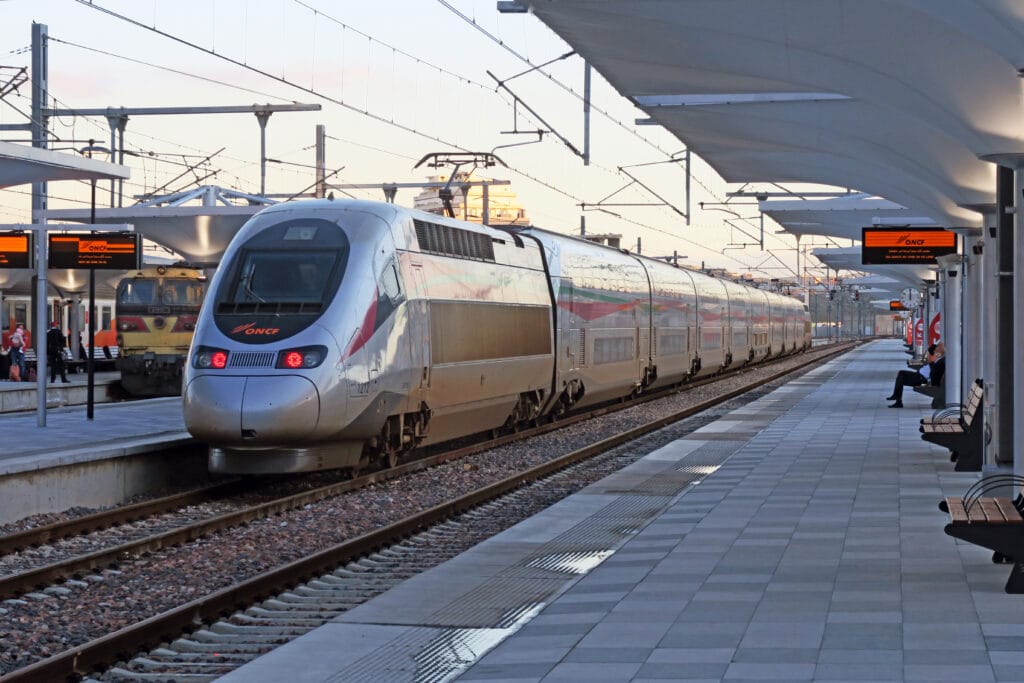
The flagship of Morocco’s railway modernization is the Al Boraq, Africa’s first high-speed train. Since its inauguration, Al Boraq has revolutionized travel between the key economic hubs of Tangier and Casablanca, significantly reducing travel times and providing a comfortable and efficient alternative to road and air travel.
| Route Segment | Travel Time | Operating Speed |
|---|---|---|
| Tangier – Kenitra | Approx. 50 mins | Up to 320 km/h |
| Kenitra – Rabat | Approx. 30 mins | Upgraded Conventional Line |
| Rabat – Casablanca | Approx. 50 mins | Upgraded Conventional Line |
| Total Tangier – Casablanca | Approx. 2h 10m |
The current Al Boraq line serves the following key stations: Tangier-Ville, Kenitra, Rabat-Agdal, and Casablanca-Voyageurs.
Expansion Plans
Morocco’s railway expansion is forging ahead, propelled by an ambitious Morocco Rail Plan 2040 with an estimated cost of 400 billion Moroccan Dirhams (approx. $40 billion USD). This vast undertaking, contingent on securing innovative financing through public-private partnerships and local government involvement, aims to add 1,300 km of new high-speed lines (including Tangier-Agadir and Oujda-Rabat) and 3,800 km of medium-speed lines. The goal is to connect 43 cities (up from 23), bringing 87% of the population within reach of the rail network, and establishing 10 regional transport hubs. This comprehensive development, which includes the ongoing Kenitra-Marrakech high-speed line (expected by late 2029) and urban network modernizations like the Casablanca rail expansion, is crucial for supporting national economic growth and accommodating future passenger demands, particularly in anticipation of the 2030 FIFA World Cup.
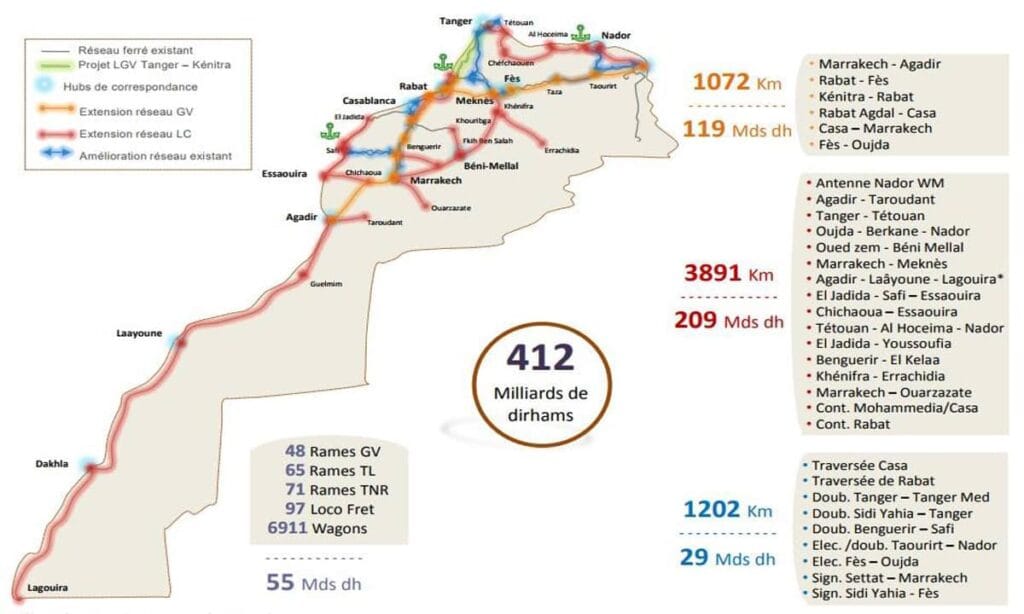
2. Weaving the Nation Together: Conventional and Future Railway Lines
Alongside the development of high-speed rail, Morocco’s national railway operator, ONCF (Office National des Chemins de Fer), is heavily invested in expanding and modernizing its conventional network. These lines are the backbone of the country’s public transport system, connecting dozens of cities and towns and facilitating the movement of both passengers and goods.
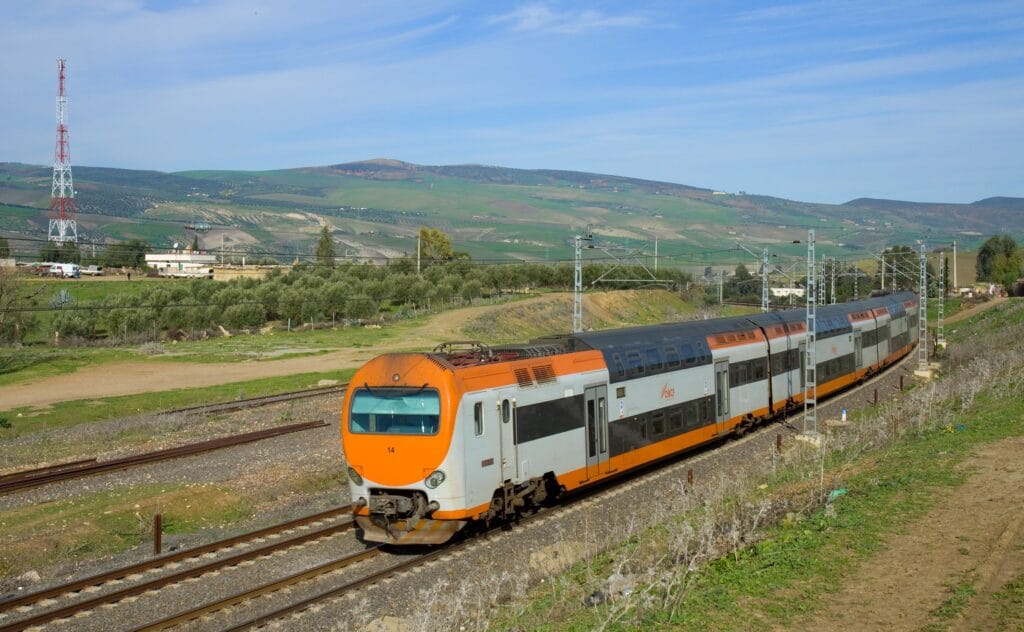
Major Existing Conventional Lines:
- North-South Axis: Tangier – Asilah – Kenitra – Rabat – Casablanca – Marrakech
- East-West Axis: Oujda – Fes – Meknes – Rabat
- Atlantic Line: Casablanca – El Jadida – Safi
- Phosphate Route: Khouribga – Casablanca
- Branch Lines: Connections to cities such as Nador, Oued Zem, and the Mohammed V International Airport.
Future Developments
The “Morocco Rail Plan 2040” envisages a significant expansion of the rail network to cover more of the country. Key future projects, beyond the high-speed extensions, include strengthening the network in the southern provinces and developing new regional lines to improve inter-city connectivity across the kingdom. A core part of this strategy is the development of a Regional Express Rail (RER) network in and around the major metropolitan areas of Casablanca, Rabat, and Marrakech, which will function as a commuter rail system to ease urban congestion.
3. Gateways to Modernity: New and Upgraded Train Stations
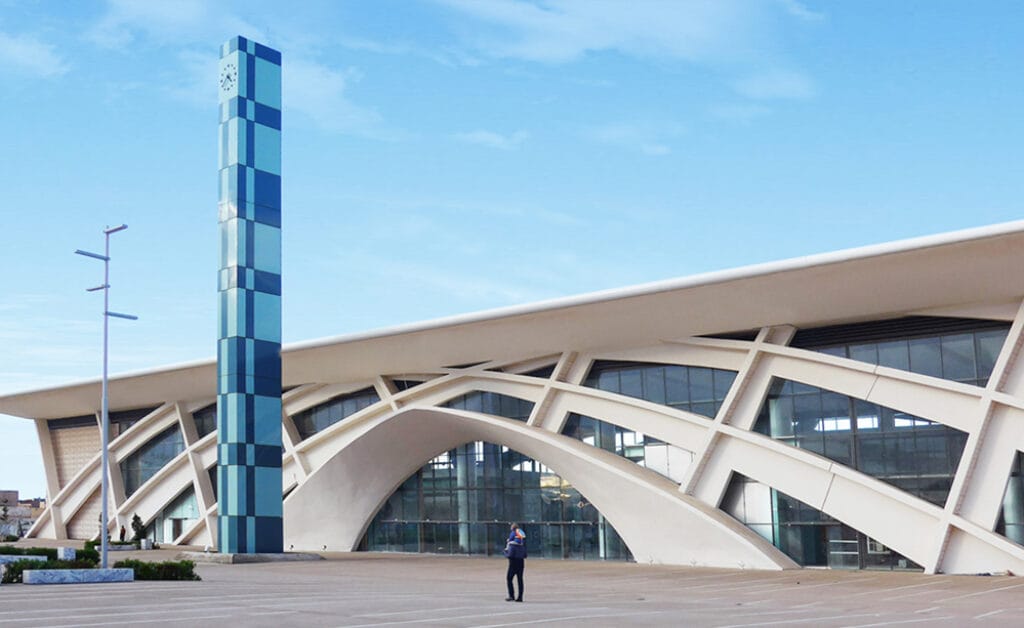
Reflecting the modernization of the railway network, a new generation of train stations has been constructed, serving as modern, multi-service hubs for travelers. The stations inaugurated with the Al Boraq line, such as Rabat-Agdal, Casablanca-Voyageurs, Tangier-Ville, and Kenitra, are architectural landmarks in their own right, offering a range of services including shopping, dining, and comfortable waiting areas.
The ongoing investment plan includes the renovation of existing stations and the construction of approximately 40 new ones. The development of the RER networks in Casablanca, Rabat, and Marrakech will also see the construction of new, modern stations designed to handle a high frequency of commuter traffic.
-

- Rabat Agdal Railway Station. Credit: Wikipedia
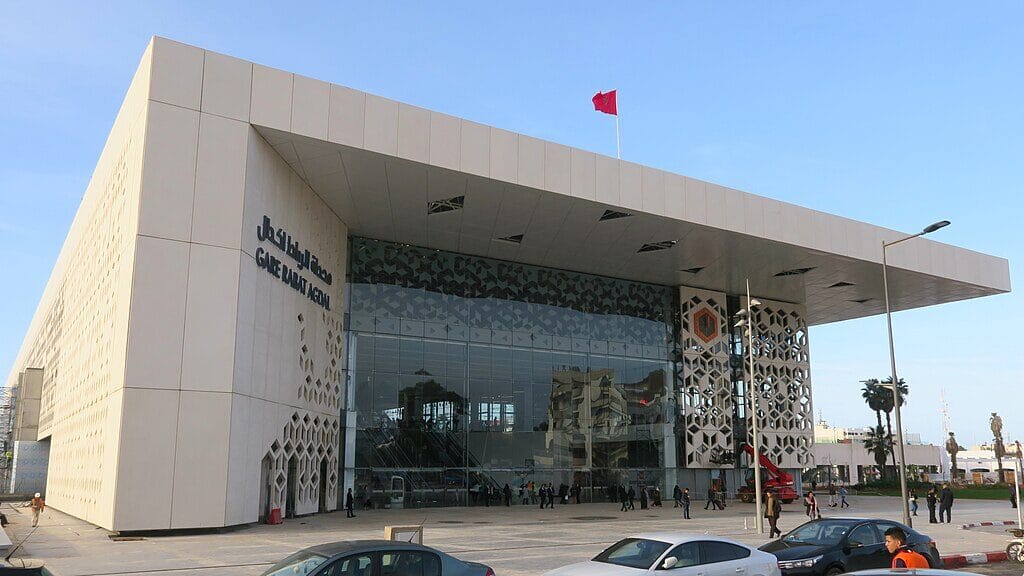
-

- Tangier Railway Station Credit: archnet.org
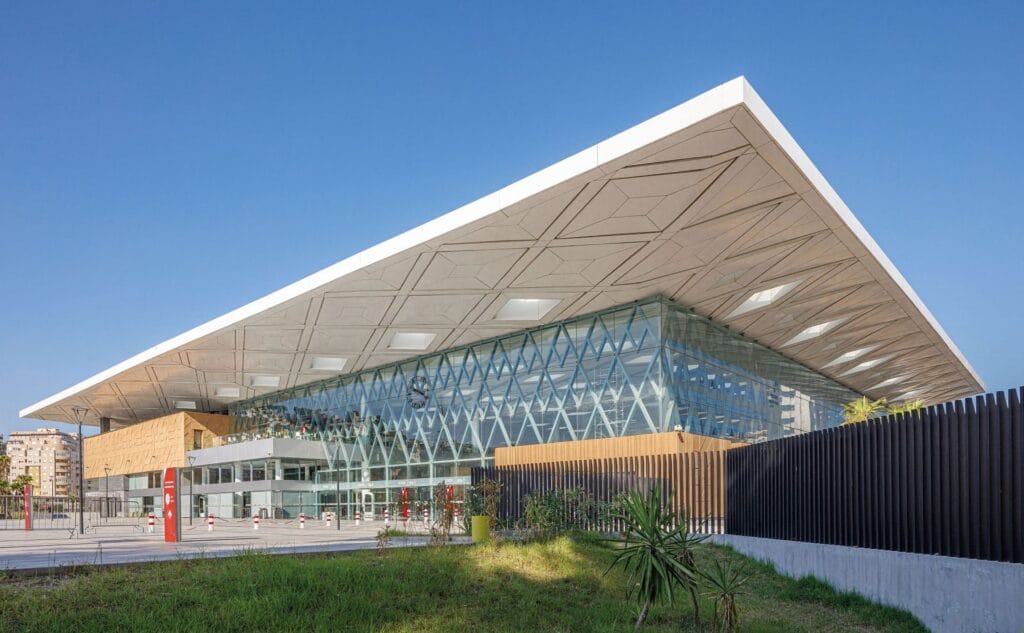
-

- Casa Voyagaeur Railway Station. Credit: leconomiste.com
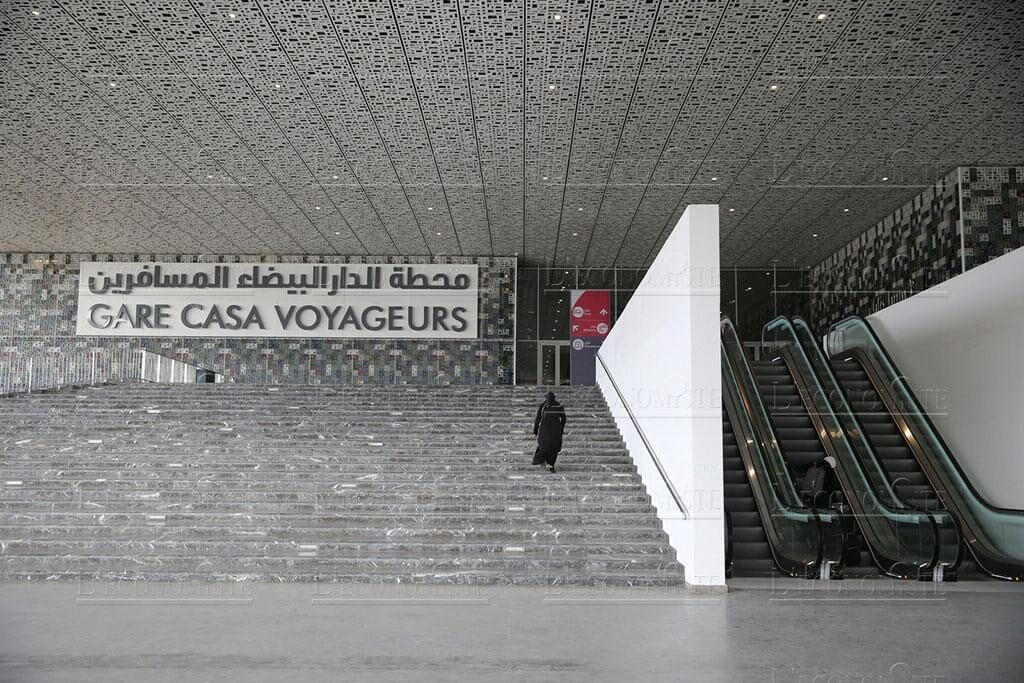
-

- Marrakech Railway Station Credit: lesiteinfo.com
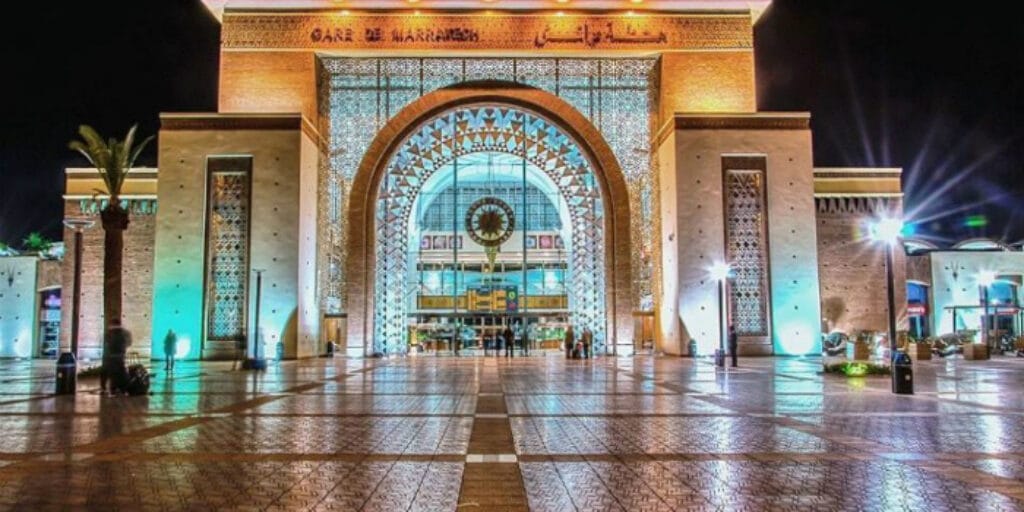
-
- Station Of Kenitra, the biggest Station in Africa. Credit: lightzoomlumière.fr
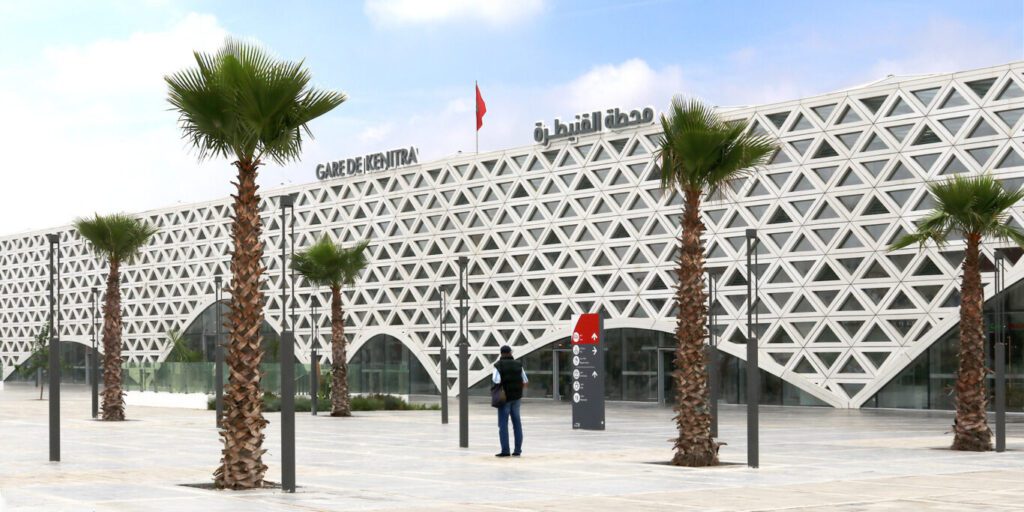
-

- Fes Railway Station Credit: Wikipedia
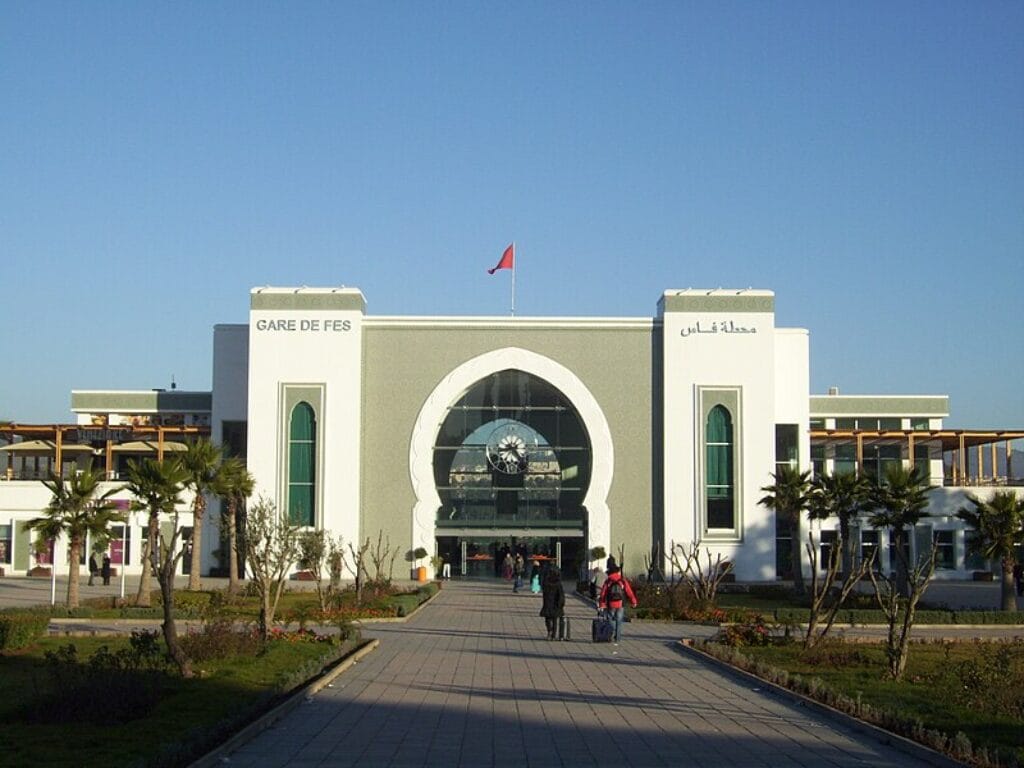
-

- Oujda Railway Station
4. Your Journey Starts Here: Booking Tickets, Classes, and On-Board Services
ONCF has made booking train tickets a straightforward process, with several options available to travelers.
Booking Methods:
- Online: Tickets can be purchased through the official ONCF website (www.oncf-voyages.ma & oncf.ma ) and the “ONCF VOYAGES” mobile application.
- Ticket Vending Machines: Self-service kiosks are available at major stations.
- Ticket Counters: Traditional ticket offices are present in all stations.
Travel Classes and Services:
ONCF offers two main classes of travel on both its Al Boraq and conventional “Al Atlas” trains, catering to different budgets and comfort preferences.
| Service | Al Boraq (High-Speed) | Al Atlas (Conventional) |
|---|---|---|
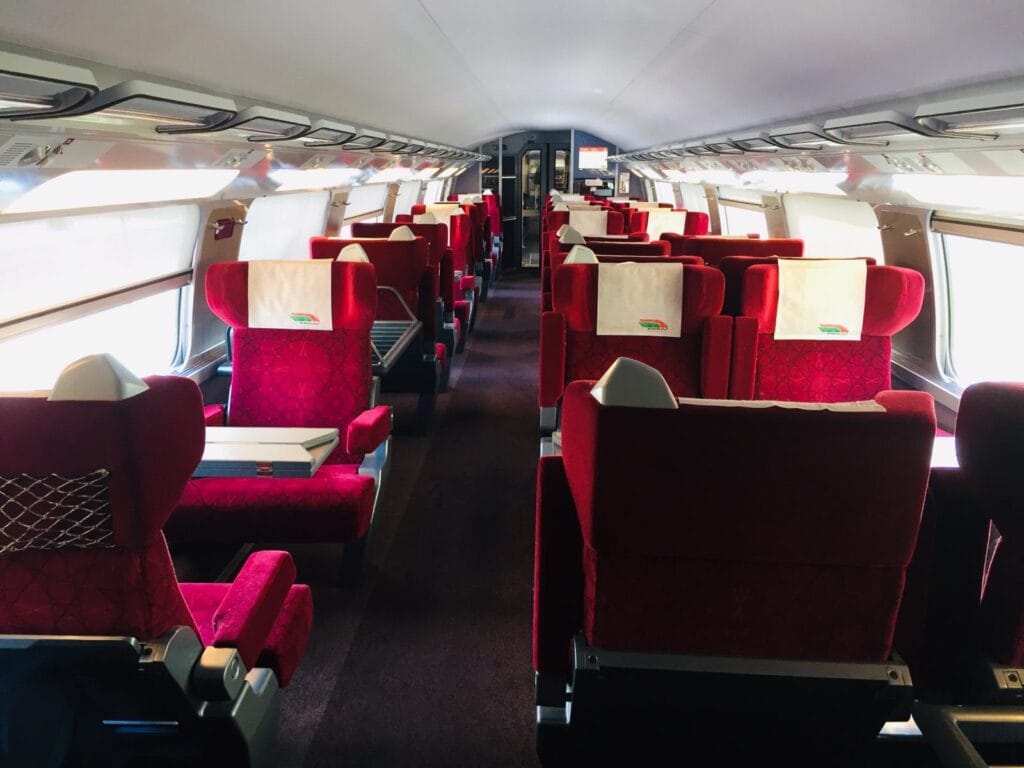
| 1st Class | More spacious, reclining seats in a quieter cabin. Individual power outlets. Access to a dedicated lounge in major stations. | Comfortable seating in compartments of six. A generally quieter environment. |
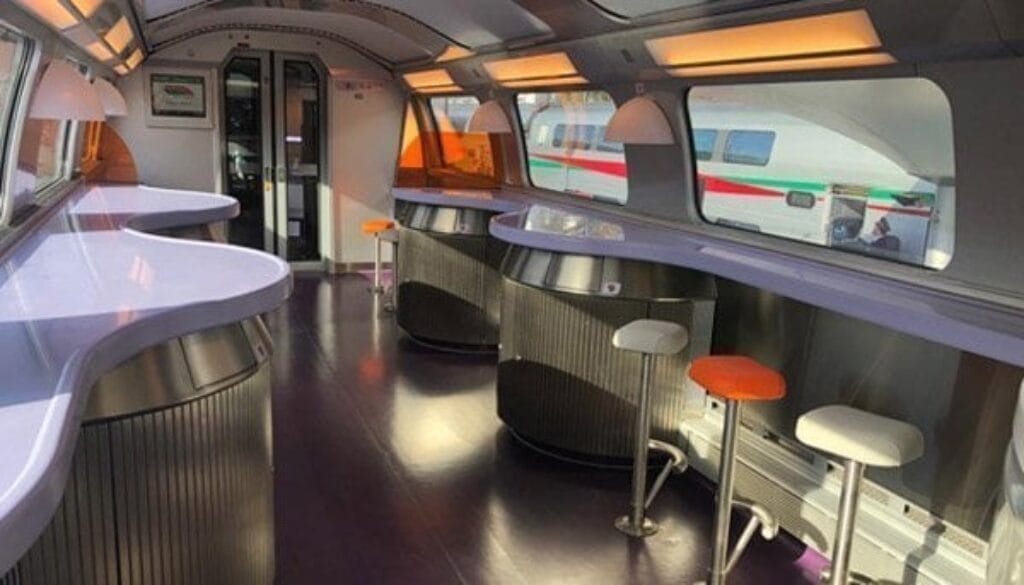
| 2nd Class | Comfortable seating with adequate legroom. Shared power outlets. Access to a buffet car. | Seating in open-plan carriages or compartments of eight. A more social and bustling atmosphere. |
| General Amenities | Air conditioning, onboard Wi-Fi, clean restrooms, luggage racks, and a buffet car. | Air conditioning, clean restrooms, luggage racks. Some long-distance trains have a cafe-bar. |
Ticket Prices:
Ticket prices are dynamic and vary based on the travel class, the time of booking (cheaper when booked in advance), and the flexibility of the ticket. Below are estimated one-way fares for some popular routes to provide an indication of costs.
1 USD ≈ 9.5 MAD
1 EURO ≈ 10.2 MAD
| Route | Al Boraq – 2nd Class (MAD) | Al Boraq – 1st Class (MAD) | Al Atlas – 2nd Class (MAD) | Al Atlas – 1st Class (MAD) |
|---|---|---|---|---|
| Tangier – Rabat | 90 – 180 | 130 – 230 | N/A | N/A |
| Tangier – Casablanca | 100 – 230 | 130 – 300 | N/A | N/A |
| Rabat – Casablanca | N/A | N/A | 30 – 70 | 50 – 90 |
| Casablanca – Marrakech | N/A | N/A | 90 – 150 | 120 – 200 |
| Fes – Marrakech | N/A | N/A | 180 – 250 | 250 – 350 |
By placing the railway sector at the forefront of its development strategy, Morocco is not just building infrastructure; it is forging connections, driving economic growth, and confidently steaming towards its 2030 vision of a modern and prosperous nation.