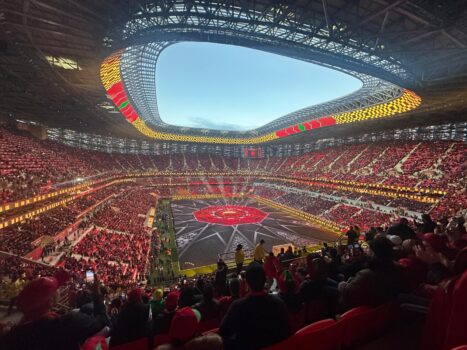
The curtain fell on the Africa Cup of Nations final in Rabat with a bitter defeat for Morocco against Senegal (1–0). Beyond the sporting outcome, the match exposed deeper issues, revealing the consequences of sustained hostile propaganda and the absence of a solid media defense capable of countering narratives targeting Moroccan football.
A defeat shaped by years of external pressure
The events surrounding the final were not merely technical incidents. They represented the logical outcome of a prolonged campaign aimed at undermining Morocco’s sporting credibility, a campaign that intensified after the 2022 World Cup.
Morocco was repeatedly portrayed as a beneficiary of refereeing favoritism, while Fouzi Lekjaa was depicted as a behind-the-scenes power broker manipulating African football. These narratives, amplified across continental media, gradually poisoned the environment in which the Moroccan national team operated.
A vacuum in African media influence
This propaganda did not spread due to a lack of Moroccan journalistic competence, but rather because professional national media were sidelined from key African platforms and decision-making circles.
The continental media space was left open, allowing hostile voices—particularly from countries openly opposed to Morocco—to dominate the narrative and influence public opinion across Africa.
Referees under pressure, Morocco under suspicion
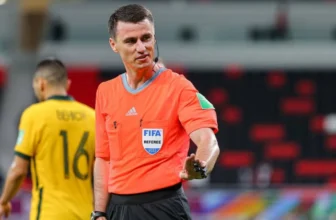
As a result, African referees increasingly entered matches involving Morocco under intense psychological pressure, feeling compelled to “prove their neutrality.” In many cases, this translated into decisions that went against the Lions of the Atlas, driven by fear of validating pre-packaged accusations.
The final was no exception, unfolding in an atmosphere already shaped by distrust and suspicion rather than sporting fairness.
Influencers: paper shields in a real battle
While professional journalism was marginalized, the communication space was filled by influencers—figures whose reach proved largely illusory on the international stage.
Focused on personal exposure and social media aesthetics, their voices remained confined to local algorithms and were unable to counter the well-structured continental and international media machinery that distorted Morocco’s image in key African countries such as Senegal, Nigeria, South Africa, and Egypt.
The cost of silencing the voice of truth
The controversial behavior witnessed during the final, and the silence that followed at the continental level, are direct consequences of the absence of a coherent sports media diplomacy strategy.
Instead of empowering experienced journalists capable of engaging Africa in its languages, history, and media culture, Morocco’s professional press found itself reduced to the role of spectator, stripped of the tools needed to defend the national team beyond the pitch.
Conclusion: a team without a media shield
Morocco entered the tournament exposed on the communication front. Hostile campaigns succeeded because they encountered no solid Moroccan media wall to stop them.
Losing the AFCON final at home is a wake-up call. Protecting the Lions of the Atlas requires more than influencers chasing likes—it demands a strong, professional, and empowered media capable of fighting behind-the-scenes battles with the same intensity shown by players on the field.
BY: Adil Ouazzani akhbarona.com