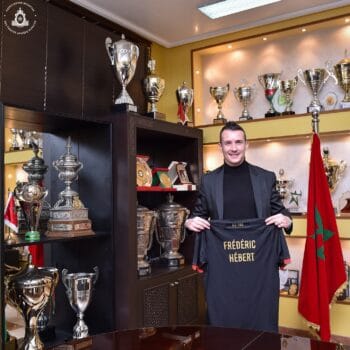
Photo credit: ASFAR / Facebook
Working in Rabat since early 2025, French football executive Frédéric Hébert has offered a striking assessment of Morocco’s football environment. In remarks reported by Le Parisien, Hébert described Morocco as “the most European country in Africa”, referring to the level of organization, professionalism, and long-term planning he has observed within the football ecosystem.
Currently serving as sporting director of FAR Rabat, Hébert says the transformation he has witnessed from inside the Moroccan system goes far beyond results on the pitch. According to him, the structure of clubs, the rigor of governance, and the seriousness of preparation reflect standards closer to European football models than to traditional African frameworks.
From French Football to the Botola
Before moving to Morocco, Hébert built his career in France, notably as sporting director at Paris FC and as sports coordinator at RC Lens. In February 2025, he took up the role of sporting director at FAR Rabat, one of the most historic and structured clubs competing in the Botola.
Hébert highlighted the seriousness of the recruitment process, explaining that he underwent lengthy interviews with military officials, as FAR Rabat is affiliated with the Royal Armed Forces. For him, this rigor reflects a broader national mindset where preparation and detail are central.
AFCON as a Catalyst for a Broader Transformation
According to Hébert, the upcoming Africa Cup of Nations has accelerated reforms and investments across Moroccan football. Infrastructure, governance, and club organization have all benefited from a clear vision driven by upcoming international deadlines.
From his perspective, Morocco’s strength lies not only in its national team results, but in the structural alignment between clubs, federation, and state institutions. This alignment, he suggests, explains why Moroccan football increasingly resembles European models in terms of professionalism, planning, and ambition.
Related:
- France24: Inside the Mohammed VI Football Academy, Morocco’s Engine for Future Champions
- How the Mohammed VI Football Academy Shaped Morocco’s Rise to Global Football Power
- Walid Regragui Ranked Among the World’s Top National Team Coaches by IFFHS
- What Did Mbappé Say About Prince Moulay Abdellah Stadium in Rabat?