The Executive Committee of FIFA has officially approved a historic financial plan for the 2026 FIFA World Cup, set to be hosted across United States, Canada, and Mexico. This landmark decision confirms a record-breaking increase in prize money, making the 2026 edition the most lucrative tournament in football history.
With expanded participation, increased global broadcasting reach, and stronger commercial partnerships, the 2026 World Cup represents a major evolution in the economics of international football.
💰 A Record-Breaking World Cup Budget
FIFA has confirmed that the total financial allocation for the tournament will reach an unprecedented $727 million, with $655 million dedicated exclusively to prize money for the 48 qualified national teams.
This represents a more than 50% increase compared to the 2022 FIFA World Cup, reflecting the rapid commercial growth of global football and FIFA’s ambition to redistribute revenues more widely across participating nations.
| Category | Prize Money | Increase vs 2022 |
|---|---|---|
| Total Budget | $727M | +50%+ |
| Total Prize Pool | $655M | Significant increase |
| Teams Participating | 48 Teams | Expanded format |
🏆 Detailed Prize Money Breakdown
The distribution model ensures that all teams benefit financially, while still rewarding performance at the highest level.
| Final Position | Prize | Notes |
|---|---|---|
| 🥇 Winner | $50M | Highest ever |
| 🥈 Runner-up | $33M | Major increase |
| 🥉 Third Place | $29M | Strong incentive |
| 4th Place | $27M | Competitive tier |
| 5th–8th | $19M | Quarter-finalists |
| 9th–16th | $15M | Knockout stage |
| 17th–32nd | $11M | Group stage exits |
| 33rd–48th | $9M | Minimum guaranteed |
📊 Additional Financial Support for Teams
Beyond performance-based earnings, FIFA has introduced a financial safety net for all qualified nations. Each federation will receive an additional $1.5 million dedicated to preparation, logistics, and operational costs.
This means every team will secure a minimum guaranteed revenue of $10.5 million, ensuring fairer distribution of wealth and stronger competitive balance.
🌍 A Strategy to Support Global Football Development
FIFA’s expanded financial model is not just about rewarding success. It is part of a broader vision to strengthen football ecosystems worldwide, particularly in emerging markets.
- Infrastructure investment: enabling federations to upgrade training facilities
- Youth development: supporting academies and grassroots programs
- Competitive balance: helping smaller nations compete at higher levels
- Global expansion: reinforcing football’s presence across new regions
This approach aligns with FIFA’s long-term ambition to make football more inclusive, competitive, and financially sustainable across all continents.
🇲🇦 Morocco Faces a High-Stakes Group Stage
The draw has placed Morocco in a highly competitive Group C, alongside football giants and ambitious challengers:
- Brazil – a global powerhouse and multiple-time world champion
- Scotland – a resilient European contender
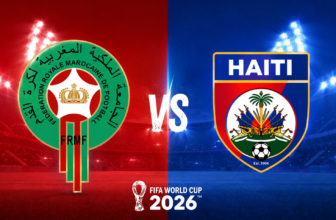
- Haiti – an emerging team with growing international presence
This group promises intense competition and high global viewership, positioning Morocco once again under the international spotlight following its historic performances in recent tournaments.
⚽ Why the 2026 World Cup Is a Turning Point
The 2026 edition introduces several transformative changes:
- 48-team format increasing global representation
- Expanded revenue streams through media rights and sponsorships
- Multi-country hosting model enhancing logistical scale
- Record financial incentives driving competitiveness
These changes signal a new era where football becomes not only a sporting spectacle but also a powerful economic engine influencing tourism, infrastructure, and global branding.
🔎 Economic and Sporting Implications
The increase in prize money will have ripple effects across the football ecosystem. National federations are expected to reinvest earnings into domestic leagues, youth academies, and infrastructure development.
For players, higher stakes translate into greater performance incentives, while fans can expect more competitive matches as financial rewards intensify pressure and ambition.
For host nations, including the United States, Canada, and Mexico, the tournament represents a multi-billion-dollar economic opportunity driven by tourism, broadcasting, and global exposure.
📈 A New Financial Benchmark for Future Tournaments
The 2026 World Cup sets a new global benchmark for tournament economics. Future competitions will likely follow this model, with increasing prize pools, expanded formats, and deeper commercial integration.
This evolution reflects football’s transformation into one of the most powerful global industries, combining sport, entertainment, and business on an unprecedented scale.
🔗 Related World Cup Coverage on MoroccoBeat
- World Cup 2026 Tickets: Morocco vs Brazil
- World Cup 2026 Favorites: Morocco Analysis
- How to Buy World Cup 2026 Tickets
- FIFA World Cup 2026 Complete Match Schedule
MoroccoBeat – Inspiring Stories, Positive Energy, Proudly Moroccan.