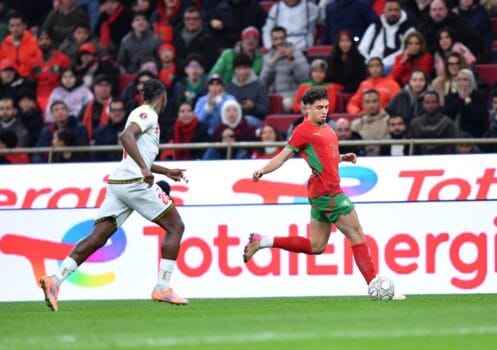
Photo source: FRMF.ma
The Africa Cup of Nations has always been a showcase of continental talent, but a recent study reveals a deeper, more complex reality behind the tournament’s squads. Far from being shaped only by domestic leagues, AFCON increasingly reflects the global geography of African footballers, influenced by migration, diasporas, and dual football cultures.
According to an analysis relayed by Foot Mercato, France stands out as the leading birthplace of players participating in the Africa Cup of Nations. No fewer than 107 players involved in the tournament were born on French soil, an overwhelming figure that places France far ahead of any other country.
Europe’s Growing Weight in AFCON Squads
The numbers highlight a clear trend: 186 players selected for AFCON were born in Europe, representing more than a quarter of all players called up for the competition. This reality underlines the structural role played by African communities abroad, particularly in Western Europe, in shaping modern African national teams.
Behind France, African countries still maintain a strong presence. Ivory Coast ranks second with 29 players born on its territory, followed closely by South Africa with 28, Egypt with 25, and Nigeria with 24. These figures confirm that local football ecosystems remain productive, even as global pathways expand.
Île-de-France, a Global Talent Hub
One of the most striking findings lies at the regional level. The Île-de-France region alone accounts for 45 players born there, making the Paris area the single most productive talent hub for this AFCON edition. This places it ahead of traditional African football centers such as Bamako (17 players), Abidjan (16), and the province of Luanda (15).
This dominance reflects decades of structured youth development, dense competition, and strong links between grassroots football and professional academies. For many African federations, the Paris region has become an essential recruitment pool rather than a peripheral one.
Morocco, a Case of Balanced Dual Identity
Among Arab nations, Morocco stands out for the diversity of its squad’s birthplaces. Of the 28 players selected, 14 were born in Morocco and 14 abroad, spread across six different countries. Spain leads with five players, followed by France and the Netherlands with three each, Belgium with two, and Canada with one.
This balanced distribution illustrates the global footprint of the Moroccan diaspora and the federation’s long-term strategy of integrating players developed abroad while maintaining strong domestic roots. Rather than a weakness, this dual identity has become one of Morocco’s defining strengths on the continental stage.
North Africa and Beyond
Elsewhere in North Africa, Tunisia counts 14 players born on its soil, while Algeria follows with 12. Meanwhile, Sudan registers 20 locally born players, showing that domestic production remains significant despite fewer players based abroad.
Some teams, however, rely heavily on a single foreign country. Comoros have 12 players born in French port cities such as Marseille and Bordeaux, while Equatorial Guinea feature 19 players born in Spain out of a 28-man squad. These patterns reflect historical, linguistic, and migratory ties that continue to shape national teams.
A Tournament Shaped by Movement
AFCON today is no longer confined by borders. It is a tournament shaped by movement—of families, communities, and football cultures. The pitch becomes a meeting point where European academies, African street football, and global identities converge.
As African football continues to evolve, these geographic dynamics are likely to become even more pronounced. Rather than diluting national identity, they add layers to it, making AFCON a mirror of Africa’s global presence.
Source: Skynewsarabia
Related:
- Why Neil El Aynaoui Is One of the Most Important Players You Don’t Notice
- Lumumba of the Stands: How a Silent DR Congo Supporter Became a AFCON 2025 Icon
- “It’s the Most European Country in Africa”: A French Football Executive on Morocco
- Walid Regragui Ranked Among the World’s Top National Team Coaches by IFFHS
- AFCON’s Oldest Goalscorers: When Experience Writes History