Morocco’s national team suffered a painful defeat in the final of the Africa Cup of Nations against Senegal, conceding a decisive goal in extra time. Beyond the sporting outcome, this final exposed deeper issues within African football, marked by tension, controversy and a growing inability to accept defeat with dignity.
A final overshadowed by unprecedented scenes
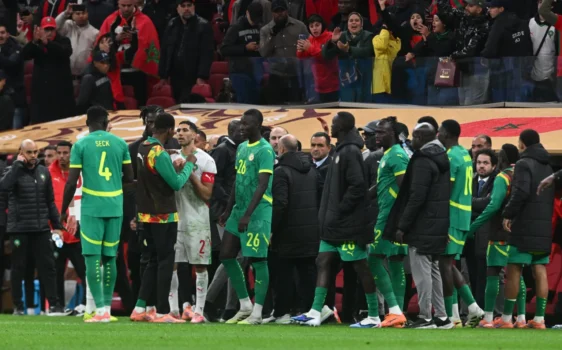
From the early stages of the match, the atmosphere became heavy. After a penalty was awarded to Morocco, the Senegalese team, acting on instructions from their coach, temporarily left the pitch in protest against the refereeing decision.
This rare and shocking scene left Moroccan players and supporters in disbelief. At the same time, Senegalese supporters attempted to enter the pitch and clashed with photographers, producing images that stood in stark contrast to the spirit expected from a continental final.
Conspiracy narratives and growing distrust
Throughout AFCON 2025, hosted by Morocco, a wave of accusations and conspiracy theories circulated, claiming that Morocco had “bought” its matches and that the tournament was decided in advance.
These narratives intensified after Algeria’s elimination by Nigeria and were fueled by provocative behavior from some supporters, including acts widely shared on social media. Rather than focusing on footballing merit, several eliminated teams and officials shifted the debate toward unproven allegations.
The controversy escalated further following public remarks from Egypt’s head coach after his team’s elimination, suggesting favoritism toward the host nation without presenting evidence. Such statements contributed to an unhealthy climate of suspicion.
Incidents that tarnished the image of the competition
Additional episodes deepened the discomfort surrounding the tournament. A politically charged gesture by an Algerian player sparked outrage, while disturbing images of inappropriate fan behavior circulated widely online.
Though isolated, these incidents revealed a lack of discipline and respect that risks damaging the image of African football as a whole.
Morocco’s exemplary organization and sporting merit
These controversies stand in sharp contrast to the reality of AFCON 2025’s organization. Morocco delivered a tournament that met international standards, with modern stadiums, high-level infrastructure, efficient logistics and exemplary security.
On the pitch, the Moroccan national team lived up to expectations. Solid, disciplined and driven by a generation that has already made history on the global stage, the Lions of the Atlas reached the final on merit.
Yet instead of acknowledging this performance, some voices chose denial and accusation over respect for sporting achievement.
A question of maturity in African football
The comparison with the 2022 World Cup is inevitable. When Morocco eliminated major European nations to reach the semifinals, defeat was met with disappointment but also respect and sportsmanship.
The contrast highlights a challenge that African football still faces: learning how to lose with dignity.
Morocco has shown that it can host competitions at FIFA standards and compete at the highest level. The real question is no longer whether Morocco belongs among the elite, but whether African football is ready to evolve alongside those who have already moved forward.
Source: internaute.ma