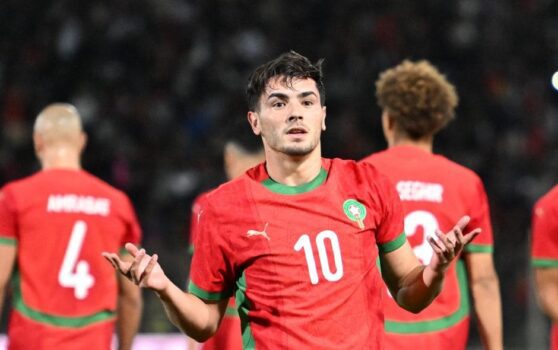
Photo Credit/FRMF.ma
FIFA has officially confirmed the seeding structure and procedural rules for the 2026 FIFA World Cup draw, marking a significant step toward the most ambitious tournament in football history. With 48 teams, 104 matches, and three host nations, the upcoming edition introduces several structural elements that reshape both the group-stage dynamics and the knockout-round journey for the world’s top national teams.
The new rules affect tournament favorites, potential underdogs, and every co-host preparing to open the World Cup on home soil. They also carry direct implications for Morocco, a Pot 2 team aiming to build on its recent global rise and newfound identity as a serious contender.
The draw will take place on Friday, December 5, at the prestigious Kennedy Center in Washington, D.C., in an event designed to set the tone for a new era of international football.
A Tournament Divided Into Two Pathways
One of the most significant procedures announced by FIFA involves the creation of two separate “pathways” in the knockout rounds. This system ensures that the two highest-ranked teams in the world, Spain and Argentina, cannot meet before the final if they win their respective groups.
The decision responds to a growing concern among organizers and broadcasters who want to preserve high-profile clashes for the tournament’s climax. In previous World Cups, there was always a possibility that the two strongest teams could collide in an early knockout round, shifting the competitive balance and reducing late-stage suspense.
The new structure guarantees that each top seed receives a path that respects its performance in recent competitions, including World Cup qualifying, the Nations League, and continental tournaments.
FIFA will also separate England and France, ranked third and fourth in the world. One will join Spain’s side of the bracket, and the other will join Argentina’s. This means that none of the four giants can face one another before the semifinals, as long as they win their groups.
The system creates clarity for powerhouses and increases the significance of topping the group, because a second-place finish would drop a team into a stronger and less predictable pathway.
Complete Seeding Pots for the 2026 World Cup
FIFA confirmed all four seeding pots, with 42 qualified teams already locked in. The remaining six spots, to be decided in the European playoffs and March’s inter-confederation playoffs, will be assigned to Pot 4, regardless of their future ranking.
This decision has sparked debate across the football world. Some argue that it rewards the teams that qualified early. Others believe it penalizes strong nations that suffer setbacks in qualifying.
- Pot 1: United States, Mexico, Canada, Spain, Argentina, France, England, Brazil, Portugal, Netherlands, Belgium, Germany
- Pot 2: Croatia, Morocco, Colombia, Uruguay, Switzerland, Japan, Senegal, Iran, South Korea, Ecuador, Austria, Australia
- Pot 3: Norway, Panama, Egypt, Algeria, Scotland, Paraguay, Tunisia, Ivory Coast, Uzbekistan, Qatar, Saudi Arabia, South Africa
- Pot 4: Jordan, Cape Verde, Ghana, Curaçao, Haiti, New Zealand, four European playoff winners, and two inter-confederation playoff winners
The confederation rule remains intact. Nations from the same region cannot share a group, except Europe, which has more teams than available groups.
The Playoff Debate and the Question of Fairness
The decision to place all playoff winners in Pot 4 creates the possibility of highly uneven groups. One of the strongest examples is Italy. The Azzurri remain one of the top-ranked national teams in the world, positioned just outside the top ten. If Italy wins its playoff, it will enter the tournament as a Pot 4 team.
In practice, this could create groups where the gap between top and bottom teams is smaller than ever. A hypothetical group featuring France, Morocco, Norway, and Italy is now possible. For broadcasters it would be a gift. For teams, it would become a brutal scenario that transforms group-stage progression into a difficult mission.
FIFA’s position is that the 42 directly qualified teams earned their seeding privileges, and rewarding playoff teams would undermine that hierarchy. Critics argue that ranking should always determine competitive balance, but in a 48-team tournament, FIFA prefers stability and predictability.
Co-Hosts Learn the Order of Their Group Matches
A second major procedural change concerns the match sequence for each team. FIFA has pre-determined the positional order that each pot will occupy within all 12 groups. This means that once a team is drawn from its pot, its group matches are already known.
This approach speeds up scheduling and streamlines stadium assignments across three vast countries. It also gives co-hosts immediate clarity.
United States
- Match 1: vs Pot 3
- Match 2: vs Pot 2
- Match 3: vs Pot 4
Final match at SoFi Stadium, Los Angeles
Mexico
- Match 1: vs Pot 3
- Match 2: vs Pot 2
- Match 3: vs Pot 4
Canada
- Match 1: vs Pot 4
- Match 2: vs Pot 3
- Match 3: vs Pot 2
Canada will face its most challenging opponent last, which could place significant pressure on its knockout-round hopes.
This structure gives fans and national federations time to prepare travel logistics and ticketing plans. It also creates early storylines, because each co-host opens the tournament with a relatively balanced opponent.
How the New Rules Shape the Knockout Rounds
The pathway system does more than divide Spain and Argentina. It affects every seeded team and alters the potential trajectory for contenders. The system works as follows:
- Group winners from the two top pathways will avoid each other until the final.
- Group winners ranked 3rd and 4th (England and France) will be divided across the two pathways.
- These four teams will only meet in the semifinal or final if results align.
- A second-place finish disrupts the pathway and can create heavyweight clashes early.
This means that consistency in the group stage becomes even more valuable than before. Teams that slip into second place risk entering a chaotic and unpredictable side of the bracket, where strong playoff nations, Pot 2 challengers, and rising African or Asian teams could gather.
The new rules also have strategic consequences. National teams will study their group schedules carefully and plan their strongest lineups to secure first place.
Why This Matters for Morocco
Morocco enters the World Cup as one of the highest-ranked teams in Pot 2, a placement that reflects its impressive record in recent competitions and its historic 2022 World Cup run.
The new structure creates several opportunities and risks for the Atlas Lions:
1. Morocco avoids all Pot 1 giants
The team will not face Spain, Argentina, France, England, Brazil, Portugal, or Germany in the group stage. This increases the chances of a favorable opening group.
2. The pathway system could protect Morocco in the round of 32
If Morocco tops its group, it will avoid the pathway loaded with the world’s top two seeds. This offers a smoother route toward the deeper rounds.
3. Pot 4 danger remains real
Because Italy or another European heavyweight could land in Pot 4, Morocco may still encounter unpredictable opponents. This increases the importance of preparing for technically strong teams regardless of ranking.
4. Morocco’s position reflects a growing global identity
Being placed in Pot 2 confirms Morocco’s place among the world’s top twelve football nations. The team enters the tournament with a reputation for tactical strength, defensive discipline, and tournament maturity.
The draw could either amplify this opportunity or create the type of high-variance group that challenges every participant.
The Complexity and Spectacle of a 48-Team Format
The 2026 World Cup will include 48 teams for the first time, which multiplies the number of matches, logistical complexities, and competitive variables.
The draw becomes a central spectacle because:
- Twelve groups expand the possibilities of diverse matchups.
- Strong and weak teams mix in new ways.
- Continental representation widens.
- African and Asian teams have more chances to reach the knockout rounds.
The tournament will also bring football to enormous stadiums across North America, making scheduling an essential part of operational success. FIFA’s decision to pre-determine match positions helps balance stadium usage between co-hosts.
What Happens After the Draw
Once the groups are known, FIFA will move into the scheduling stage. Each match will receive a specific stadium, city, and kickoff time within 24 hours. This affects teams, broadcasters, travel planners, and fans from every continent.
The 2026 edition covers vast geographical distances. Travel between cities like Vancouver, Miami, and Mexico City requires detailed planning for recovery, fitness, and climate adaptation. Assigning matches swiftly allows national teams to build complete logistical plans early.
A Tournament Built on Rankings and Reputation
FIFA’s updated approach respects ranking strength as the primary organizing principle. This creates a tournament where:
- Top seeds gain predictable routes
- Group winners receive major advantages
- Rankings influence long-term tournament design
- Consistency gets rewarded
- Playoff paths feel more punishing and risk-heavy
The emphasis on performance encourages national teams to invest in preparation and maintain competitive form in the months leading up to the World Cup.
For fans, the new system produces a balance between fairness and entertainment. For analysts, it offers a more technical structure to evaluate group difficulty and knockout progression.
Final Thoughts
FIFA’s confirmation of the 2026 World Cup draw procedures signals the arrival of a fresh era in global football. With two knockout pathways, pre-determined match sequences, and a full seeding layout, the tournament takes its most structured form yet. Every powerhouse, co-host, and rising nation now sees a clearer picture of what awaits them next summer.
For Morocco, the draw carries both opportunity and challenge. As a Pot 2 nation, it stands among the world’s respected football powers, but the possibility of landing in a group with an elite playoff winner remains real. The team’s success will depend not only on its opponents but on its ability to control group-stage outcomes and earn a favorable path.
The December 5 draw will deliver the first major moment of drama for the 2026 tournament. From that point, the world will begin counting down to a World Cup that expands football’s reach and reshapes the competitive landscape for years to come.
Related: