Photo credit: MAP
Turning Events into Lasting Impact
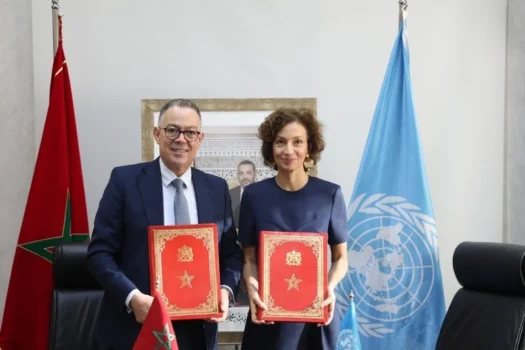
UNESCO and the Fondation Maroc 2030 have launched a partnership that actively reshapes how Morocco envisions its future through sport. The focus no longer rests solely on hosting tournaments, it now centers on turning every match, every arena, and every athlete’s story into a driving force for inclusion, education, and collective progress.
The cooperation, announced in Rabat, brings together the expertise of UNESCO in cultural and educational development with Morocco 2030’s ambition to align national projects with global values. The focus is simple but profound: to make sport a tool for change.
This initiative covers the period 2025–2030, matching the horizon of Morocco’s hosting of two major football events, the AFCON 2025 and the 2030 FIFA World Cup. Yet its goals stretch far beyond those moments. It aims to create a framework where sporting culture becomes part of everyday education, not only celebration.
Sport as a Bridge for Education and Equality
At the heart of the partnership is a belief that sport can be a school in itself. The project includes three key programmes:
- “AFCON for Citizenship”, which develops community football leagues to encourage youth engagement and civic values.
- “Values of Sport”, a national campaign promoting fair play, equality, and respect through schools and local clubs.
- “Equality and Development through Sport”, a festival dedicated to women and girls, celebrating inclusion and opportunity through athletics and local projects.
Through these efforts, Morocco and UNESCO are not only preparing for global events but also planting seeds of cultural transformation. They see sport as a social language, one that transcends status, geography, and background.
The partnership highlights Morocco’s role as a regional leader in linking sports diplomacy with social innovation. It follows a pattern already visible in the Kingdom’s football development strategy: long-term investment in education, local infrastructure, and community-led projects.
A Vision That Extends Beyond the Stadiums
For UNESCO, Morocco offers an ideal ground for a model that could inspire other nations. The country’s commitment to youth and gender equality aligns naturally with the organization’s broader mission for inclusive growth.
For Morocco 2030, the cooperation transforms vision into structure. It ensures that global events like AFCON and the World Cup leave behind more than stadiums and memories, they leave knowledge, opportunities, and a sense of unity that outlives the competition.
Sport becomes a metaphor for Morocco’s modern identity: confident, collaborative, and forward-looking. It represents not only victory on the field but also progress in classrooms, workplaces, and communities.
As this initiative unfolds, the partnership between UNESCO and Morocco 2030 stands as a reminder that the true legacy of sport is not found in medals or trophies, but in the lives it changes.
Related articles: