Across Morocco’s cities, art no longer hides behind museum walls. It spills into alleyways, factory zones, and seaside promenades, turning streets into galleries open to all. Every wall tells a different story: of identity, dreams, rebellion, and pride. From Casablanca’s sprawling murals to Marrakech’s design districts, Morocco’s cities are now living canvases that celebrate a dialogue between tradition and modern creativity.
This artistic movement mirrors the country’s evolution, confident, youthful, and deeply rooted in its heritage. As Morocco prepares for the 2030 World Cup, these murals are becoming more than decorative; they are cultural ambassadors, painting Morocco’s future in vivid color.
Marrakech: When Tradition Meets Urban Expression
Marrakech’s energy is magnetic, and its creativity is contagious. For years, the city has balanced between its heritage-filled medina and its modern design scene. In recent years, its walls have started speaking too.
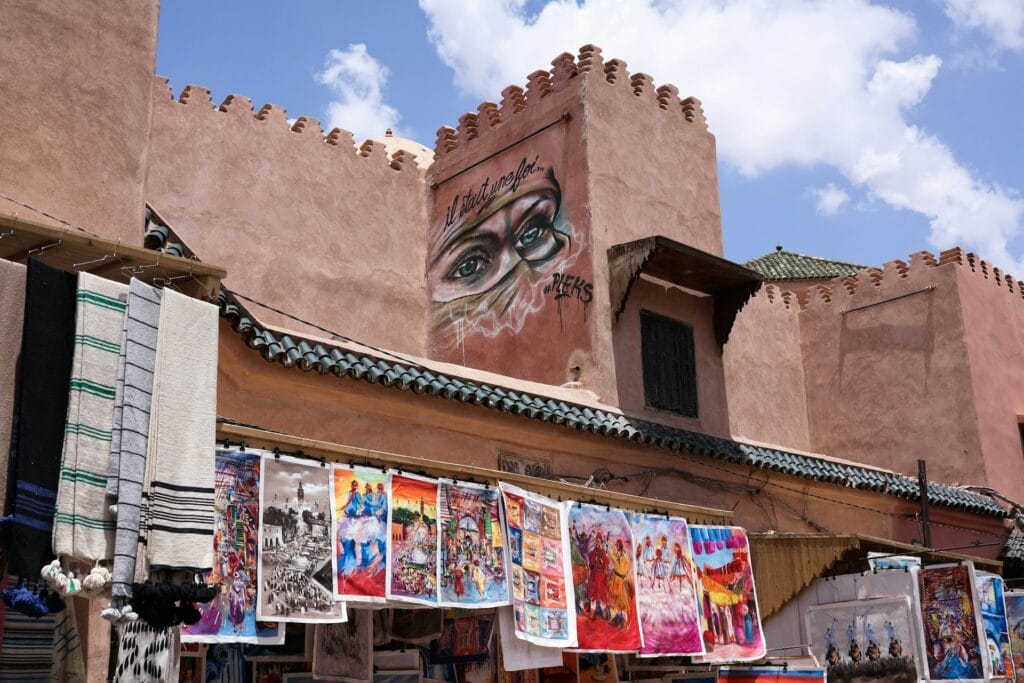
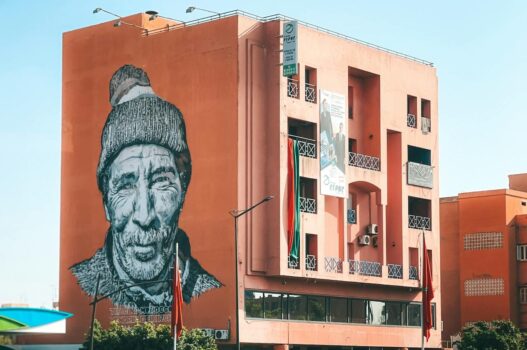
Inside the Medina of Marrakech, street art has found an unexpected home among its centuries-old alleys. Artists use the ochre walls as living canvases, blending bright pigments with traditional shapes inspired by Moroccan crafts and folklore. The murals here feel organic , they rise between carved wooden doors and market stalls, becoming part of the city’s rhythm. Many paintings depict faces, symbols, and lamps that mirror the medina’s atmosphere, transforming forgotten corners into cultural statements. These works remind travelers that even in Marrakech’s most historic heart, creativity continues to evolve, turning ancient pathways into spaces of modern storytelling.
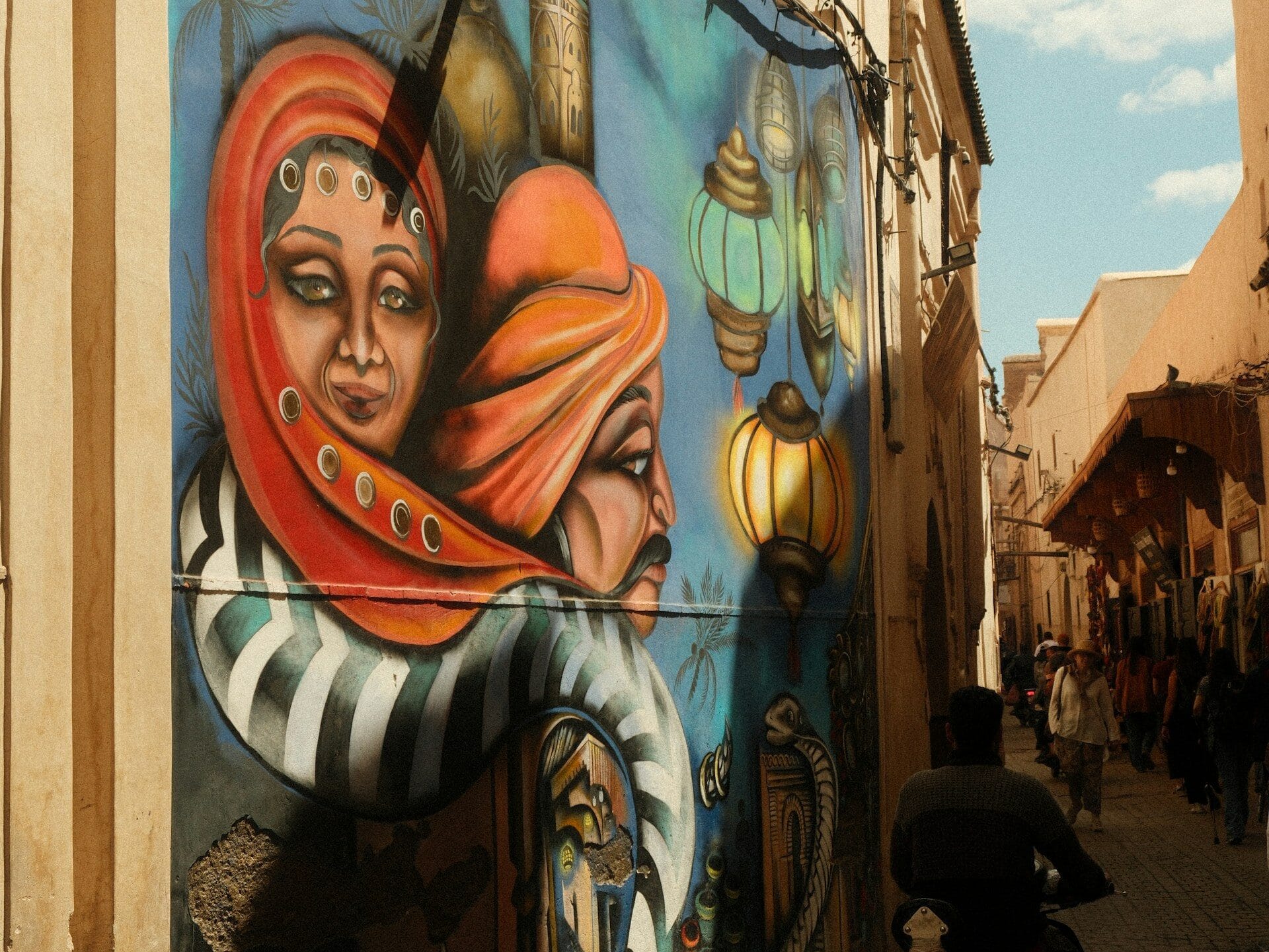
The Sidi Ghanem industrial quarter, once dominated by warehouses and workshops, has evolved into an open-air studio. Artists from Morocco and abroad come here to reinterpret Moroccan symbols with street art techniques. Geometric Amazigh motifs merge with fluorescent graffiti, while murals of women in haiks gaze over the orange-pink skyline. Each piece reflects the coexistence of memory and reinvention, a visual dialogue between the old and the new Morocco.
Not far away, Gueliz, the city’s modern district, has embraced urban art in its cafés, boutique hotels, and design galleries. Many façades display colorful patterns, surreal portraits, and calligraphic art blending Arabic letters with abstract shapes. These murals are not just photo stops; they tell stories of identity, empowerment, and pride in Moroccan youth culture. (Street Art Cities)
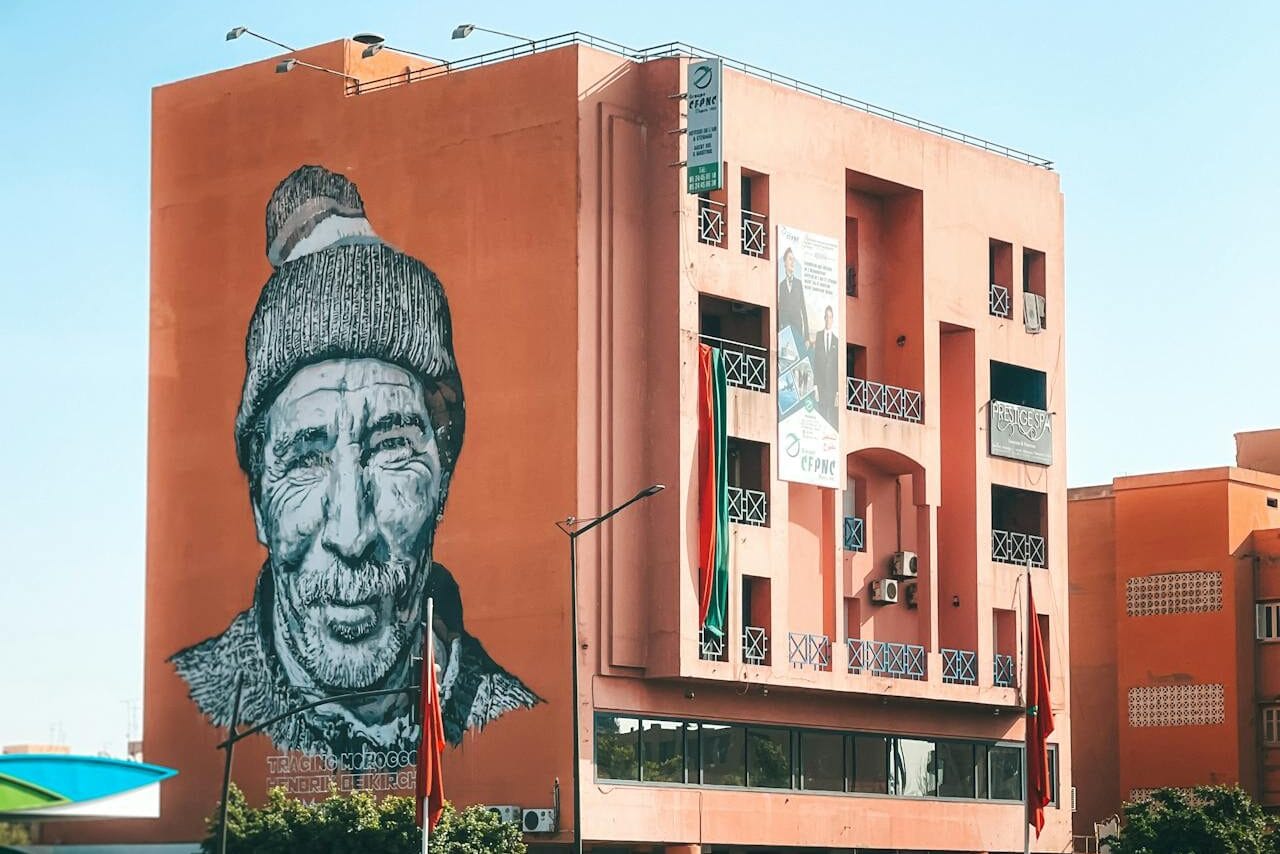
Inside the MACAAL (Museum of African Contemporary Art Al Maaden), exhibitions explore African identity and sustainability through contemporary art, installations, and digital media. MACAAL also supports emerging Moroccan artists, connecting the local creative scene with African and global movements. Together, the streets and galleries of Marrakech prove that Moroccan creativity breathes freely between heritage and modern innovation.
Casablanca: Concrete Walls Turned into Cultural Statements
Casablanca, Morocco’s economic heart, pulses with urban rhythm. Its tall buildings and industrial zones make it the perfect canvas for large-scale murals. For years, artists have used these walls to express collective identity and social reflection.
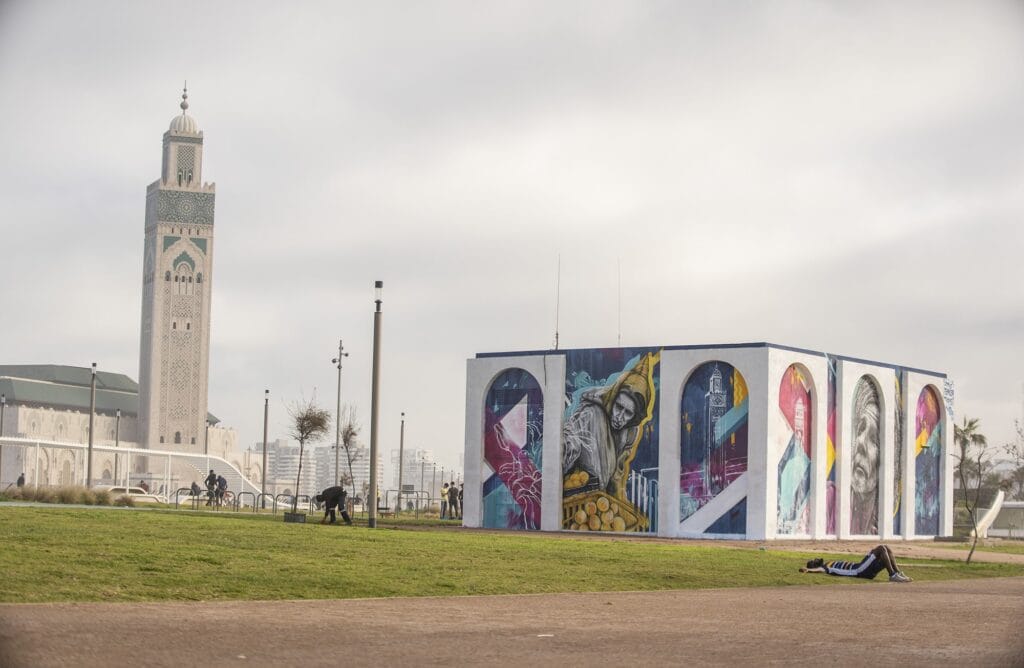
The Sbagha Bagha Festival, founded in 2013, has transformed the city into a global reference point for street art in Africa. Each year, Moroccan and international muralists reimagine Casablanca’s walls, from the bustling Hay Mohammadi to the historic slaughterhouse district known as Les Abattoirs. The event doesn’t just paint walls; it redefines how public spaces are perceived, promoting access to art for everyone.
Visitors can find enormous murals depicting Amazigh heritage, portraits of African women, or surreal landscapes that blend the Atlantic horizon with Casablanca’s skyline. Many of these works highlight Morocco’s multicultural identity, combining calligraphy, geometric shapes, and graffiti realism.
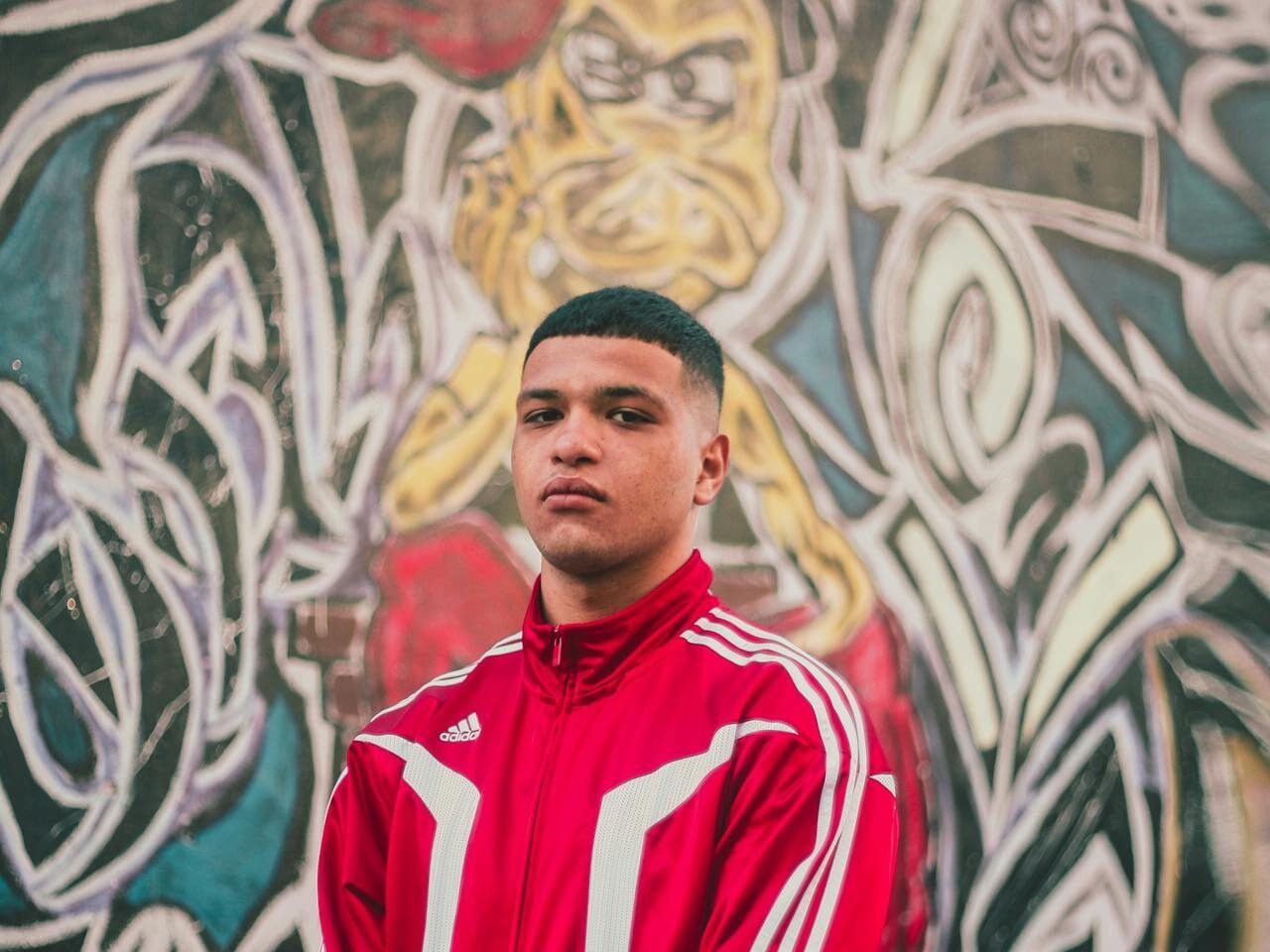
Beyond the walls, La Fabrique Culturelle des Anciens Abattoirs now serves as a creative hub where exhibitions, concerts, and workshops take place. Once a symbol of industry, the space now echoes with music and creativity, a transformation that embodies Casablanca’s ongoing cultural renewal.
Rabat: The Capital of Murals
If Casablanca is Morocco’s industrial artist, Rabat is its artistic diplomat. The capital city has turned street art into a structured cultural program through the Jidar – Toiles de Rue Festival. Held annually, it brings together world-class muralists and Moroccan talent to paint the city’s facades with stories that celebrate unity, nature, and hope.
Walking through Rabat during Jidar feels like stepping into a colorful narrative. Around the Avenue Mohammed VI, large portraits, symbolic creatures, and nature-inspired patterns rise on multi-story buildings. Near the Kasbah of the Udayas, smaller murals echo the ocean breeze with marine themes, while downtown Rabat features striking portraits of everyday citizens.
Jidar has also become a hub for artistic exchange, where international artists collaborate with Moroccan students. The event reflects Morocco’s openness and creative diplomacy, using art to connect Africa, Europe, and the Arab world.
What makes Rabat unique is how it integrates art into daily life. Even outside festival days, many cafés, libraries, and community centers feature rotating exhibitions or murals that change with the seasons. For travelers visiting Rabat for AFCON 2025 or cultural tourism, following the Jidar route is like exploring the capital’s soul through color.
Fez, Essaouira, and Asilah: Heritage Walls Reimagined
While Marrakech, Casablanca, and Rabat lead Morocco’s urban art scene, smaller cities like Fez, Essaouira, and Asilah have embraced street art in their own unique ways.
In Fez el-Jdid, walls surrounding youth centers and universities now display murals that reflect the city’s intellectual and spiritual heritage. Artists often use calligraphy and geometric abstraction inspired by zellige patterns. The ancient city, known for its medieval charm, now tells stories of a modern generation eager to express itself through new artistic codes.
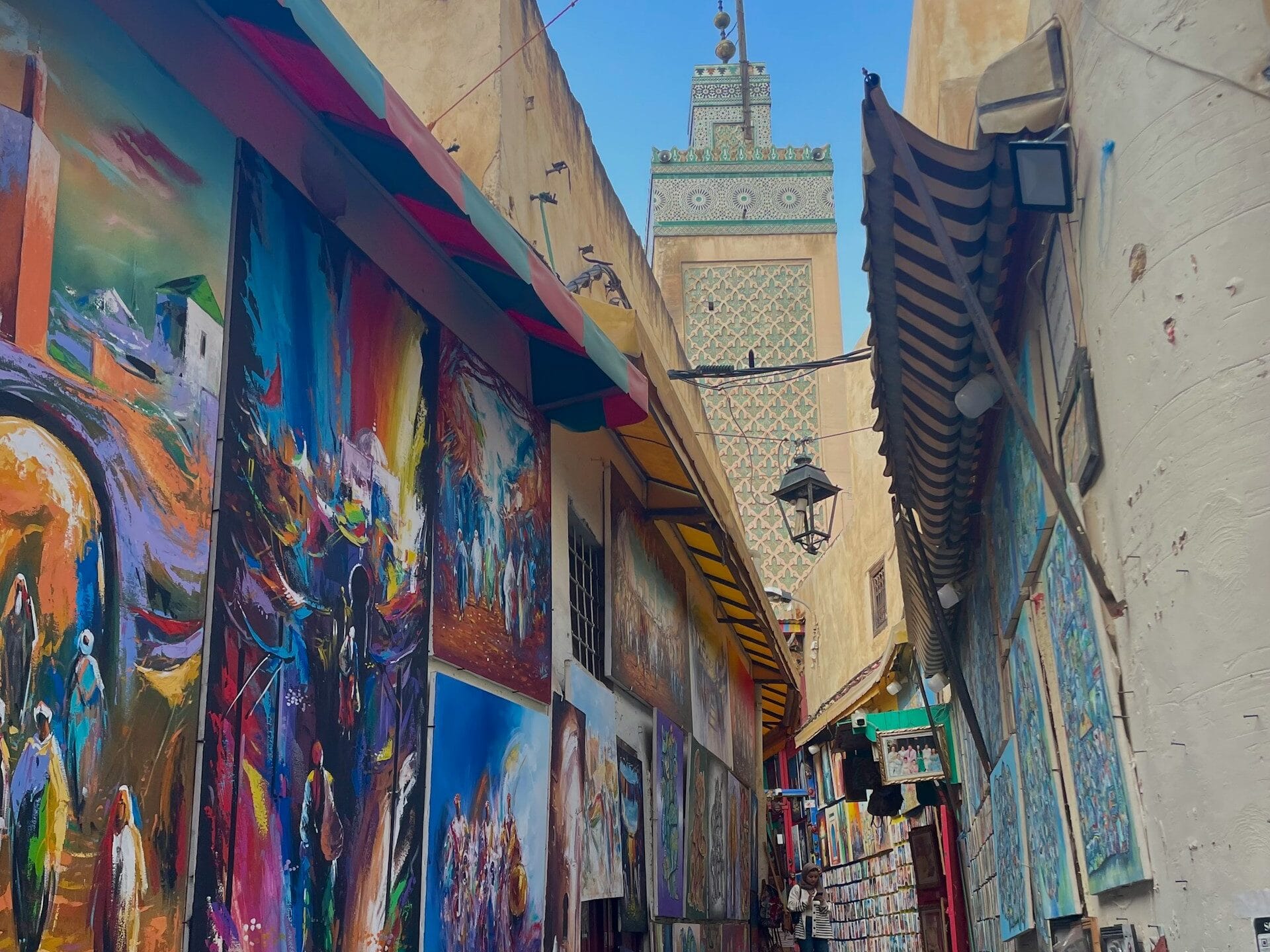
Essaouira, already known for its creative energy and music festivals, has seen artists painting along its harbor walls and in narrow medina alleys. Themes often revolve around freedom, the sea, and coexistence. The contrast between blue ocean tones and colorful murals creates a dreamlike aesthetic that fits perfectly with the city’s bohemian reputation.
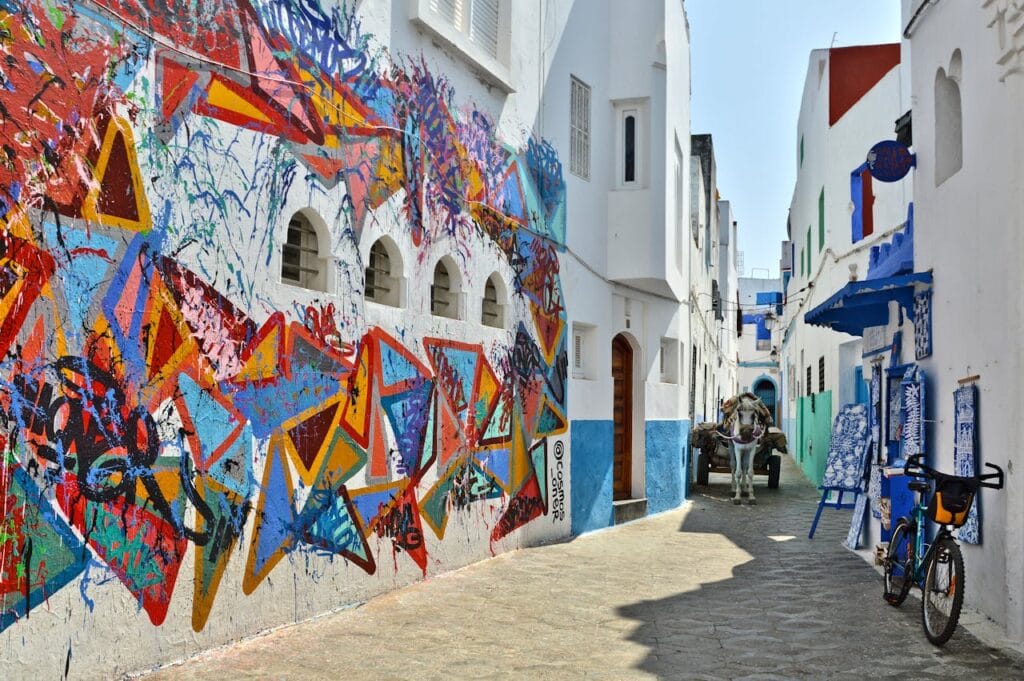
Meanwhile, Asilah stands as Morocco’s pioneer of wall art. Since the late 1970s, the Asilah Arts Festival has invited artists from around the world to decorate the town’s whitewashed medina walls. Every year, murals are painted anew, transforming Asilah into a living museum that evolves with time. The festival inspired later initiatives like Jidar and Sbagha Bagha, proving how a small coastal town helped Morocco find its artistic voice decades before urban art became a global movement.
The New Face of Cultural Tourism
Urban art has evolved from rebellion into an essential layer of Morocco’s tourism identity. Tour operators in Marrakech and Casablanca now offer guided mural walks, and cultural travel platforms feature routes connecting the country’s main art districts. Visitors can meet local artists, attend workshops, or simply enjoy a different kind of sightseeing, one that reveals Morocco’s creative pulse beyond its monuments.
Government initiatives and city councils have started recognizing the social value of urban art. Murals are being commissioned to promote environmental awareness, youth inclusion, and civic pride. These initiatives reflect Morocco’s cultural soft power, using creativity to connect tourism, education, and sustainability.
As the nation gears up for the 2030 FIFA World Cup, this cultural renaissance aligns with broader urban renewal efforts. Stadium surroundings, public transport hubs, and new districts are being beautified with murals that highlight Morocco’s identity, a visual way to welcome millions of fans while showcasing national artistry.
Street art in Morocco has become more than decoration; it’s a new form of storytelling that unites history, sport, and hope. Every brushstroke celebrates a country moving confidently toward its creative future.
Conclusion
From the souks of Marrakech to the boulevards of Rabat, Morocco’s walls are alive with imagination. Street art has become a bridge between generations, languages, and continents, proof that beauty and identity can grow from public space.
Whether you travel for football, festivals, or simple curiosity, Morocco’s murals invite you to pause, look closer, and feel the rhythm of a nation painting its story in real time.
Related: