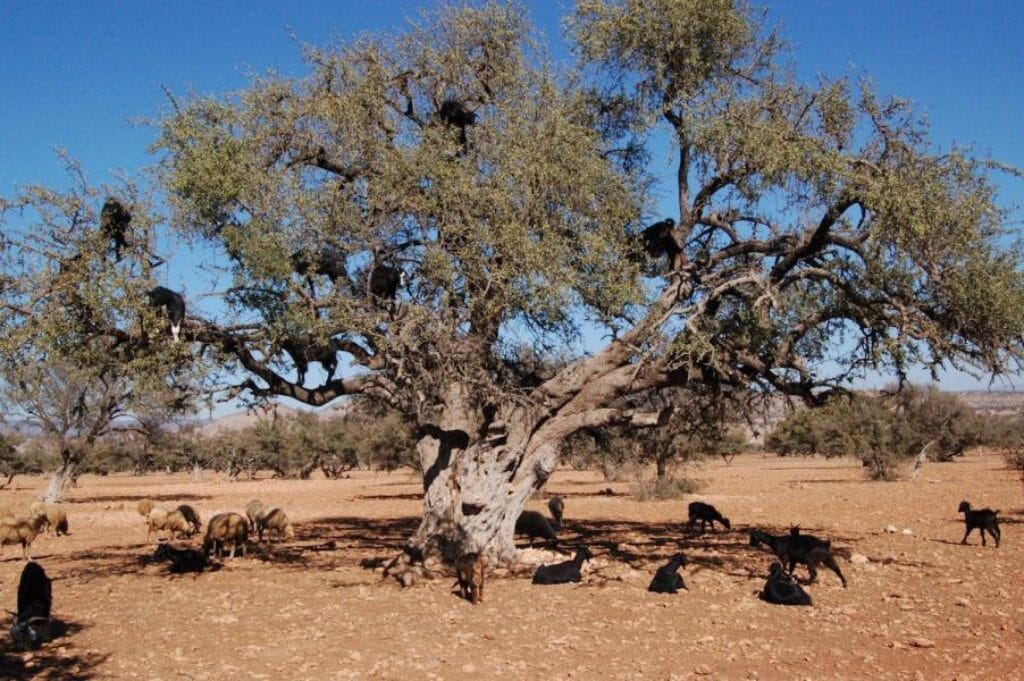
Photo credit: SNRTNews
The argan tree, native to the semi-arid regions of Morocco, is often called the “tree of life.” For centuries, it has nourished communities with its fruits, oil, and shade. This resilient tree thrives in harsh environments, symbolizing Morocco’s enduring spirit. From its unique oil to its cultural importance, the argan tree represents both heritage and modern Moroccan innovation. Visitors and locals alike are drawn to its beauty and usefulness. Learn more about traditional Moroccan products that showcase the country’s natural wealth.
Longevity and Fruit of the Argan Tree
Argan trees can live for over 200 years, producing small, round fruits that hide precious kernels inside. These kernels are carefully harvested and pressed to produce argan oil, celebrated worldwide for its versatility. Beyond cosmetics, argan oil is used in cooking, adding a distinctive nutty flavor to Moroccan dishes. The process requires patience and skill, reflecting centuries of local knowledge. The tree itself also plays a crucial ecological role, preventing soil erosion and supporting biodiversity. Exploring Moroccan landscapes reveals how deeply the argan tree shapes the environment.
Berber Traditions and Women Empowerment
Berber communities have long maintained the art of extracting argan oil. Women traditionally gather the nuts, crack them by hand, and press the kernels to obtain the golden oil. This practice empowers rural women economically and preserves cultural traditions. Local cooperatives have strengthened this heritage, allowing Moroccan argan products to reach international markets. Tourists can witness these age-old techniques firsthand, connecting with authentic Moroccan life. Sustainable practices ensure that these forests remain vibrant for future generations. You can also explore Marrakech’s traditional crafts to see Moroccan craftsmanship at its finest.
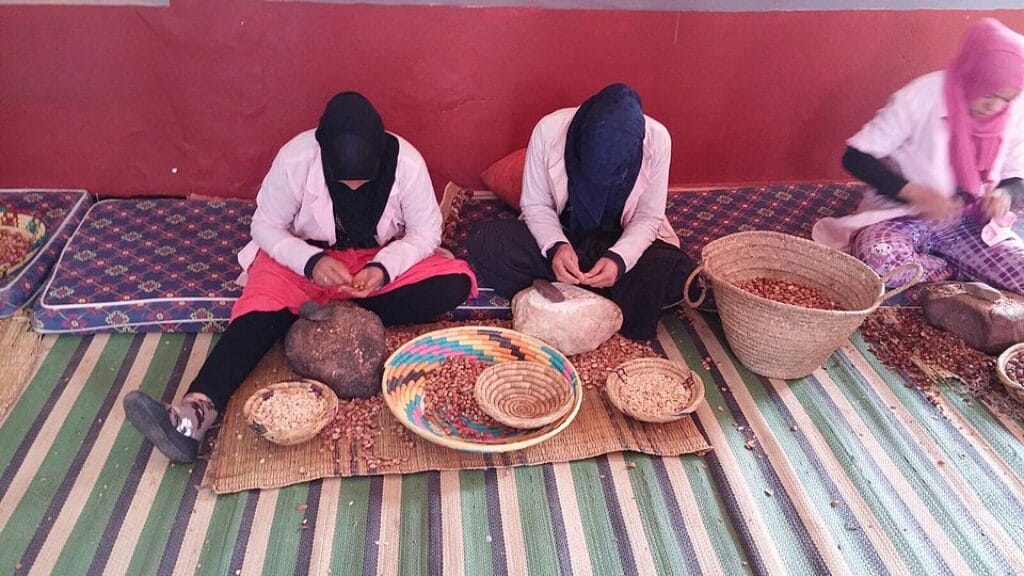
Moroccan Argan oil workers. Photo credit: Orlysi On Wikimedia.org
Health and Beauty Benefits of Argan Oil
Argan oil is rich in vitamin E, antioxidants, and essential fatty acids, making it a prized ingredient in skincare. Regular use moisturizes and protects the skin while combating signs of aging. It also strengthens hair, leaving it soft, shiny, and manageable. Culinary argan oil enhances salads, couscous, and tagines with a delicate, nutty aroma. Moroccan chefs and beauty artisans alike value the oil’s versatility. The argan tree thus connects wellness, cuisine, and cultural pride. Its global recognition highlights Morocco’s contribution to natural health and beauty.
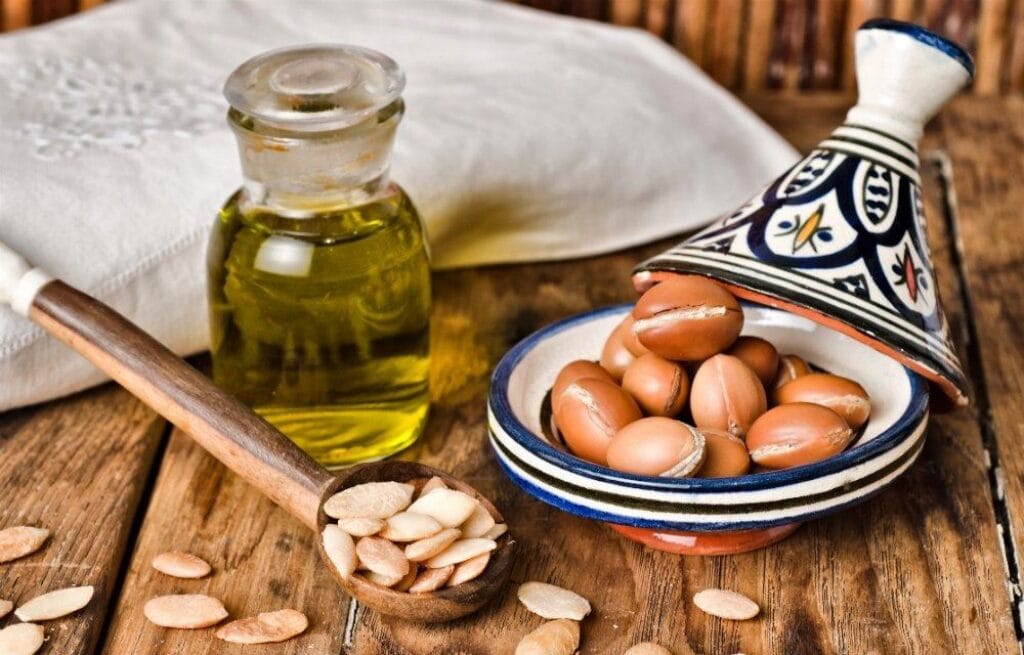
Moroccan Argan Oil. By moroccoprivatetours.net
Argan Tree and Sustainability
Beyond its practical uses, the argan tree is a symbol of resilience and sustainability. Argan forests are recognized by UNESCO as biosphere reserves, reflecting Morocco’s commitment to environmental protection. These ecosystems preserve water, enrich soil, and provide habitat for native wildlife. Visitors are often inspired by the harmony between humans and nature evident in these forests. Sustainable harvesting and cooperative management keep the tradition alive while promoting ecological balance. Exploring these areas offers insight into Morocco’s efforts to balance progress and preservation.
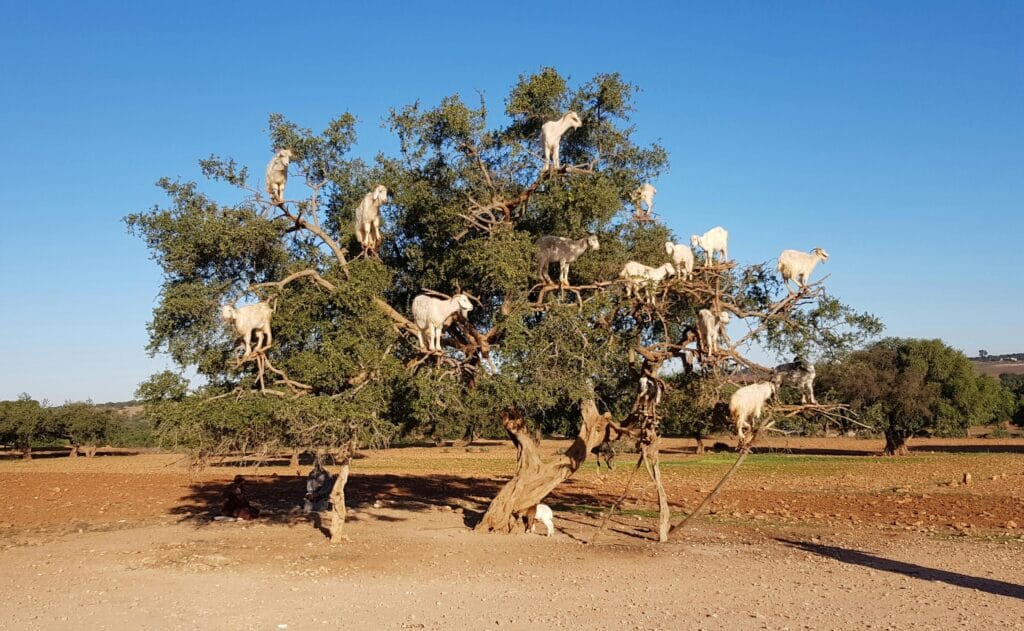
Goats climb moroccan argan trees to eat their fruit and leaves. Photo by Ivan Dražić / Pexels
Argan Trees in Moroccan Landscapes
The beauty of argan trees extends to Moroccan landscapes, from the rocky Anti-Atlas mountains to the plains of Souss-Massa. Their twisted branches and silver-green leaves create striking scenery, especially at sunrise and sunset. Photographers and travelers often capture their unique shapes against vast skies. Local festivals celebrate the argan harvest, combining music, dance, and culinary delights. These events strengthen community ties and attract tourists eager to experience Moroccan traditions. The argan tree’s presence in both nature and culture reflects its deep-rooted significance. It is a living emblem of Morocco’s identity and creativity.
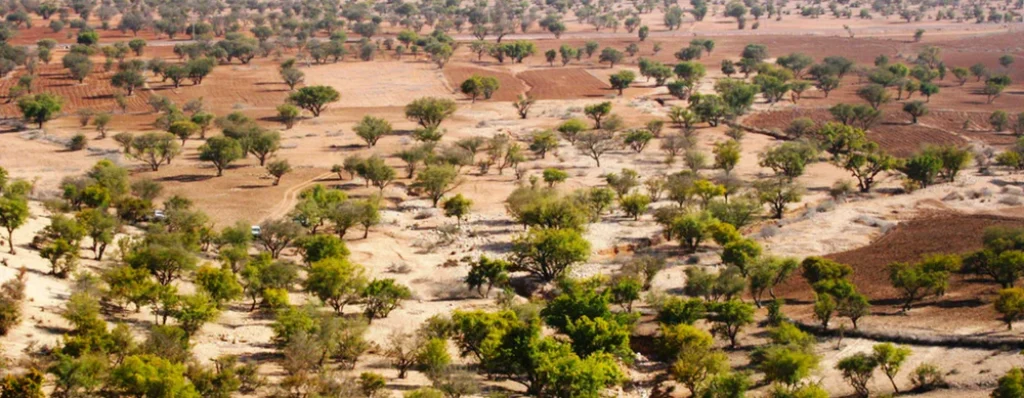
Argan Trees in Moroccan Landscapes. By freskincare.com
Argan in Modern Moroccan Economy
Modern Moroccan businesses have also embraced the argan tree. Beauty brands, artisanal cooperatives, and gourmet producers highlight its value on the global stage. Export of argan products generates income while showcasing Moroccan expertise. Many companies emphasize ethical sourcing and fair trade, ensuring that local communities benefit directly. Consumers worldwide recognize the quality and authenticity of Moroccan argan oil. This economic impact reinforces the tree’s importance beyond cultural and ecological realms. It represents how tradition and innovation can coexist sustainably. The story of argan exemplifies Morocco’s global influence.
Immersive Argan Experiences for Travelers
Travelers seeking immersive experiences can visit argan cooperatives, forests, and nearby villages. They gain insight into harvesting, oil production, and local customs. These visits also support rural communities and promote cultural exchange. Exploring Moroccan deserts, mountains, and markets alongside argan sites enhances understanding of local life. The tree becomes a gateway to discovering Morocco’s broader natural and cultural heritage. From tasting argan oil in a traditional dish to seeing the harvest firsthand, every encounter is memorable. It’s a journey that blends education, adventure, and appreciation of Moroccan ingenuity.
A Symbol of Morocco
From its roots in Moroccan soil to its global influence, the argan tree remains a symbol of resilience, beauty, and community. Its contributions to health, cuisine, culture, and economy showcase Morocco’s richness and creativity. By supporting sustainable practices and local cooperatives, every bottle of argan oil tells a story of heritage and pride. Next time you enjoy this golden treasure, remember the generations of Moroccan hands that nurtured it. The argan tree is more than a natural resource; it is a living emblem of Morocco’s enduring spirit.