Jean-Marie Gustave Le Clézio and Morocco: When the Sahara Becomes Literature
In Morocco, the desert is more than a destination, it is a voice. For Jean-Marie Gustave Le Clézio, that voice became literature, reflection, and identity.
When Le Clézio first encountered the Moroccan Sahara, he stepped into a world that spoke through silence. The vastness of the desert mirrored his inner search for meaning, transforming travel into contemplation.
In this landscape of light, wind, and endless horizons, the Nobel Prize in Literature laureate discovered a space where thought flows freely, shaped by nature rather than noise.
The Desert as a Living Presence
The Moroccan Sahara profoundly shaped Le Clézio’s imagination. In its endless horizons, he found lessons in patience, humility, and continuity.
In his novel Désert (1980), the desert is not merely a backdrop, it becomes a character. It holds memory, guides journeys, and witnesses human transformation.
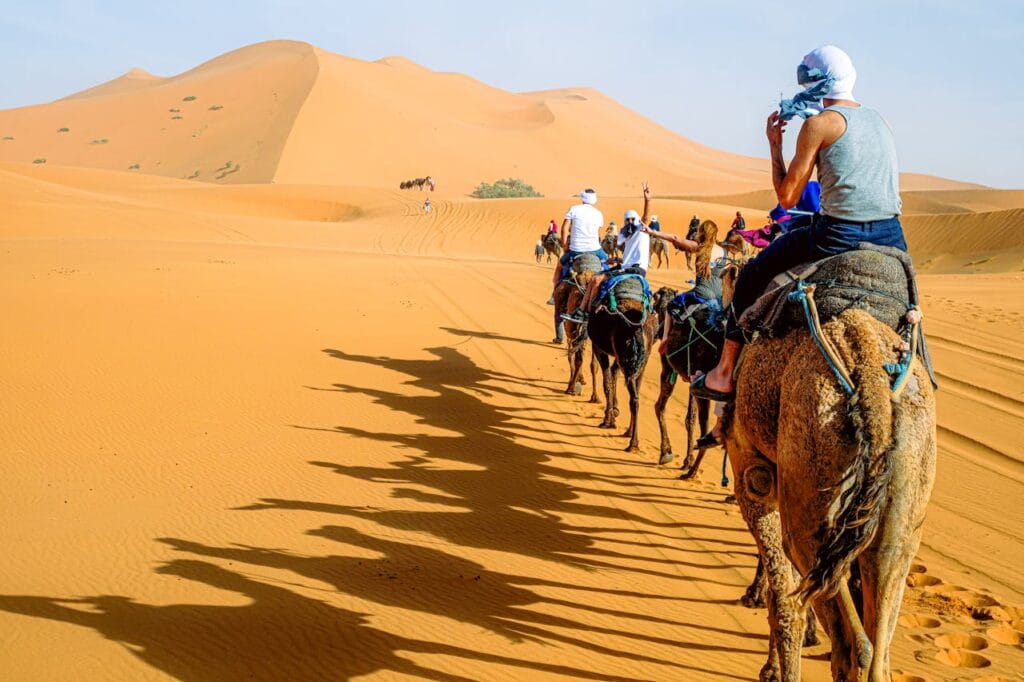
Wind, sun, and shifting dunes create a sense of movement within stillness. The desert invites reflection, and through that reflection, a deeper understanding of existence begins to emerge.
Morocco as a Bridge Between Worlds
Le Clézio’s connection to Morocco grew from its unique geography and cultural richness. Positioned between the Mediterranean, the Atlantic, and the Sahara, the country embodies a dialogue between worlds.
Through Morocco, he explored themes of identity, migration, and belonging. The desert offered both solitude and connection a paradox that defines much of his literary work.
Each journey became a narrative thread, woven from encounters, languages, and shared human experiences.
Travel as Reflection, Not Consumption
For many, Morocco’s desert represents adventure. For Le Clézio, it represented clarity.
He approached travel not as conquest, but as listening. In every horizon, he found an invitation to rediscover simplicity and awareness.
This philosophy gives Moroccan tourism a deeper dimension, one where experience replaces expectation, and presence replaces speed.
To walk across the Sahara is to follow an unwritten path. The dunes, the silence, and the vast sky become guides, teaching travelers to move with intention.
Heritage, Culture, and Living Traditions
The landscapes that inspired Le Clézio remain alive with tradition. Across southern Morocco, communities preserve nomadic heritage, music, storytelling, and craftsmanship.
From desert camps to oasis villages, cultural continuity shapes everyday life. These traditions ensure that the Sahara remains more than scenery, it remains a living memory.
Protecting this heritage is essential, not only for tourism but for identity itself. The same spirit that inspired literature continues to sustain Moroccan creativity today.
A Global Literary Legacy Rooted in Morocco
Winning the Nobel Prize in Literature recognized Le Clézio’s ability to capture the world’s quiet truths. His connection with Morocco added depth to that voice.
Through his writing, Morocco entered global literature not just as a setting, but as a symbol of reflection, serenity, and human connection.
Readers and travelers who follow his path discover that the desert still speaks. Each journey becomes part of an ongoing story, written by wind, shaped by sand, and carried across generations.
Final Thoughts
Morocco’s Sahara is more than a landscape, it is an experience that transforms those who encounter it.
For Jean-Marie Gustave Le Clézio, it became a source of inspiration that transcends borders, blending literature, philosophy, and travel into a single narrative.
In the silence of the desert, Morocco continues to tell stories, not loudly, but profoundly.
MoroccoBeat – Inspiring Stories, Positive Energy, Proudly Moroccan.