Photo credit: Pexels / MAG Photography
A Lagoon That Tells a Story
When The Times published Hannah Evans’s feature “How Morocco became the perfect holiday destination for oyster lovers” readers met a quieter side of Morocco, calm, sunlit, and shaped by the tide. Evans followed the rhythm of Oualidia, a lagoon town between El Jadida and Safi where life grows from salt water and patience. Her story revealed recognition rather than discovery: a place that always belonged to the sea, now being noticed again.
The Secret Beneath the Tide
Evans described Oualidia’s oyster beds shimmering under turquoise water. The lagoon’s microclimate, gentle tides, 320 days of sun, and protection from Atlantic winds, creates perfect conditions for oyster farming.
Here, nature does most of the work. Farmers simply follow the rhythm of the sea: cleaning, shifting, and letting the tide renew the beds twice a day.
The oysters grown here are the Pacific “giga” variety, introduced in the 1950s by a French couple who helped shape Morocco’s modern oyster story. Unlike Europe’s seasonal harvests, Oualidia’s oysters are available year-round, a small miracle sustained by sun and sea.
La Sultana and the Lagoon Life
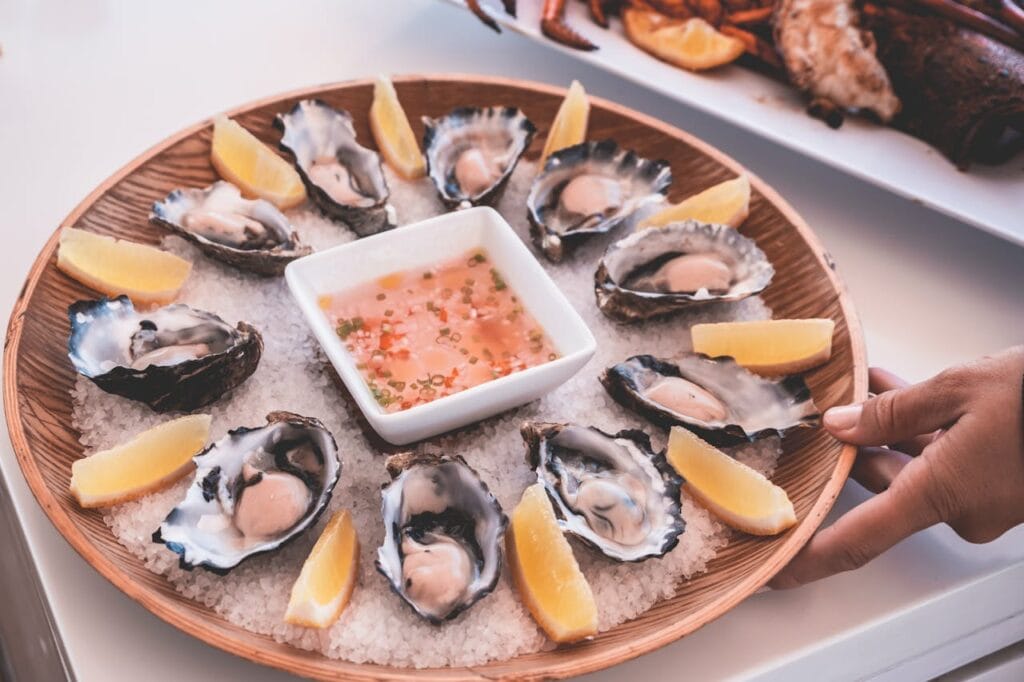
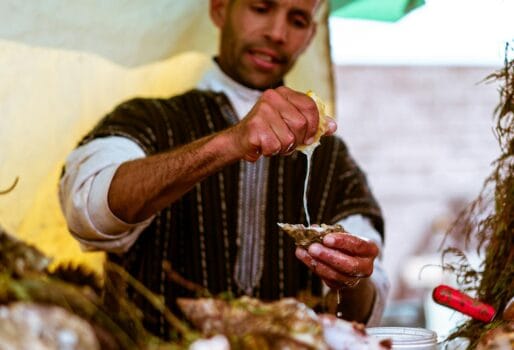
Evans’s piece also brought readers into La Sultana Oualidia, the boutique Moorish-style hotel that mirrors the calm of its surroundings. Its organic gardens supply the kitchen, fishermen deliver the catch, and the famous oyster bar sits at the end of a jetty reaching into the lagoon.
Guests taste the ocean while herons drift past. It’s slow, natural luxury, the kind Morocco does best.
Royal Echoes and Fishermen’s Fires
Oualidia’s charm runs deeper than tourism. It was once a royal retreat, favored by the grandfather of King Mohammed VI. His white palace still overlooks the lagoon.
Yet nearby, fishermen still grill shrimp, lobster, and oysters over beach fires for visitors. The balance between simplicity and refinement, between palace walls and fishing nets, is what gives Oualidia its quiet magic.
A New Face of Moroccan Tourism
Evans’s report in The Times highlighted more than cuisine. Oualidia reflects a turning point in Moroccan tourism. The lagoon values calm over spectacle, connection over display. Sustainability grows naturally here: oysters filter the water, protect the ecosystem, and sustain families who work the shore. The coast thrives through balance between people and place.
A Final Taste
At dusk, an oyster shell catches the last light of the Atlantic. The air smells of salt and earth. That moment explains why The Times turned its gaze toward Oualidia. The lagoon tells its story softly, through work, water, and patience.
Related posts:
- Work, Surf, Repeat: Why Morocco Is the Next Digital Nomad Paradise in 2026
- Top Things to Do in Dakhla, Morocco: The Hidden Paradise of the Sahara Coast
- Surfing in Taghazout, Morocco: The Ultimate Guide to Africa’s Surf Paradise
- Top 11 Surf Beaches in Morocco: Ride the Atlantic Waves
- Dakhla’s Kite-Surf World Cup 2025: Morocco’s Wind-Powered Soft Power Strategy