Estimated reading time: 7 minutes
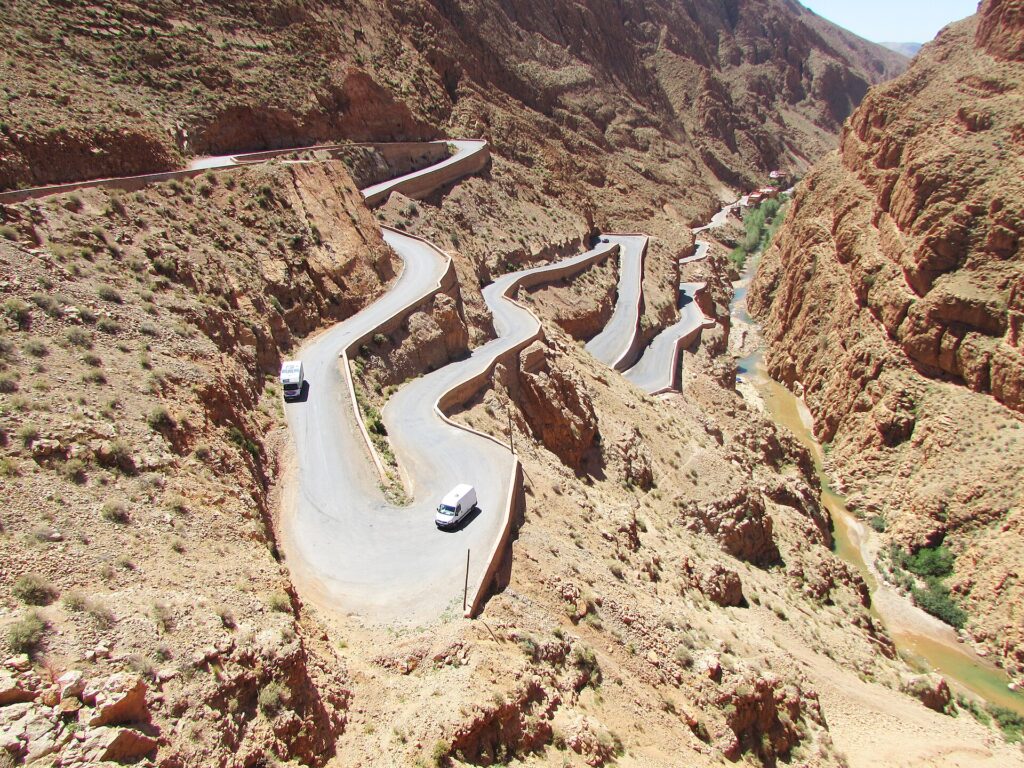
Winding road leading into the Dades gorges in the Anti-Atlas mountain range, Morocco. Image Credit: Bikerhiker75/ Wikimedia.org
The Dades Gorges are among Morocco’s most breathtaking natural attractions. Located between Boumalne Dades and M’Semrir, these impressive canyons stretch through the heart of the High Atlas Mountains and offer visitors dramatic landscapes carved by the Dades River over millions of years.
Travelers exploring the region can admire towering cliffs, winding mountain roads, lush valleys, and unique rock formations that create one of the most iconic panoramas in southern Morocco.
Whether you enjoy hiking, camping, photography, or scenic road trips, the Dades Gorges promise an unforgettable adventure in one of Morocco’s most beautiful natural settings.
- The Geological History of the Dades Gorges
- Where Are the Dades Gorges Located?
- Visiting the Dades Gorges
- The Four Series of Gorges
- Excursion Through the Dades Valley
- Climate and Best Time to Visit
- Things to Do in the Dades Valley
- Where to Stay Near the Dades Gorges
- How to Reach the Dades Gorges
- FAQ about the Dades Gorges
The Geological History of the Dades Gorges
The Dades Gorges are an extremely ancient geological site whose formation dates back nearly 200 million years to the Jurassic period.
During that time, the region was covered by an ocean that allowed coral reefs to develop. Over millions of years, sediment deposits gradually transformed into sandstone and limestone formations.
The movement of tectonic plates later contributed to the formation of the High Atlas Mountains. As the mountains rose, the ancient coral reef formations were lifted to higher elevations.
Over time, the Dades River carved through these rocks, slowly shaping the spectacular gorges visible today. Seasonal erosion, winter conditions, and water flow all played a role in sculpting the dramatic cliffs and canyon landscapes.
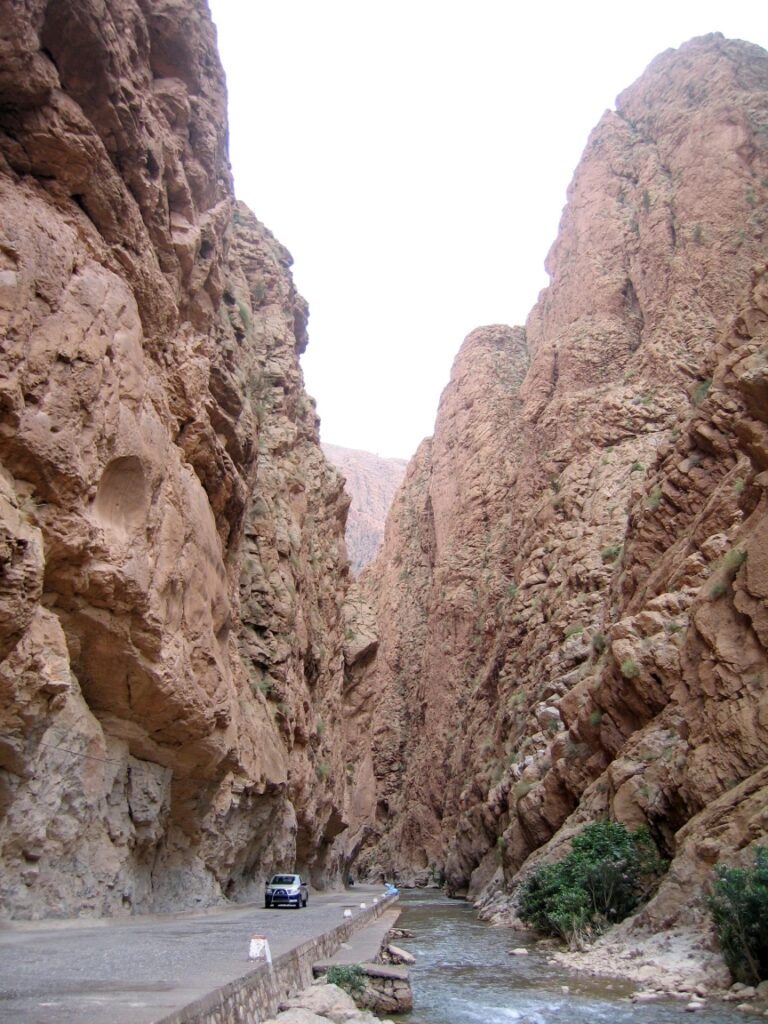
Inside the Dades gorges in the Anti-Atlas mountain range, Morocco. Image Credit: Anderson sady/ Wikimedia.org
Where Are the Dades Gorges Located?
The Dades Gorges are situated between the High Atlas Mountains and the Jebel Saghro range, in southeastern Morocco.
They stretch across the upper Dades Valley between the towns of Boumalne Dades and M’Semrir, southeast of Marrakech.
The Dades River flows through an arid yet surprisingly fertile landscape. Along the valley you will find fig trees, date palms, and almond orchards that bring life and greenery to the desert surroundings.
The region is also known for producing some of Morocco’s finest dates.
Visiting the Dades Gorges
The Dades Gorges extend for nearly 200 kilometers, offering one of the most impressive canyon landscapes in Morocco.
Visitors are often amazed by the contrast between the rugged mountain terrain and the fertile valley floor dotted with traditional villages.
The cliffs, which can rise up to 500 meters high, create dramatic viewpoints and unforgettable panoramas.
During your visit, you may also discover troglodyte houses carved into the rock and meet welcoming local communities who have lived in the valley for generations.
The Four Series of Gorges
First Series of Gorges
The first series consists of two branches of the Dades River. These branches carved gorges reaching approximately 300 meters deep into ochre limestone dating from the Middle Jurassic period.
Second Series of Gorges
After the basin of M’Semrir, the second series of gorges appears. These formations extend over more than 500 meters and create narrow passages that descend nearly 400 meters deep.
Third Series of Gorges
The third series is separated from the previous ones by a narrow basin surrounded by steep cliffs. These gorges stretch for several kilometers and are carved into reef limestone from the Early Jurassic period, often showing reddish or ochre tones.
Fourth Series of Gorges
The fourth series lies north of the Boumalne oasis. These formations are particularly interesting due to their geological diversity, combining rocks from both the Cretaceous and Eocene periods.
Visitors can observe vertical canyon walls carved in ochre limestone as well as narrow passages sculpted into red sandstone.
Excursion Through the Dades Valley
One of the best ways to explore the region is by following the scenic road through the valley toward Aït Moutad.
Along the route, travelers pass through beautiful orchards before reaching the red mountain slopes of the Atlas.
A recommended stop is Tamlalt, about 9 kilometers after Boumalne. Here you can admire the famous rock formations known as the “Monkey Fingers”, which are particularly spectacular at sunset.
Across the river lie the ruins of an ancient kasbah, adding a sense of mystery to the landscape.
Continuing along the valley for about 3.5 hours will bring you to the village of Aït Oudinar. Further along, you will reach the narrow canyon of Imdiazen, a peaceful location ideal for picnics or relaxation beside the water.
The road eventually leads to M’Semrir, a Berber village about 60 kilometers north of Boumalne, which serves as a starting point for excursions toward the Todra Valley or deeper into the Atlas Mountains.
Climate and Best Time to Visit
The region has a semi-arid climate characterized by dry seasons and cool winters.
- January to March: temperatures can reach around 19°C
- April: temperatures rise to about 22°C
- May to October: warm and pleasant weather
- November: mild conditions around 18°C
- December: moderate temperatures with limited rainfall
The best time to visit the Dades Gorges is from April to November.
Things to Do in the Dades Valley
Hiking from Aït Arbi
Hiking is one of the best ways to explore the valley. Visitors can walk along the river or even take guided treks using donkeys.
Explore the Dades Valley
Strolling through the valley allows travelers to discover scenic landscapes and meet welcoming local communities.
Visit Kasbahs and Cave Houses
The famous Kasbah Amridil, dating back to the 17th century, is one of the region’s most remarkable historic buildings.
Admire Scenic Viewpoints
Some of the most impressive viewpoints include Timzzilite panoramic view, the Dades Gorge viewpoints, and the famous Dades “turtle rock” formation.
Where to Stay Near the Dades Gorges
Hotel La Gazelle du Dades
This hotel, built in traditional Berber style, blends perfectly into the surrounding mountains. Each room offers a panoramic terrace overlooking the valley.
Chez Pierre
This popular hotel features a rooftop terrace, swimming pool, and restaurant, providing comfort after a day of exploration.
Riad Les 5 Lunes
Located in Aït Idaïr, this charming riad offers free Wi-Fi, private parking, and comfortable rooms with beautiful garden views.
How to Reach the Dades Gorges
From Boumalne Dades or M’Semrir
Shared taxis are available from both towns to reach the gorges. Renting a car is also possible, although the road between Agoudal and M’Semrir requires a 4×4 vehicle.
From Marrakech
Traveling from Marrakech by public transport or taxi takes approximately 7 hours and usually costs between $30 and $45.
Driving your own car is faster, taking roughly 6 hours.
FAQ about the Dades Gorges
Where are the Dades Gorges located?
The Dades Gorges are located in southeastern Morocco between Boumalne Dades and M’Semrir in the High Atlas Mountains.
How old are the Dades Gorges?
The geological formations date back about 200 million years to the Jurassic period.
What are the Monkey Fingers rock formations?
They are unique rock formations near Tamlalt shaped by erosion, resembling giant fingers emerging from the mountain.
What is the best time to visit the Dades Gorges?
The best time to visit is from April to November when the weather is warm and pleasant.
How far are the Dades Gorges from Marrakech?
The gorges are about 320 kilometers from Marrakech and can be reached in roughly 6 to 7 hours by road.