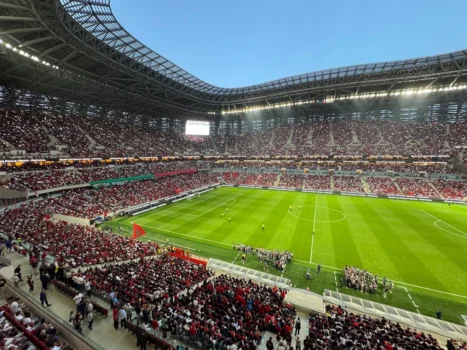
The Director General of the prominent Argentine sports magazine Olé, Mariano Dayan, has praised Stade Moulay Abdellah in Rabat as one of the truly exceptional football venues on the planet, describing it as a stadium “without equal anywhere in the world.”
Dayan, who has visited and covered dozens of stadiums across Europe and the Americas, did not hesitate to highlight the Moroccan capital’s football arena as “world-class” and uniquely impressive. His remarks underline not only the stadium’s architectural qualities but also the full experience on match days.
A World-Class Football Stage
According to Dayan’s comments published by Rue20, the design and atmosphere of Stade Moulay Abdellah stand out for their visual appeal, organic integration with the fan experience, and organizational quality. He emphasized that these aspects make it difficult to compare with other famous stadiums he has seen in his long career.
His appreciation extended beyond aesthetics. Dayan highlighted the passionate crowd presence and efficient Moroccan event management, which together create an atmosphere rarely matched in global football venues.
A Stepping Stone to the 2030 FIFA World Cup
Dayan also pointed to Morocco’s ongoing developments in stadium infrastructure, event operations, and sporting culture as strong indicators of readiness for the global stage. He noted that the 2030 FIFA World Cup will serve as a culmination of these achievements, providing the country with the opportunity to share its world-class football facilities with a massive international audience.
With four years to go before the World Cup, Dayan believes that Morocco’s continued progress—highlighted by venues like Stade Moulay Abdellah—will only elevate its reputation as a host and further validate the investment in elite sporting venues.
Moroccan Stadium on the Global Map
For Moroccan football fans and organizers, Dayan’s comments represent a significant endorsement from a respected voice in international sports journalism. His praise furthers the narrative that Morocco’s football infrastructure is capable of hosting world-class events and creating memorable experiences for both players and supporters alike.
In a region where stadium reputation often shapes global perceptions of sporting readiness, such recognition from Olé’s director affirms Morocco’s growing footprint in the world of football.If you want, I can provide a Yoast SEO pack for this article or rewrite it for a social media post.