A New Era for Moroccan Football in Rabat
What fans will witness at the grand reopening goes far beyond imagination. The transformation of the Prince Moulay Abdellah Stadium marks a defining moment in Morocco’s sports infrastructure evolution, positioning Rabat as a key stage for AFCON 2025 and the 2030 FIFA World Cup.
Completely rebuilt in record time, the stadium now stands among the most advanced football arenas in Africa—combining cutting-edge design, increased capacity, and world-class facilities tailored for players, fans, and global audiences alike.
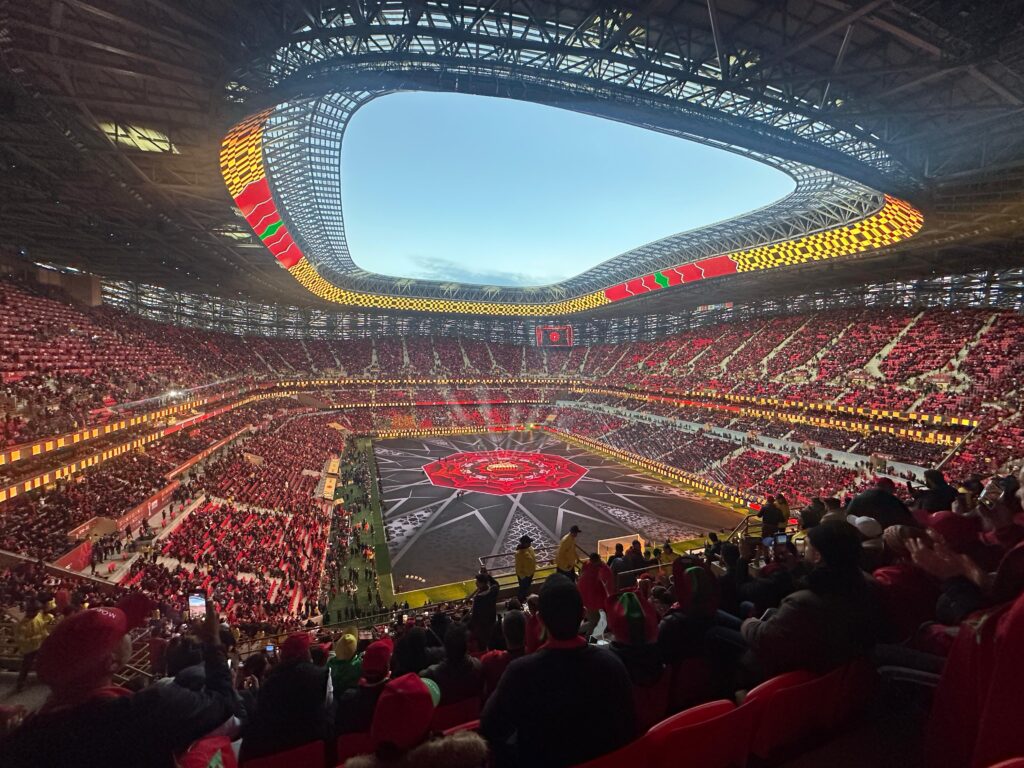
Prince Moulay Abdellah Stadium after its full reconstruction in Rabat
From Demolition to a World-Class Stadium
In less than two years, Morocco achieved an extraordinary feat: transforming an aging venue into a state-of-the-art football stadium built to international standards. The previous structure was completely demolished, making way for a modern arena designed to meet both CAF and FIFA requirements.
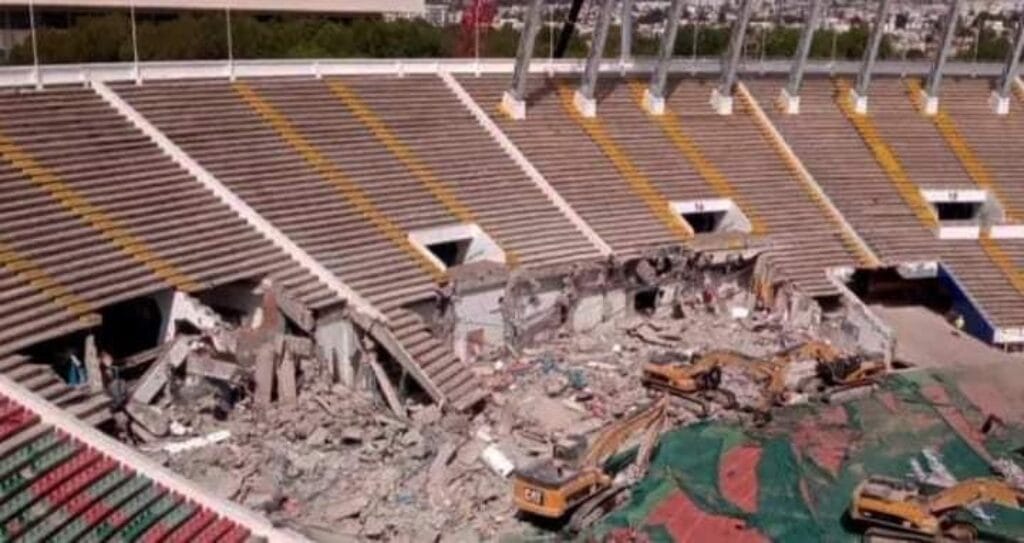
Demolition phase of the former stadium
Today, the new stadium emerges as a benchmark for modern sports architecture, with a capacity of nearly 69,500 seats, offering optimal visibility and comfort for every spectator.
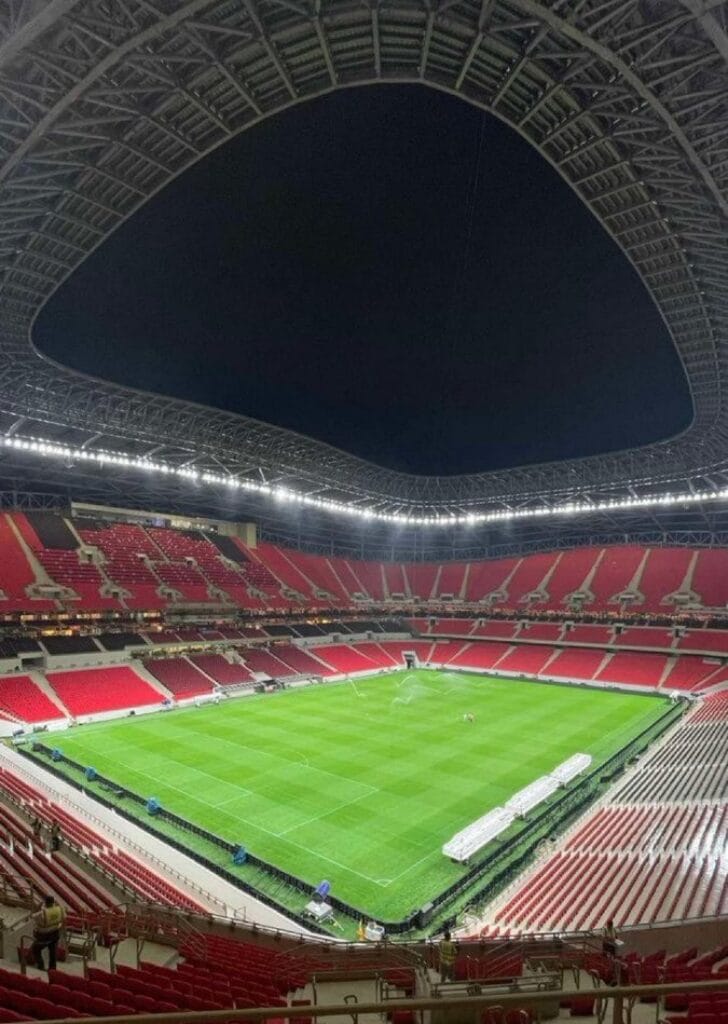
The new stadium: a symbol of Morocco’s modern sporting ambition
The Grand Reopening: A Historic Match
The reopening of the stadium is set to coincide with a major football event, as the Moroccan national team, the Atlas Lions, face Niger in a highly anticipated match. Tickets sold out rapidly, reflecting the excitement surrounding both the team and the unveiling of this architectural masterpiece.
This moment goes beyond sport—it represents a national celebration of progress, pride, and unity.
Strategic Vision for AFCON 2025 and World Cup 2030
Following Morocco’s official selection as host of AFCON 2025, authorities launched an ambitious nationwide program to modernize stadium infrastructure. The Prince Moulay Abdellah Stadium quickly became a flagship project within this vision.
The objective is clear: ensure that Moroccan venues meet the highest international standards, enabling the country to host not only continental tournaments but also matches during the 2030 FIFA World Cup, co-organized with Spain and Portugal.
Key Features of the New Stadium
The redesigned stadium integrates advanced technologies and premium facilities, creating a world-class matchday experience:
| Feature | Description |
|---|---|
| Capacity | Approximately 69,500 seats with optimized sightlines |
| Design | Fully covered stadium with two-tier seating structure |
| VIP Areas | Royal tribune, VVIP lounges, and premium hospitality suites |
| Facilities | Modern restrooms, fan zones, and improved circulation areas |
| Lighting | Advanced LED lighting system for immersive night matches |
These features elevate the stadium to international standards, ensuring comfort, safety, and an unforgettable atmosphere for fans.
A Landmark for African and Global Football
The new Prince Moulay Abdellah Stadium is more than a sports venue—it is a symbol of Morocco’s rise in global football infrastructure. Its modern architecture and advanced facilities place it among the elite stadiums on the continent.
It is expected to host major matches during AFCON 2025 and potentially key fixtures during the 2030 World Cup, reinforcing Rabat’s status as a major sports destination.
Writing the Next Chapter of Moroccan Football
Originally built in 1983 for the Mediterranean Games, the stadium has long been a pillar of Moroccan football history. Today, its complete transformation marks the beginning of a new era—one driven by innovation, national expertise, and global ambition.
As Morocco prepares to welcome the world in the coming years, the Prince Moulay Abdellah Stadium stands ready to host unforgettable moments, reflecting a country that sees sport as both a passion and a powerful engine of development.
MoroccoBeat – Inspiring Stories, Positive Energy, Proudly Moroccan.