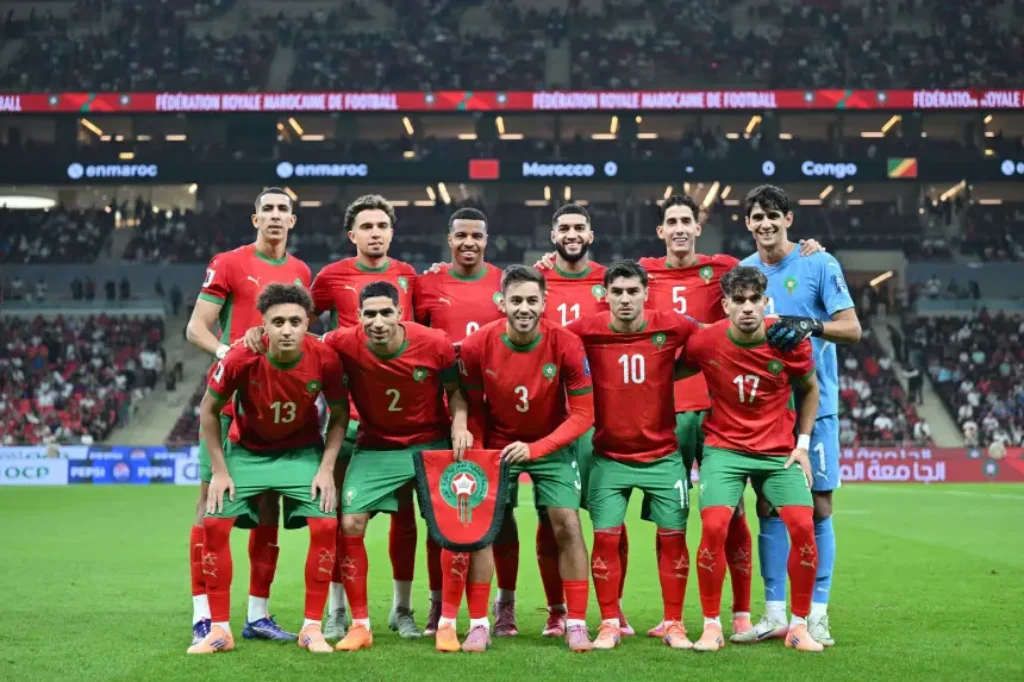
As the football world awaits the 2026 FIFA World Cup group draw, scheduled for 5 December in Washington, Morocco approaches the event with renewed confidence and elevated ambitions. After its historic fourth-place finish at the 2022 World Cup in Qatar, the national team—led by head coach Walid Regragui aims to reach new heights in the upcoming tournament hosted by the United States, Canada, and Mexico.
Morocco’s rise is not accidental. It is the result of a decade-long investment in youth development, advanced infrastructure, and strong strategic vision—including the role of the Mohammed VI Football Academy, a cornerstone of the national team’s long-term success.
High Expectations After a Historic 2022 Run
Morocco’s fourth-place finish in Qatar, where it eliminated teams such as Belgium, Spain, and Portugal, set a new benchmark for African and Arab football. For Regragui’s squad, this achievement raised the bar, shaping a mindset aimed not only at repeating the feat but surpassing it.
The Royal Moroccan Football Federation (FRMF), led by Fouzi Lekjaa, is openly targeting a quarter-final finish at minimum for the 2026 edition. While ambitious, the goal is consistent with the nation’s steady rise, supported by solid performance metrics and a world-class talent pool.
Morocco currently sits 11th in the FIFA World Ranking, its highest modern-era position a fact highlighted in recent analyses such as the report on Morocco’s rise:
Morocco Ranked 11th Worldwide in the FIFA Rankings.
A Favorable Positioning in Pot 2
Morocco’s strong FIFA ranking has placed it in Pot 2 for the draw. This status significantly reduces the likelihood of facing two elite teams in the group stage, since only one opponent will come from Pot 1 comprised of teams such as:
- Brazil
- France
- Argentina
- Portugal
- Spain
- Germany
- USA, Mexico, or Canada (hosts)
The remaining group opponents will come from Pots 3 and 4, which statistically include less threatening teams. Additionally, FIFA regulations prevent two teams from the same confederation sharing a group meaning Morocco cannot face another African side in the opening phase.
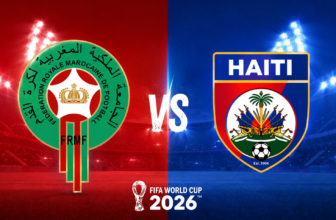
Potential opponents may include Norway, Scotland, Paraguay, Panama, Uzbekistan, Qatar, or Saudi Arabia from Pot 3. Teams in Pot 4 could include Cape Verde, Jordan, Haiti, New Zealand, or playoff winners such as Italy, Poland, Sweden, or Ukraine some of which could prove unpredictable.
An Experienced, Balanced, and Confident Squad
Morocco’s advantage lies in the maturity and stability of its squad. The team features experienced players accustomed to top-level European competition, including:
- Achraf Hakimi — African Ballon d’Or 2025 and Champions League winner with PSG
- Eliesse Ben Seghir — rising star at Bayer Leverkusen
- Brahim Díaz — standout performer at Real Madrid
- Yassine Bounou — one of the world’s top goalkeepers
- Youssef En-Nesyri — reliable scorer with international experience
The squad’s depth is reinforced by a new generation of players who triumphed at the U20 World Cup in Chile, defeating Argentina in the final. Among them:
- Yassir Zabiri — Silver Boot, four goals
- Othmane Maamma — Golden Ball award
This blend of experience and youth reflects the strategic evolution of Moroccan football an evolution recognized by international media such as MARCA:
MARCA: Morocco Is Becoming a Top Force in World Football.
Regragui’s Impact: A Modern, Assertive Moroccan Team
Often called the “Moroccan Guardiola”, Walid Regragui has transformed the national team through tactical discipline, modern training methods, and rigorous match preparation. His 4-1-4-1 system emphasizes defensive solidity, quick transitions, and detailed analysis of opponents.
Since taking charge, Regragui has guided Morocco to:
- 32 wins (72%)
- 9 draws (18%)
- Only 5 defeats (10%) in 50 matches
His approach was evident at the 2022 World Cup, where Morocco conceded just one goal in the first five matches, despite facing elite teams. The 2026 qualifiers have been equally impressive, with eight wins in eight matches.
The Ideal Lineup for 2026
While much can change before June 2026, Regragui’s projected preferred starting XI includes:
Bounou; Hakimi, Aguerd, Abqar, El Karouani; Amrabat; Díaz, El Aynaoui, Saibari, Ben Seghir; En-Nesyri.
This lineup reflects Morocco’s new identity: tactically intelligent, defensively stable, and supported by a powerful diaspora contributing players born in Europe 14 of 26 squad members in Qatar 2022 were born abroad.
A Regional Leader with World Cup Ambitions
Morocco enters the 2026 World Cup as a regional and continental leader, driven by investment in infrastructure, development academies, and long-term strategic planning. The dream of becoming the first African world champion remains distant, but more attainable than ever.
With a growing squad, strong FIFA ranking, and global respect earned after 2022, Morocco looks toward the 2026 World Cup tournament with a mix of ambition, confidence, and determination.