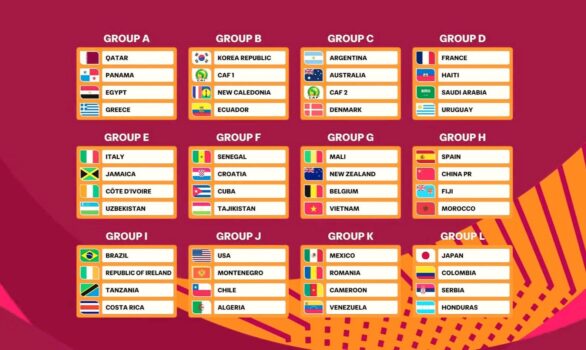
Morocco’s U17 national team now know their opponents for the FIFA U17 World Cup Qatar 2026. Following the official draw organized by FIFA in Zurich on May 21, the Atlas Cubs were placed in Group H alongside Spain, China, and Fiji in what promises to be one of the tournament’s most intriguing groups.
The competition will take place in Qatar from November 19 to December 13, 2026, bringing together the best young football talents from around the world. For Morocco, the tournament represents another important step in the country’s rapidly growing football project after the historic rise of Moroccan football on both senior and youth levels in recent years.
The young Moroccan side secured qualification for the U17 World Cup after reaching the quarterfinals of the CAF U17 Africa Cup of Nations currently being played in Morocco from May 13 to June 3. Under head coach Tiago Lima Pereira, the Atlas Cubs have shown ambition, technical quality, and attacking potential that continue to attract attention across African football.
Morocco U17 Group at FIFA U17 World Cup 2026
| Group H |
|---|
| Spain |
| Morocco |
| China |
| Fiji |
Morocco’s group presents a fascinating mix of football cultures and styles. Spain enter as one of the traditional powerhouses of youth football, while China continue investing heavily in youth development. Fiji, meanwhile, arrive as outsiders but could still create problems with their athleticism and fearless approach.
Spain Represents Morocco’s Biggest Test
Spain are widely expected to be Morocco’s toughest opponent in Group H. The Spanish youth system remains one of the strongest in world football, consistently producing technically gifted players capable of dominating possession and controlling matches through structured buildup play.
For Morocco, the match against Spain will be a major test of tactical discipline, defensive organization, and mental strength. However, Moroccan youth football has evolved significantly over the past decade. The Royal Moroccan Football Federation has invested massively in infrastructure, academies, scouting, and coaching development, helping Morocco close the gap with elite football nations.
Morocco’s recent performances at youth level have already demonstrated that the Atlas Cubs can compete with traditional football powers. The clash against Spain could therefore become one of the most exciting matches of the group stage.
China and Fiji: Dangerous Opponents Morocco Cannot Underestimate
While Spain naturally attract most of the attention, Morocco will also need to approach matches against China and Fiji with full concentration. In youth tournaments, surprises happen frequently because momentum, confidence, and individual brilliance can completely change the dynamic of a group.
China continue to develop their youth football structure and have increased investment in player development over recent years. Their teams are often physically disciplined and tactically organized, making them difficult opponents to break down.
Fiji arrive as underdogs, but teams from Oceania often play with freedom and intensity due to reduced pressure. Morocco will need to avoid complacency and maintain consistency throughout the group stage.
Morocco’s Strong Progress in Youth Football
The Atlas Cubs enter the FIFA U17 World Cup with growing confidence after a memorable campaign during the previous edition held in Qatar in 2025.
Morocco reached the quarterfinals of the tournament before narrowly losing 2-1 against Brazil. Despite the elimination, the Moroccan side impressed many observers with their resilience, attacking quality, and ability to compete against elite football nations.
The tournament had started in difficult fashion for Morocco. The young Atlas Lions suffered defeats against Japan and Portugal during the group stage. However, they responded spectacularly by defeating New Caledonia 16-0 in one of the most remarkable scorelines in FIFA youth tournament history.
That historic victory allowed Morocco to qualify for the knockout stage among the best third-placed teams. From there, the Atlas Cubs eliminated the United States on penalties before defeating Mali in the Round of 16.
Those performances changed the international perception of Moroccan youth football. The country is no longer viewed simply as an emerging football nation, but increasingly as a serious long-term competitor capable of producing elite-level talent.
Tiago Lima Pereira and Morocco’s New Generation
Head coach Tiago Lima Pereira has become one of the important figures behind Morocco’s current U17 generation. His work focuses on tactical organization, technical development, and modern positional football principles.
The Moroccan U17 side combines locally developed players with talents emerging from Moroccan diaspora communities abroad. This blend has strengthened Morocco’s technical level and tactical maturity, allowing youth teams to compete more comfortably against top international opponents.
The Federation’s long-term football strategy continues to deliver visible results across multiple age categories. Morocco’s rise is no longer limited to the senior national team after the historic 2022 FIFA World Cup semifinal run. The progress is now visible throughout the entire football pyramid.
Full FIFA U17 World Cup Qatar 2026 Draw
- Group A: Qatar, Egypt, Panama, Greece
- Group B: South Korea, CAF 1, New Caledonia, Ecuador
- Group C: Argentina, Australia, CAF 2, Denmark
- Group D: France, Haiti, Saudi Arabia, Uruguay
- Group E: Italy, Ivory Coast, Uzbekistan, Jamaica
- Group F: Senegal, Croatia, Tajikistan, Cuba
- Group G: Mali, New Zealand, Belgium, Vietnam
- Group H: Spain, China, Morocco, Fiji
- Group I: Brazil, Ireland, Tanzania, Canada
- Group J: United States, Montenegro, Chile, Algeria
- Group K: Mexico, Romania, Cameroon, Venezuela
- Group L: Japan, Colombia, Serbia, Honduras
What Morocco Must Do to Reach the Knockout Stage
Morocco’s objective will be to qualify for the knockout rounds while competing strongly against Spain for top position in the group. The expanded tournament format offers additional qualification opportunities, but consistency remains essential.
The key for Morocco will likely be defensive concentration against Spain while maximizing attacking efficiency against China and Fiji. Goal difference could also become important depending on the final standings.
Morocco’s recent youth teams have shown strong mentality during difficult moments, which could become one of their biggest advantages in Qatar.
Why the FIFA U17 World Cup Matters for Moroccan Football
The FIFA U17 World Cup is increasingly important for Morocco’s long-term football ambitions. Youth tournaments provide exposure for future stars, international experience for young players, and validation for national development projects.
Morocco’s football authorities have invested heavily in academies, coaching structures, sports science, and scouting networks over the last decade. The results are now becoming visible at every level of international competition.
With Morocco also preparing to co-host the FIFA World Cup 2030 alongside Spain and Portugal, strong performances in youth tournaments help strengthen the country’s football reputation globally.
The Atlas Cubs therefore carry more than simple sporting ambitions. They represent the future of Moroccan football and the next generation expected to continue the country’s rise on the international stage.
Frequently Asked Questions
Which group is Morocco in at the FIFA U17 World Cup 2026?
Morocco were drawn in Group H alongside Spain, China, and Fiji.
When will the FIFA U17 World Cup Qatar 2026 take place?
The tournament will be played from November 19 to December 13, 2026, in Qatar.
How did Morocco qualify for the U17 World Cup?
Morocco qualified after reaching the quarterfinals of the CAF U17 Africa Cup of Nations.
How far did Morocco go in the previous U17 World Cup?
Morocco reached the quarterfinals of the 2025 FIFA U17 World Cup before losing 2-1 against Brazil.
Who coaches Morocco’s U17 national team?
The Moroccan U17 national team is coached by Tiago Lima Pereira.
Conclusion
Morocco’s U17 national team face an exciting challenge at the FIFA U17 World Cup Qatar 2026 after being drawn against Spain, China, and Fiji in Group H. The draw offers both opportunity and difficulty for the Atlas Cubs, who continue to represent one of the fastest-rising football projects in world football.
With growing international experience, improved youth development structures, and increasing confidence after recent performances, Morocco will enter the tournament believing they can once again compete with the world’s best young teams.
The road to Qatar 2026 is now officially clear. The next step for Morocco’s young Lions is proving that the future of Moroccan football remains exceptionally bright.