Estimated reading time: 12 minutes
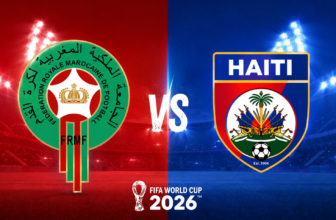
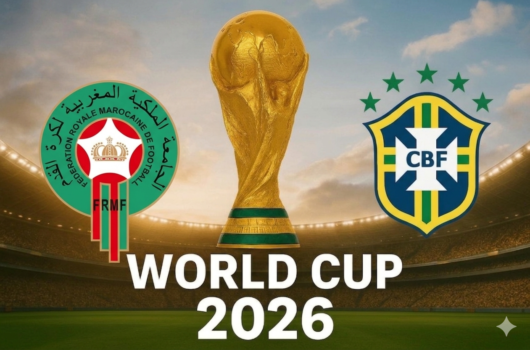
Brazil have officially confirmed their final 26-man squad for the FIFA World Cup 2026, with Neymar Jr included by Carlo Ancelotti in one of the most anticipated selections of the tournament. For Moroccan fans, this announcement carries immediate importance: Brazil will open their World Cup campaign against Morocco on June 13, 2026, at the New York/New Jersey Stadium, in a Group C clash already viewed as one of the standout fixtures of the first round.
The Seleção enter the tournament with enormous pressure, a new tactical identity, and one of the most closely watched squads in world football. Five-time world champions, Brazil have not lifted the trophy since 2002 and have not reached a World Cup final for more than two decades. The arrival of Carlo Ancelotti, one of the most successful club managers in football history, was designed to change that cycle.
For Morocco, the timing could not be more significant. The Atlas Lions, semifinalists at the 2022 FIFA World Cup in Qatar, will face Brazil in their opening match. That makes Ancelotti’s final list a key piece of information for Walid Regragui, Moroccan supporters, and anyone following Group C closely.
Brazil’s Final 26-Man Squad for the FIFA World Cup 2026
Carlo Ancelotti’s final selection combines experience, elite European-based stars, Brazilian league representation, and explosive attacking talent. The biggest headline is the return of Neymar Jr, who had been absent from the national team picture for a long period after serious injury problems.
| Player | Position |
|---|---|
| Alisson | Goalkeeper |
| Ederson | Goalkeeper |
| Weverton | Goalkeeper |
| Alex Sandro | Defender |
| Bremer | Defender |
| Danilo | Defender |
| Douglas Santos | Defender |
| Gabriel | Defender |
| Ibanez | Defender |
| Leo Pereira | Defender |
| Marquinhos | Defender |
| Wesley | Defender |
| Bruno Guimarães | Midfielder |
| Casemiro | Midfielder |
| Danilo S. | Midfielder |
| Fabinho | Midfielder |
| Lucas Paquetá | Midfielder |
| Endrick | Forward |
| Gabriel Martinelli | Forward |
| Igor Thiago | Forward |
| Luiz Henrique | Forward |
| Matheus Cunha | Forward |
| Neymar Jr | Forward |
| Raphinha | Forward |
| Rayan | Forward |
| Vinicius Jr | Forward |
Neymar Included: The Biggest Story of Brazil’s Squad Announcement
Neymar’s presence in Brazil’s final World Cup squad is the headline that will dominate global coverage. The 34-year-old forward remains one of the most influential Brazilian players of his generation and Brazil’s all-time leading scorer. His return gives Ancelotti a unique attacking option, but also raises one of the most important tactical questions of the tournament: how should Brazil use Neymar in 2026?
For months, his selection was uncertain. Neymar had struggled with injuries and had not been a regular part of Brazil’s recent international cycle. Ancelotti repeatedly made it clear that reputation alone would not be enough. The Italian coach wanted proof of fitness, rhythm, and competitive sharpness before making a final decision.
His inclusion suggests that Brazil believe Neymar can still influence matches at the highest level. He may not have the same physical explosiveness that defined his earlier career, but his passing, vision, set-piece quality, and ability to slow or accelerate the rhythm of a match remain valuable assets. Against organized teams, that creativity can be decisive.
For Morocco, Neymar’s return adds another layer of complexity. Walid Regragui’s side will already need to prepare for Vinicius Jr, Raphinha, Endrick, and Brazil’s midfield control. Neymar gives Ancelotti another creator between the lines, especially if Brazil struggle to break down Morocco’s defensive block.
Why This Brazil Squad Matters So Much for Morocco
Morocco’s opening match against Brazil is more than a glamorous fixture. It could shape the entire direction of Group C. In a tournament with 48 teams and 12 groups of four, finishing first still carries major importance because it can influence the route through the knockout stage.
Brazil will expect to finish top of the group. Morocco, however, will not approach this match as outsiders in the traditional sense. Since their historic 2022 run, the Atlas Lions have earned global respect. Their semifinal appearance in Qatar changed how elite nations view Moroccan football. No serious opponent will underestimate them again.
The Moroccan team has several qualities that can trouble Brazil. Achraf Hakimi provides world-class speed and experience on the right side. Noussair Mazraoui offers technical security and tactical intelligence. Brahim Diaz can operate between midfield and attack, while Youssef En-Nesyri remains a dangerous penalty-box forward. Azzedine Ounahi’s press resistance and ability to carry the ball through midfield could also be crucial against Brazil’s central pressure.
Brazil’s squad announcement therefore gives Morocco a clearer picture of the challenge ahead. The Atlas Lions must prepare for a team that can attack in several different ways: through Vinicius Jr’s direct running, Raphinha’s movement from wide areas, Neymar’s creativity, Endrick’s explosiveness, and Casemiro’s ability to control transitions.
Brazil vs Morocco: Date, Venue and Group C Context
Brazil and Morocco will meet on June 13, 2026, at the New York/New Jersey Stadium. The match is scheduled as one of the major early fixtures of the competition and will attract huge attention from fans in Morocco, Brazil, the United States, and across the global football audience.
| Match | Date | Opponent | Venue |
|---|---|---|---|
| Matchday 1 | June 13, 2026 | Morocco | New York/New Jersey Stadium |
| Matchday 2 | June 19, 2026 | Haiti | Philadelphia Stadium |
| Matchday 3 | June 24, 2026 | Scotland | Miami Stadium |
Group C is far from simple. Brazil are the historic heavyweight, Morocco are the recent World Cup semifinalists, Scotland bring European intensity and physical structure, while Haiti enter as a dangerous underdog with little pressure. For Brazil, the objective is clear: win the group and build momentum. For Morocco, a strong result against Brazil would immediately confirm that the Atlas Lions remain one of the most serious non-European, non-South American contenders in world football.
Carlo Ancelotti’s Brazil: A New Tactical Era
Carlo Ancelotti’s appointment changed the identity of the Brazilian national team. Brazil have always been associated with flair, technical superiority, and attacking imagination. Ancelotti does not want to remove those qualities. His challenge is to organize them inside a more stable structure.
The most likely system is a flexible 4-2-3-1 or 4-3-3, depending on Neymar’s role and the balance required in midfield. Ancelotti is not a rigid ideologue. Throughout his career, he has adapted to the players available rather than forcing every squad into the same shape. That flexibility could be useful for Brazil, whose attacking depth allows several combinations.
Vinicius Jr is expected to be central to the project. His speed, one-versus-one ability, and experience in major matches make him Brazil’s most dangerous attacking weapon. Under Ancelotti at Real Madrid, Vinicius developed from a raw winger into one of the most decisive forwards in world football. That relationship could help Brazil create a clear attacking hierarchy.
Raphinha gives Brazil intensity, pressing, and final-third quality from wide areas. Endrick offers youth, power, and unpredictability. Matheus Cunha can connect midfield and attack. Gabriel Martinelli provides vertical running and defensive work rate. Neymar, meanwhile, can act as the creative reference point if his body allows him to handle the demands of tournament football.
Brazil’s Midfield: Experience, Control and Physical Balance
Brazil’s midfield selection reveals Ancelotti’s desire for balance. Casemiro remains a key figure because of his experience, defensive reading, and leadership. Bruno Guimarães brings distribution, pressing intelligence, and the ability to dictate tempo. Fabinho adds another experienced defensive option, while Lucas Paquetá can offer creativity and movement between the lines.
Against Morocco, midfield control could be decisive. Morocco are at their best when they can disrupt rhythm, recover the ball, and attack quickly through wide channels. Brazil must avoid becoming stretched, especially if both full-backs push forward. Ancelotti’s midfield choices will therefore be crucial in preventing Moroccan counterattacks.
The battle between Brazil’s midfield and Morocco’s technical core could define the opening match. If Brazil dominate possession but leave space behind, Morocco have the speed and intelligence to punish them. If Brazil control transitions and force Morocco deep for long periods, the pressure on the Atlas Lions’ defensive line will increase.
Defensive Strength: Marquinhos, Gabriel and the Back Line
Brazil’s defensive unit is one of the strongest on paper. Marquinhos brings international experience, calmness, and leadership. Gabriel has developed into a powerful and reliable central defender, particularly strong in duels and aerial situations. Bremer, Ibanez, Leo Pereira, Danilo, Alex Sandro, Douglas Santos, and Wesley give Ancelotti several options depending on the opponent.
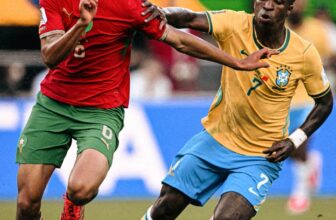
Against Morocco, Brazil’s defenders will need to manage direct balls into En-Nesyri, quick combinations around Brahim Diaz, and the overlapping threat of Hakimi. The duel on Morocco’s right side could be one of the most important tactical zones of the match, especially if Vinicius Jr starts on Brazil’s left and Hakimi attacks into the same corridor.
That matchup alone gives the game enormous tactical appeal. Vinicius against Hakimi would bring together two of the fastest and most recognizable players in world football. It would also force both coaches to make decisions about support, pressing cover, and defensive protection.
Key Absences: Rodrygo, Estevão and Brazil’s Lost Options
Brazil’s squad is loaded with talent, but Ancelotti will still regret several absences. Rodrygo’s absence removes a technically gifted forward capable of playing across the front line. Estevão, one of Brazil’s most exciting young prospects, also misses the tournament because of injury. Eder Militão’s absence further reduces defensive flexibility, particularly in positions where Ancelotti might have wanted a hybrid defender.
These absences partly explain why Neymar’s inclusion became even more important. Brazil needed another player with experience, creativity, and star power in the attacking unit. The injuries also create space for younger names such as Endrick and Rayan to play bigger roles than initially expected.
What Brazil’s Squad Reveals About Their World Cup Ambition
This is not a conservative Brazil squad. Ancelotti has selected a group built to win, not merely to compete. The attacking depth is clear. The midfield has experience. The defensive line has strength. The goalkeeping department, led by Alisson and Ederson, is among the best in the tournament.
However, Brazil’s biggest challenge may be psychological. Since 2002, every World Cup has carried the weight of expectation. The 2014 semifinal defeat to Germany remains a national trauma. The eliminations in 2018 and 2022 reinforced the feeling that Brazil have often had enough talent, but not enough tournament control.
Ancelotti was hired to solve that problem. His reputation is built on calm leadership, elite dressing-room management, and knockout-stage experience. Brazil do not only need tactics. They need emotional stability in decisive moments. That is where Ancelotti’s presence could matter most.
Why the Morocco Match Could Define Brazil’s Tournament
Opening matches often shape the mood of an entire World Cup campaign. For Brazil, starting against Morocco is both a challenge and an opportunity. A win would send a powerful message to the rest of the tournament. A draw would keep the group open. A defeat would immediately create pressure before matches against Haiti and Scotland.
Morocco will likely approach the game with discipline, compactness, and selective aggression. Regragui’s team proved in 2022 that they can frustrate elite opponents and punish mistakes. Spain, Portugal, and Belgium all struggled against Morocco’s organization and intensity in Qatar. Brazil will be aware of that history.
The key for Brazil will be patience. If they try to force the game too early, Morocco can exploit spaces. If they move the ball quickly and create overloads in wide areas, they can stretch the Moroccan block. Neymar’s role could be decisive in that context because he can attract defenders and open passing lanes for runners.
Morocco’s Opportunity Against Brazil
For Morocco, facing Brazil is not just a test; it is a global stage. A strong performance would strengthen the country’s football image ahead of the later stages of the tournament and ahead of Morocco’s growing role in world football, especially as a co-host of the 2030 FIFA World Cup.
The Atlas Lions have already shown they can compete with the best. Now they have the chance to do it again against the most iconic national team in football history. Morocco do not need to dominate possession to hurt Brazil. They need structure, concentration, and efficiency in transition.
A positive result against Brazil would also give Morocco a strong platform before facing Scotland and Haiti. In a group where every point matters, the first match could determine whether Morocco fight for first place or simply manage qualification.
FIFA World Cup 2026 Format: Why Squad Depth Matters More Than Ever
The 2026 FIFA World Cup introduces an expanded 48-team format. The tournament features 12 groups of four teams, followed by a round of 32. That means eventual champions must manage a longer and more demanding path than in previous editions.
This format increases the importance of squad rotation. Brazil may need to rely on almost every area of the squad if they go deep into the competition. Fitness, recovery, travel, climate, and tactical flexibility will all matter.
For Neymar, this is especially important. Ancelotti may not need him to play every minute. Instead, Brazil could use him strategically: starting key games, managing his minutes, or bringing him into matches when creativity is needed. That could be the most realistic way to maximize his impact.
Frequently Asked Questions About Brazil’s World Cup 2026 Squad
Is Neymar in Brazil’s World Cup 2026 squad?
Yes. Neymar Jr has been included in Brazil’s final 26-man squad for the FIFA World Cup 2026 by Carlo Ancelotti.
When will Brazil play Morocco?
Brazil will play Morocco on June 13, 2026, in their opening Group C match at the New York/New Jersey Stadium.
Who is Brazil’s coach at the 2026 World Cup?
Brazil are coached by Carlo Ancelotti, the Italian manager appointed to lead the Seleção into a new era.
Which teams are in Brazil’s World Cup 2026 group?
Brazil are in Group C with Morocco, Haiti, and Scotland.
Why is Brazil vs Morocco important?
The match is important because it brings together Brazil, the five-time world champions, and Morocco, the 2022 World Cup semifinalists. It could also decide the battle for first place in Group C.
Key Takeaways
- Brazil have confirmed their final 26-man squad for the FIFA World Cup 2026.
- Neymar Jr is included, making his return one of the biggest stories of the tournament.
- Carlo Ancelotti will lead Brazil in his first World Cup as national team coach.
- Brazil will open their campaign against Morocco on June 13, 2026.
- The match will be played at the New York/New Jersey Stadium.
- Morocco will view the fixture as a major opportunity to confirm their status among world football’s elite.
- Brazil remain one of the tournament favorites, but Group C will not be easy.
Conclusion: Brazil Arrive with Stars, Morocco Await with Belief
Brazil’s final World Cup 2026 squad announcement confirms what many fans expected: the Seleção will arrive with star power, ambition, and huge pressure. Neymar’s inclusion adds emotion and global attention, while Vinicius Jr, Raphinha, Endrick, Casemiro, Bruno Guimarães, Marquinhos, Gabriel, Alisson, and Ederson give Carlo Ancelotti one of the most complete squads in the tournament.
But Morocco will not be intimidated. The Atlas Lions have already rewritten African football history and will enter the 2026 World Cup with belief, experience, and tactical maturity. Their opening match against Brazil is more than a spectacle. It is a statement opportunity.
For Brazil, the mission is to win a sixth star. For Morocco, the goal is to prove that the Qatar 2022 miracle was only the beginning. On June 13, 2026, the world will be watching.