Estimated reading time: 10 minutes
Most travelers think they know what language is spoken in Morocco… but the reality is completely different.
You might expect Arabic—and you’d be partly right. But once you arrive in cities like Marrakech or Fes, you’ll hear a surprising mix of languages that can change within a single conversation.
French, Amazigh, Spanish, and even English all play a role. This unique linguistic blend is one of the most fascinating—and confusing—aspects of traveling in Morocco.
This guide reveals what tourists don’t expect, and how to navigate it easily.
Quick Answer: What Language Is Spoken in Morocco?
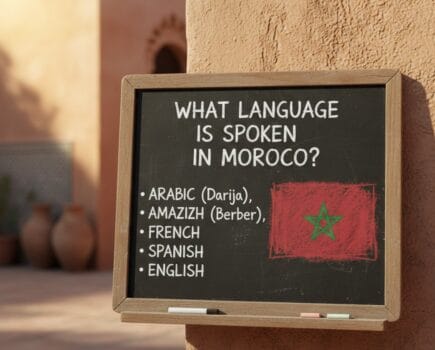
Morocco uses multiple languages. Moroccan Arabic (Darija) is the most spoken, while Amazigh and Modern Standard Arabic are official. French is widely used, and English is growing in tourism.
Why Morocco Has So Many Languages
Morocco’s linguistic diversity comes from its unique history. Over centuries, the country has been influenced by Arab, Amazigh (Berber), African, and European cultures.
Each of these influences left a mark on how people speak today. As a result, most Moroccans grow up multilingual, switching between languages depending on the situation.
| Language | Type | Role in Society |
|---|---|---|
| Darija (Moroccan Arabic) | Spoken | Daily communication |
| Modern Standard Arabic | Official | Media, education |
| Amazigh (Berber) | Official | Cultural identity |
| French | Secondary | Business, administration |
| English | Emerging | Tourism, youth |
Darija: The Language You Will Hear Everywhere
The most commonly spoken language in Morocco is Moroccan Arabic, known locally as Darija. It is used in everyday conversations, markets, taxis, and casual interactions.
Darija is different from classical Arabic. It includes words from French, Spanish, and Amazigh, making it unique and sometimes challenging for outsiders.
For travelers, learning a few basic words can make a big difference in interactions.
Common Darija Expressions
| Phrase | Meaning |
|---|---|
| Salam | Hello |
| Shukran | Thank you |
| La | No |
| Naam | Yes |
Learn Moroccan Darija, Click here: 100 Essential Darija Words and Phrases.
Modern Standard Arabic: The Official Language
Modern Standard Arabic is one of Morocco’s official languages. It is used in government, news, formal writing, and education.
However, it is not commonly used in everyday conversation. Most locals prefer Darija for daily communication.
Travelers are unlikely to need Standard Arabic unless dealing with official institutions.
Amazigh Languages: The Indigenous Identity
Amazigh languages, often referred to as Berber, are also official in Morocco and represent the country’s indigenous heritage.
They are widely spoken in rural areas and mountainous regions such as the Atlas Mountains.
There are several Amazigh dialects, including:
- Tarifit (north)
- Tamazight (central regions)
- Tachelhit (south)
These languages are increasingly recognized and promoted in education and media.
What This Means for Travelers
For visitors, Morocco’s multilingual environment is actually an advantage. You do not need to master every language—basic communication is often enough.
In most tourist areas, people adapt quickly and will switch languages to help you.
The key takeaway: Morocco is not a one-language country—it is a flexible communication environment.
French, English, and Regional Language Use in Morocco
While Morocco has official languages like Arabic and Amazigh, the reality on the ground is even more dynamic. French and English play major roles in communication, especially in cities and tourist areas.
Understanding when and where each language is used will help you navigate the country more easily and confidently.
What Tourists Don’t Expect About Language in Morocco
- You may hear 3 languages in one sentence
- Taxi drivers may switch languages mid-conversation
- French is sometimes more useful than Arabic
- English is growing fast—but not everywhere
The Role of French in Morocco
French is one of the most important languages in Morocco, even though it is not officially recognized as such. It is widely used in business, education, administration, and daily urban life.
Due to historical ties with France, many Moroccans are fluent in French, especially in cities like Casablanca, Rabat, and Marrakech.
Street signs, menus, official documents, and transportation systems often include French, making it extremely useful for travelers.
Where French Is Most Common
| Context | Usage Level | Examples |
|---|---|---|
| Business | Very high | Companies, banking |
| Education | High | Universities, schools |
| Daily city life | High | Shops, restaurants |
| Tourism | Moderate | Hotels, guides |
If you speak French, you will find communication in Morocco extremely easy, particularly in urban areas.
Is English Widely Spoken in Morocco?
English is rapidly growing in Morocco, especially among younger generations and in the tourism sector. While it is not as widespread as French, it is increasingly becoming a key language for international communication.
In cities like Marrakech and Fes, many people working in tourism—such as hotel staff, guides, and shop owners—speak basic to fluent English.
This trend is driven by globalization, digital media, and the increasing number of international visitors.
English Usage in Morocco
| Location | English Level | Notes |
|---|---|---|
| Tourist areas | High | Hotels, tours, restaurants |
| Large cities | Moderate | Younger population |
| Small towns | Low | Basic communication only |
| Rural areas | Very low | Rarely spoken |
While English alone can be enough for travel, combining it with basic French or Arabic phrases will significantly improve your experience.
Regional Language Differences
Language use in Morocco varies depending on the region. Geography plays a key role in determining which language is most dominant.
In northern regions, Spanish influence is also present due to proximity to Spain. In southern and mountainous areas, Amazigh languages are more commonly spoken.
Language by Region
| Region | Main Languages | Notes |
|---|---|---|
| North (e.g. Tangier) | Darija, Spanish, French | Spanish influence |
| Central cities | Darija, French | Urban communication |
| Atlas Mountains | Amazigh | Strong cultural identity |
| South | Amazigh, Darija | Traditional communities |
This regional diversity makes Morocco linguistically rich and culturally unique.
Multilingual Communication in Daily Life
One of the most fascinating aspects of Morocco is how people switch between languages effortlessly. A single conversation may include Darija, French, and even English.
This flexibility is part of everyday life and reflects the country’s openness and adaptability.
For travelers, this means that communication barriers are usually temporary. Even if one language does not work, another often will.
What Language Should You Use as a Tourist?
If you are visiting Morocco, your best approach is simple:
- Use English in tourist areas
- Use French in cities if possible
- Learn a few Darija words for local interactions
This combination ensures smooth communication in almost every situation.
In the next section, we will go deeper into practical communication tips, real-life scenarios, and how to handle language barriers like a pro traveler.
Practical Communication Tips in Morocco
Understanding the languages spoken in Morocco is one thing—but using them effectively in real-life situations is what truly matters for travelers.
This section gives you practical tools to communicate confidently, even if you do not speak Arabic or French fluently.
How Moroccans Communicate with Tourists
Moroccans are known for their hospitality and adaptability. In most tourist areas, locals naturally adjust their language depending on who they are speaking to.
In cities like Marrakech and Fes, it is common for people to switch between multiple languages in a single conversation.
This flexibility means that even basic communication skills are usually enough.
Typical Language Adaptation
| Situation | Language Used | What Happens |
|---|---|---|
| Tourist asks in English | English | Basic conversation |
| French-speaking traveler | French | Smooth interaction |
| Local market | Darija | Simple words + gestures |
| Mixed group | Multiple languages | Switching naturally |
This multilingual flexibility is one of Morocco’s biggest advantages for international travelers.
Essential Words Every Traveler Should Know
You do not need to learn a full language, but knowing a few key words can improve your experience significantly.
Basic Communication Cheat Sheet
| Word | Language | Meaning |
|---|---|---|
| Salam | Arabic | Hello |
| Shukran | Arabic | Thank you |
| Bonjour | French | Hello |
| Merci | French | Thank you |
| Combien? | French | How much? |
Using even one or two local words often leads to friendlier interactions.
Real-Life Scenarios and How to Handle Them
Let’s look at common travel situations and the best communication approach for each.
At a Restaurant
In most restaurants, especially in cities, staff will speak either French or English. Menus are often bilingual.
Tip: If you have dietary preferences, explain them clearly and simply.
In a Taxi
Taxis usually operate in Darija or French. It is helpful to know your destination name and confirm the price beforehand.
Tip: Show your destination on your phone if needed.
In Markets (Souks)
Markets are where language barriers are most noticeable, but also where communication becomes fun and interactive.
Tip: Use gestures, numbers, and basic words—communication does not need to be perfect.
In Hotels and Riads
Hotels and riads generally have multilingual staff. English is widely spoken here.
Tip: Ask for help if needed—staff are usually very accommodating.
Common Communication Mistakes to Avoid
Many travelers make small mistakes that can lead to confusion. Avoiding these will improve your overall experience.
| Mistake | Why It Happens | Better Approach |
|---|---|---|
| Speaking too fast | Language gap | Speak slowly and clearly |
| Using complex sentences | Translation difficulty | Keep it simple |
| Assuming English everywhere | Overconfidence | Adapt if needed |
| Ignoring non-verbal cues | Cultural difference | Use gestures |
Communication in Morocco is not just about words—it’s about attitude, patience, and openness.
Non-Verbal Communication Matters
Gestures, facial expressions, and tone play a big role in Moroccan communication. Even when words fail, body language often fills the gap.
Smiling, being polite, and showing respect are universal and highly valued.
Building Confidence While Traveling
The more you interact, the easier communication becomes. Morocco is a country where effort is appreciated more than perfection.
Trying a few local words often creates a positive connection and shows respect for the culture.
In the final section, we will cover expert tips, a full travel strategy, and how to navigate Morocco’s multilingual environment like a pro.
Pro Travel Strategy, Language Hacks & Final Insights
By now, you understand that language in Morocco is not a barrier—it’s a flexible system. The key to mastering communication is not fluency, but strategy.
This final section gives you expert-level insights to navigate Morocco like a seasoned traveler.
The Smart Traveler Language Strategy
Instead of focusing on learning one language, successful travelers use a hybrid approach. Morocco rewards adaptability more than perfection.
The 3-Layer Communication Strategy
| Layer | Language | Purpose |
|---|---|---|
| Layer 1 | English | Tourism and general communication |
| Layer 2 | French | Urban and administrative situations |
| Layer 3 | Darija basics | Local connection and respect |
This strategy ensures that you are prepared for nearly every situation, from hotels to markets.
How Language Enhances Your Travel Experience
Language is not just about communication—it is about connection. Even a simple “Salam” or “Shukran” can transform your interaction.
In cities like Marrakech, Fes, or Casablanca, small efforts often lead to better service, friendlier conversations, and more authentic experiences.
Moroccans appreciate when visitors show interest in their language and culture.
Digital Tools That Make Communication Easy
Modern technology removes most language barriers. With the right tools, you can communicate effectively even without prior knowledge.
| Tool | Use | Benefit |
|---|---|---|
| Google Translate | Instant translation | Quick understanding |
| Maps apps | Show destinations | Avoid confusion |
| Voice translation | Real-time speech | Smooth conversations |
Combining technology with basic language skills creates a powerful communication toolkit.
When Language Becomes a Cultural Experience
One of the most rewarding aspects of traveling in Morocco is experiencing how language reflects culture. Words, expressions, and even humor reveal insights into daily life.
In traditional settings, especially outside major cities, language becomes a gateway to understanding local traditions and values.
This is particularly true in rural areas and regions where Amazigh culture is strong.
Do You Really Need to Learn Arabic Before Visiting?
The short answer is no. You do not need to learn Arabic to travel in Morocco.
However, learning a few words can significantly improve your experience. It shows respect and often leads to warmer interactions.
Even basic effort goes a long way.
Final Tips for Stress-Free Communication
- Keep sentences short and simple
- Use gestures and visual aids
- Stay patient and positive
- Adapt your language depending on the situation
- Don’t be afraid to ask for help
These simple habits eliminate most communication challenges.
Conclusion: Language in Morocco Is an Advantage, Not a Barrier
Traveling through Morocco means experiencing a rich and dynamic linguistic environment. Arabic, Amazigh, French, and English all coexist, creating a flexible system that works in favor of visitors.
Whether you are exploring the bustling streets of Marrakech, the historic medina of Fes, or the modern districts of Casablanca, communication is rarely a problem.
The key is not mastering one language, but embracing the diversity of communication styles.
Morocco proves that language is not a barrier—it is an invitation to connect.
With the right approach, every conversation becomes part of the journey.
👉 Read also: Morocco travel tips for first-time visitors
👉 Discover: What to eat in Morocco
👉 Guide:Is Morocco safe for tourists?