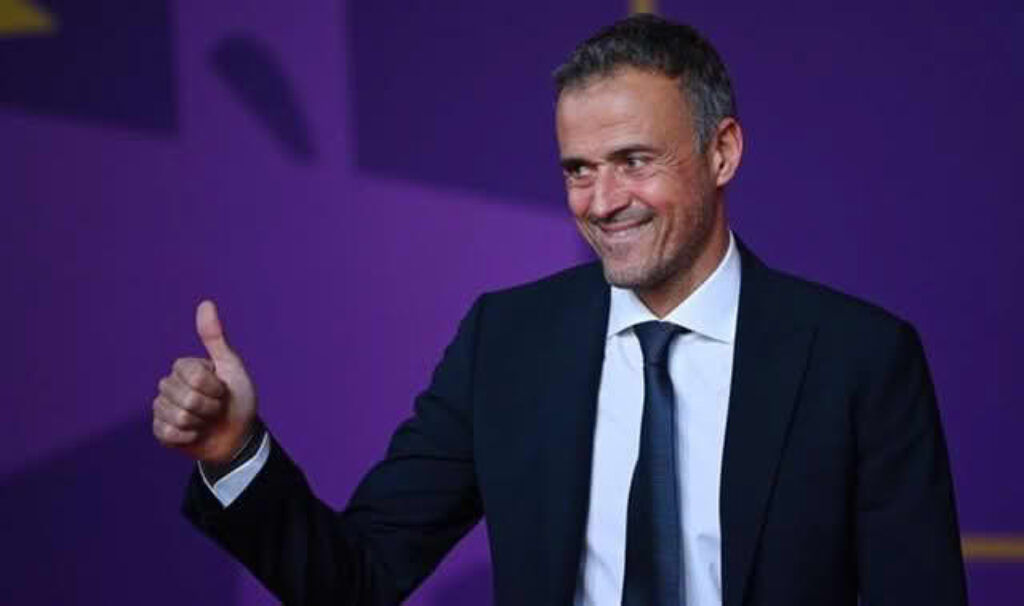
Luis Enrique i 2022. Av Juan FranRivas.
Lisence: CC BY SA 4.0
One day after Morocco’s painful defeat to Senegal in the Africa Cup of Nations final, Luis Enrique stepped forward to publicly defend Brahim Díaz. The Paris Saint-Germain coach refused to turn the Moroccan playmaker into the symbol of a collective failure, reminding critics that even the greatest names in football history have missed decisive moments.
A painful defeat and a targeted player
The disappointment is still raw and emotions remain intense. Beaten by Senegal in the AFCON 2025 final, Morocco has been deeply affected by the missed penalty from Brahim Díaz. Targeted by part of the fanbase, the Real Madrid midfielder nonetheless received strong backing from a respected voice in world football.
Speaking at a press conference on Monday, ahead of a European fixture, PSG coach Luis Enrique did not hesitate to take a clear stand in defense of the Moroccan international.
“Even the greatest have missed decisive moments”
“Everyone is talking about Brahim, but I remember Zidane… Zidane, who is a god of football, did that in a World Cup final,” Luis Enrique stated. He then broadened his argument by adding: “I also remember Sergio Ramos doing it. When you score a panenka, everyone applauds. When you miss it, the comments become very harsh.”
Through these examples, the Spanish coach sought to place the incident into perspective, stressing that risk and failure are inherent parts of elite football.
A personal defense built on trust
A former Spain national team coach, Luis Enrique knows Brahim Díaz well. He was the one who first called him up to the Spanish national team for a friendly match, before the player eventually committed fully to Morocco.
“Brahim is a wonderful player. I know him very well. He is an exceptional footballer and a very good person,” Luis Enrique insisted, firmly rejecting the idea of making Díaz a scapegoat.
A call for calm and responsibility
In the face of increasingly hostile reactions, including personal attacks, the PSG coach urged restraint and responsibility. “I can understand that it’s difficult to accept. It was strange, yes, but it’s football. Nothing more,” he said, aiming to restore a sense of proportion.
For Luis Enrique, the message is unambiguous: Morocco did not lose a final because of one individual. “Brahim is not a killer,” he repeated, confident that the attacking midfielder will bounce back.
In a sport where the line between hero and villain is often razor-thin, Luis Enrique’s intervention promotes solidarity over blame, reminding observers that even the most audacious gestures are part of the game — and that great players are also defined by how they respond after disappointment.
Related Reads:
- Morocco’s Prime Minister Praises AFCON Organization and Sends Message of Support to Brahim Díaz
- “My Soul Hurts”: Brahim Díaz Breaks His Silence and Apologizes to Moroccans
- AS Backs Brahim Díaz’s Choice to Play for Morocco After Strong AFCON Start
- AFCON 2025: How Brahim Diaz Won Over the Moroccan Fans